

California is preparing for a dangerous round of offshore winds that could increase wildfire risk, disrupt travel and leave hundreds of thousands of residents facing possible electricity shutoffs. Forecasts issued on October 14, 2026, warned that strong Santa Ana winds would develop across Southern California, while dry offshore winds were also expected to create fire-weather concerns across Northern and Central California.
The National Weather Service warned of northeast-to-east winds reaching 20 to 40 mph in affected Southern California areas, with gusts of 50 to 70 mph in some mountain locations. Humidity levels could fall to between 8% and 20%, creating conditions in which a new fire could spread quickly. Red Flag Warnings were issued for much of Los Angeles and Ventura counties, with additional fire-weather concerns expected in parts of the Central Coast.
The developing weather event has also prompted utility companies to prepare for preventive power shutoffs. Pacific Gas and Electric Company (PG&E) announced on October 14 that approximately 88,000 customers across 29 California counties were within the potential scope of a Public Safety Power Shutoff. Southern California Edison was separately considering outages that could affect as many as 245,000 customers. These were potential impacts, not confirmed outages for every customer included in the estimates.
For California residents and travelers, the combination of strong winds, dry vegetation and possible outages creates a broader challenge than weather alone. Mountain roads may become difficult to navigate, parks can close during dangerous fire conditions, and electricity disruptions may affect communications, accommodation and other visitor services.
Why Santa Ana Winds Create Dangerous Fire Conditions
Santa Ana winds develop when air flows from higher-pressure areas inland toward Southern California’s coast. As the air descends through mountain passes and canyons, it compresses and warms, often becoming drier. The resulting offshore winds can carry embers over long distances and accelerate the spread of vegetation fires.
The danger depends on more than wind speed. Relative humidity, vegetation moisture, terrain and the presence of an ignition source all influence how a fire behaves. When strong winds coincide with dry brush and low humidity, firefighters may have less time to contain a new blaze before it threatens homes, roads or public lands.
The National Weather Service’s October 14 outlook identified Thursday through Saturday, October 15–17, as a period of elevated fire danger in Southern California. The strongest Santa Ana conditions were expected from Thursday afternoon into Friday afternoon, with winds gradually weakening over the weekend. Forecasters warned that any new ignition could produce extreme fire behavior in the affected areas.
These conditions are particularly important in the Santa Monica Mountains, the San Gabriel Mountains and the Santa Susana Mountains, where steep terrain, narrow access roads and residential areas can complicate emergency operations.
The concern also extends beyond Southern California. Northern California can experience similar fire-weather conditions from Diablo winds, which blow from inland areas toward the coast. Although the regional wind systems have different names and local patterns, both can produce dry, gusty conditions that raise wildfire danger.
Red Flag Warnings Cover Parts Of Southern California
The National Weather Service Los Angeles/Oxnard office issued Red Flag Warnings covering much of Los Angeles and Ventura counties for the October 15–17 period. The warnings included mountain areas, the Santa Monica Mountains and communities across the region where offshore winds could combine with low humidity. Parts of Santa Barbara and San Luis Obispo counties were also expected to experience elevated fire-weather conditions.
The forecast called for sustained northeast-to-east winds of 20 to 40 mph, with gusts reaching 50 to 70 mph in some locations. Such gusts can bring down tree limbs, damage power lines and make driving more difficult, particularly for trucks, recreational vehicles and other high-profile vehicles.
A Red Flag Warning does not mean that a wildfire is already burning. It means weather conditions are favorable for rapid fire development and spread if an ignition occurs. Residents should treat the warning as a period for heightened caution, while following any separate evacuation orders or emergency instructions issued by local authorities.
The warning also has practical consequences for recreation. California State Parks, the National Park Service and other land managers may restrict access to vulnerable areas when dangerous fire weather arrives. California’s recently announced coordinated closure protocol for Santa Monica Mountains parklands, effective October 15, adds another reason for visitors to verify access before leaving home.
Travelers planning hikes or outdoor activities can review the California destinations guide for alternative trip ideas, but current official closures and weather alerts should take priority over older itineraries.
PG&E Expands Its Potential Power Shutoff Area
PG&E announced on October 14 that its potential Public Safety Power Shutoff could affect approximately 88,000 customers across portions of 29 counties. The utility expanded the scope after updating its weather assessment, adding approximately 25,000 customers while removing around 7,300 from the potential impact area.
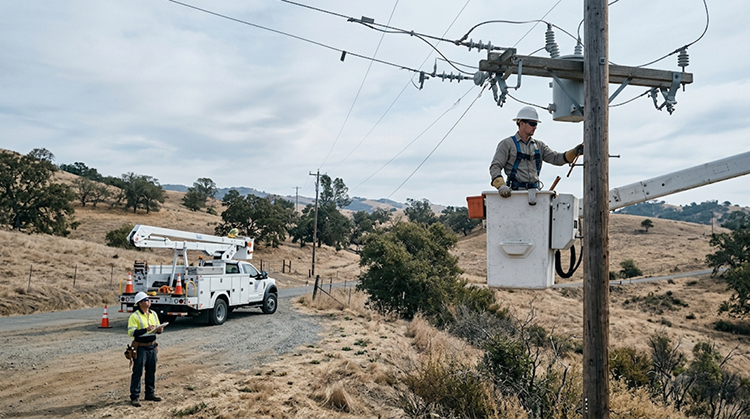
The potential event was forecast to begin Wednesday evening, October 14, and continue into Saturday, October 17, depending on weather and operational conditions. PG&E said it was sending notifications to customers in targeted areas and would provide further notice if a shutoff became necessary.
The potential outage area spans multiple regions, including portions of the North Bay, East Bay, Sierra foothills and Central Coast. In the Bay Area, locations of concern included areas in Alameda, Contra Costa, Napa, Sonoma and Solano counties. Strong Diablo winds were expected to affect some inland and elevated communities.
PG&E’s decision to consider shutoffs reflects the risk that electrical equipment could ignite vegetation during severe wind conditions. A Public Safety Power Shutoff is a preventive measure: a utility de-energizes selected lines when it determines that operating them could create an unacceptable wildfire risk.
The utility emphasizes that the final impact area can change as forecasts evolve. Inclusion in an advance notice does not guarantee that a customer’s electricity will be disconnected, and restoration timing depends on conditions and required safety inspections.
Customers should check the PG&E Public Safety Power Shutoff updates for current information about their specific area instead of relying on statewide estimates.
Southern California Edison Prepares For Possible Outages
Southern California Edison was also preparing for potential power shutoffs as Santa Ana winds approached Los Angeles and Ventura counties. The utility’s possible outage area was estimated to include as many as 245,000 customers, although the number and locations of actual shutoffs would depend on updated weather forecasts and operational decisions.
Malibu was among the communities facing possible outages. Local reporting on October 14 said Edison had notified the city that the Merlin circuit, serving an area extending inland from the coast between Latigo Canyon and Malibu Canyon, could be shut off as a precaution. Other circuits in Malibu and the western Santa Monica Mountains could also be affected.
For residents, the effects of a preventive outage can extend beyond lighting and household appliances. Electricity may be needed for medical equipment, refrigeration, internet access, water pumps and garage doors. Businesses and accommodation providers may also need contingency plans if service is interrupted.
Visitors should contact hotels, campgrounds and other providers directly if their plans depend on uninterrupted electricity. Those staying in areas subject to potential shutoffs should charge essential devices, keep a flashlight available and identify how they will receive emergency alerts if internet service becomes unreliable.
Customers who receive a direct utility notification should use that notice and the utility’s outage map to establish whether their address is in scope. The statewide estimates are useful for understanding the scale of the event, but they do not replace address-specific information.
What Power Shutoffs Mean For California Travelers
The combination of fire weather and possible electricity interruptions can affect travel in several ways.
Strong winds can bring down branches or trees, create road hazards and make driving difficult on exposed routes. Mountain roads, canyon routes and highways through elevated areas deserve particular attention during periods of high wind. Motorists driving vans, trucks, trailers or recreational vehicles should be especially cautious because their larger profiles can catch gusts.
Park access can also change. The Santa Monica Mountains include popular hiking destinations and public lands managed by several agencies. During Red Flag Warnings, designated parklands may close to reduce ignition risk and keep visitors away from areas where emergency access could be limited.
Travelers should check road and park conditions immediately before departure. A destination that was accessible the previous day may be closed under a new warning, and a road may be affected by falling debris or emergency operations.
Electricity outages can create additional uncertainty for visitors staying in rural communities. Some locations may have limited mobile reception, while businesses may need time to confirm whether services remain available. Travelers should save important reservations and contact details offline, keep phones charged and carry enough water and basic supplies for unexpected delays.
Anyone planning outdoor activities during the warning period should have an alternative itinerary that avoids closed trails and exposed areas. Visitors should never bypass closure signs or barriers to reach a scenic overlook or hiking route.
How Californians Can Prepare Before The Winds Arrive
The California Governor’s Office of Emergency Services urged residents to prepare for the approaching high-wind event. In its October 13 guidance, Cal OES advised Californians to monitor official information, understand local risks and prepare for possible power disruptions. The agency also explained that utilities may temporarily turn off electricity to reduce the risk of fires caused by electrical infrastructure.
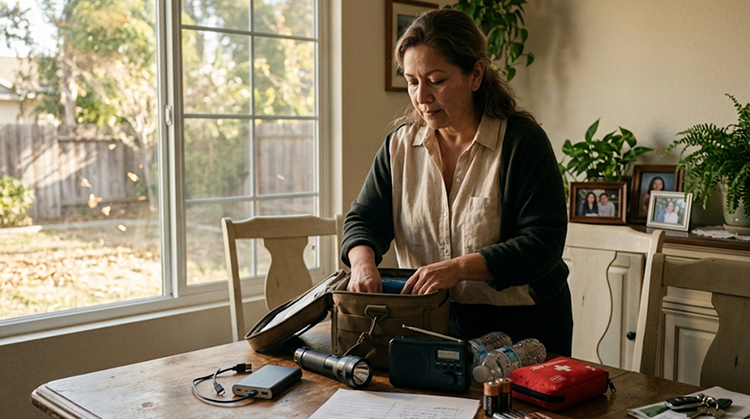
A few preparations can reduce disruption if the power goes out or conditions deteriorate.
- Charge essential devices. Charge phones, battery packs, medical equipment and other critical electronics in advance. Keep a battery-powered radio available if practical.
- Prepare safe lighting. Keep flashlights and fresh batteries accessible. Avoid candles, which introduce an additional fire risk during dangerous fire weather.
- Secure outdoor items. Move or secure patio furniture, lightweight decorations and other objects that strong winds could carry away.
- Plan for medical and water needs. Residents who depend on electrically powered medical devices or private water pumps should have a backup plan appropriate to their needs.
- Check evacuation information. Know how to receive local emergency alerts and understand the routes available from your neighborhood.
PG&E has also urged customers to prepare for extended outages by charging devices, keeping flashlights and batteries available, and monitoring utility communications. The company says customers should receive additional notification if a shutoff becomes imminent.
Residents should follow guidance from their own utility and county emergency-management agencies, since the timing and duration of outages can vary by circuit and location.
The Difference Between A Wind Warning And An Evacuation Order
Red Flag Warnings, high-wind warnings, power-shutoff notices and evacuation orders communicate different risks. Understanding those differences helps residents respond appropriately.
A Red Flag Warning signals weather conditions favorable for rapid wildfire growth. A high-wind warning concerns dangerous wind speeds and their potential effects on people, structures, trees and power lines. A Public Safety Power Shutoff notice means a utility is considering or preparing to de-energize selected electrical equipment because of fire risk.
An evacuation warning or order, by contrast, comes from emergency authorities responding to a specific threat to people in a defined area. Residents should not assume that a Red Flag Warning alone means they must evacuate, but they should be ready to act if local officials issue an evacuation instruction.
The most reliable approach is to monitor official alerts from the National Weather Service, county emergency services, local fire agencies and the relevant electric utility. Information can change quickly during offshore wind events, and an earlier forecast may no longer reflect current conditions.
California Faces A Critical Test Of Fire Preparedness
The October wind event arrives after California’s destructive 2025 wildfire season, which included the Palisades and Eaton fires. Those fires demonstrated how quickly extreme fire weather can threaten communities, damage infrastructure and disrupt local economies.
The current forecasts do not mean that a disaster of comparable scale will occur. They do, however, explain why fire agencies and utilities are taking precautions before the strongest winds arrive. Preventive shutoffs and park closures can inconvenience residents and visitors, but they are intended to reduce the risk of ignition and limit exposure during dangerous conditions.
For California’s tourism sector, the immediate challenge is helping visitors adapt to changing conditions without abandoning safety precautions. Flexible itineraries, direct communication with accommodation providers and regular checks of official alerts can reduce disruption.
The next several days will depend on how the wind event develops and whether forecasts change. Residents and travelers should use current local guidance rather than assuming every part of California will experience the same conditions.
Santa Ana winds are a familiar feature of Southern California’s autumn weather, but their combination with dry vegetation and low humidity can create a serious fire threat. As PG&E and Southern California Edison evaluate potential outages and agencies manage recreation access, preparation remains the most useful response: monitor alerts, secure property, plan for electricity interruptions and stay out of closed areas until officials confirm they are safe.