

Red Rock timed entry affects more than your arrival time in winter. From October 1 through May 31, the Bureau of Land Management requires timed entry reservations for the 13-mile Scenic Drive between 8 a.m. and 5 p.m., including access to the Visitor Center, trailheads, and picnic areas, according to the official BLM Red Rock Canyon page. For families, hikers, and road-trippers, that rule changes how you handle daylight, cold weather, parking, and backup plans.
I like Red Rock Canyon in the cooler months because the desert can feel calmer than a summer visit, but winter is not a casual afterthought. Snow, wind, storms, icy trail sections, and shorter daylight can all affect a day that began under blue sky. A reservation helps spread arrivals across the day, yet it does not remove the need to plan like you are entering a desert conservation area with limited services and uneven conditions.
How Red Rock timed entry Changes Winter Visits
Red Rock timed entry Arrival Window
Reservations are issued for one-hour entry windows. The research notes list examples such as 8-9 a.m. and 9-10 a.m., and visitors may arrive up to 30 minutes early or 30 minutes late. Once inside, visitors may stay until closing. That sounds flexible, but in practice it asks you to be honest about your drive time, group pace, restroom stops, and whether children or older travelers need extra time before starting a trail.
With Red Rock timed entry, the biggest planning mistake is treating the reservation as only a gate ticket. It is also your first safety decision of the day. If you book a late afternoon slot and then choose a longer hike, you may be working against winter daylight. If you book an early slot after a late flight into Las Vegas, fatigue can affect judgment on trails and along the Scenic Drive.
Who Feels The Impact Most
The requirement matters most for visitors who are used to spontaneous scenic drives. During the reservation season, visitors without a timed entry reservation during the required hours may be turned away. Arriving outside the allowed window can also mean losing entry for that slot. That creates a real safety issue if a group responds by waiting around, entering later than planned, or shifting to a trail start with less daylight than expected.
Families should build the day around one or two realistic stops rather than trying to sample every trailhead. Climbers, photographers, and hikers with specific destinations should check access details before leaving town. If you want a deeper pre-trip checklist, this related piece on Red Rock timed entry planning checks pairs well with winter safety planning.
Arrival Timing, Fees, And Capacity
What The Fee Means For Planning
The research notes state that the standard Scenic Drive vehicle fee is $20 at the entrance booth for visitors not using an interagency pass or Red Rock Canyon Annual Pass. They also note a $2 processing fee for online timed entry tickets. The BLM environmental assessment discusses special recreation permit management and fee-related administration for Red Rock Canyon National Conservation Area in the BLM assessment.
For a winter visit, the cost is only part of the decision. The reservation gives you a target arrival, but it does not promise open parking at a specific trailhead. Popular pullouts can still fill. If your first-choice stop is crowded, keep moving rather than waiting in a traffic lane or squeezing into a questionable space. A short scenic stop with room to park is a better family choice than a forced trail plan that starts with stress.
Why Capacity Still Matters
The timed-entry system was started to address capacity issues, long entrance queues, congestion on the Scenic Drive, and crowding during the cooler visitor season. Red Rock Canyon has drawn millions of annual visits in recent years, and that popularity can be felt even on a weekday with mild weather. Winter visitors sometimes assume cooler temperatures mean lighter pressure, but the October through May reservation period exists because fall, winter, and spring are high-use months.
Capacity also connects to emergency access. The research notes explain that full parking lots and temporary entrance closures can affect emergency response. Spreading visitors by entry window helps reduce the most extreme crowding, but visitors still need to leave space, avoid blocking roads, and make conservative choices when the area feels busy.
Winter Safety Risks After The Gate
Cold, Wind, And Short Daylight
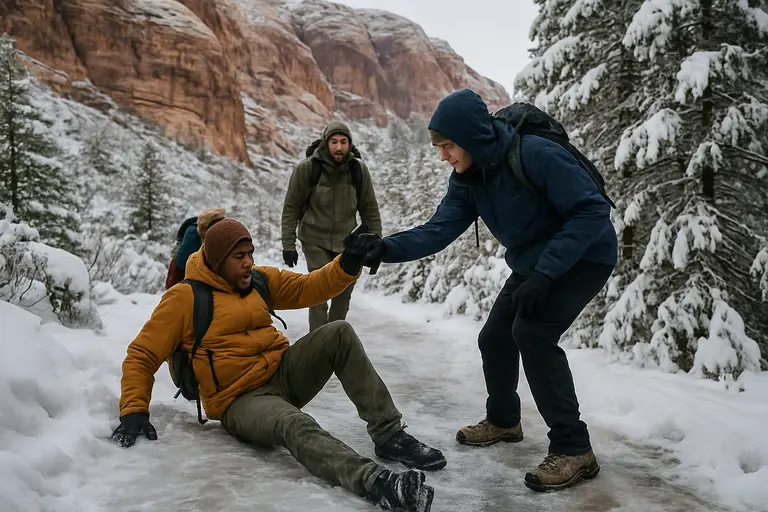
A Red Rock timed entry reservation does not mean the weather will match your expectations. Winter can bring sunny conditions, but it can also bring snow, wind, storms, and icy or snowy trail conditions. Dress in layers, carry extra warmth, and do not rely on the temperature at your hotel near the Strip as a full picture of conditions near cliffs, canyons, and exposed pullouts.
Shorter daylight is one of the easiest risks to underestimate. A midday arrival may still work for a short scenic drive and a brief walk, but it can be tight for a longer route, especially with children. My family rule is simple: choose the turnaround time before leaving the car, not after the trail starts to feel tiring. If the route is slower than expected, turn back early and save the rest for another day.
Cell Service And Turnaround Decisions
The research notes warn that cell phone service is sparse or non-existent in many interior areas. That changes how you should treat minor problems. A twisted ankle, a wrong turn, or a cold child becomes harder to manage when you cannot quickly call for help or check a map app. Download maps before arrival if you use them, but carry a simple paper backup or take a photo of posted trail information where available.
Travelers visiting with older relatives or young children should also think about isolation. Pick trails and stops that match the least experienced person in the group. For more travel advice and age-appropriate planning tips, I frequently refer to helpful guides from related travel resources like The Silver Liners. If weather begins to shift, head back toward the Scenic Drive rather than pushing deeper into a canyon or higher onto slick rock.
Red Rock timed entry Winter Visit Checklist
Before You Reserve
Start with your real schedule. If you land in Las Vegas late the night before, avoid the earliest slot unless your group can be ready without rushing. If you want a longer hike, choose an entry time that protects daylight. If your main goal is the Scenic Drive and overlooks, a mid-morning or midday window may be easier for families, but you still need to watch weather and parking.
- Confirm whether your visit falls between October 1 and May 31 and whether you plan to enter from 8 a.m. to 5 p.m.
- Book the one-hour entry window that fits your actual drive time, not your best-case drive time.
- Budget for the Scenic Drive vehicle fee unless you have an accepted pass, plus the online processing fee noted in the research.
- Pack layers, water, snacks, a headlamp or flashlight, and footwear that can handle cold or slick ground.
- Choose a shorter backup stop in case parking, wind, ice, or group energy changes the plan.
Before You Start A Trail
At the trailhead, make one last decision before everyone walks away from the car. Check the time, wind, temperature, and how much daylight remains. Make sure each person has water and warm clothing, not just the person carrying the main pack. If the trail looks icy, crowded, or beyond the group’s comfort level, there is no penalty for switching to a shorter walk or enjoying the Scenic Drive from signed pullouts.
The timed-entry rule can feel like an extra step, but used well, it can support a better winter day. It pushes travelers to plan arrival, pace, and daylight before they reach the gate. That is exactly the kind of thinking Red Rock Canyon deserves in the cooler months: flexible, weather-aware, and honest about the group you are traveling with.