You don’t just see a giant sequoia. You feel it. The air changes, thick with the scent of centuries. Your neck cranes back, and back some more, until your sense of scale just gives up. It’s a humbling, first-person encounter with living history.
Here’s the sobering math. These forests once sprawled over 2.2 million acres—picture three Rhode Islands covered in ancient wood. Today? We’re down to a fraction of the old-growth giants. For coast redwoods, aggressive logging has left less than 5% of the original population standing.
Think about that for a second. We’ve managed to erase 95% of a forest system that took millennia to build. As one USGS scientist bluntly put it, even these fire-tolerant titans face an unprecedented crisis. It’s not just an environmental loss; it’s a form of cultural amnesia.
So, what’s the move? Passive preservation is a museum concept. These aren’t artifacts. Salvation requires getting your boots dirty. This is where the real work begins, championed by groups like the Save the Redwoods League.
The mission isn’t just to save what’s left. It’s to actively rebuild a future where these forests thrive again. That’s the enlightened urgency. It’s not about looking up in awe, but about rolling up your sleeves.
Priority Projects and What Volunteers Do
The old economy harmed the redwoods. Now, a new economy is fixing them and creating jobs. We have a two-part plan: heal the coast range and protect the giant sequoias inland. It’s like surgery and a vaccine.
In the coast redwood range, we’re fixing the damage from logging. Imagine a forest that’s too crowded and stressed. We need to thin it out.
For the sequoias, we focus on making them resilient to wildfires. We’re creating gaps in the forest to stop fires from spreading. This isn’t clear-cutting; it’s selective cutting for the good of all.
So, what does the work look like? It’s hard, precise, and varied.
- The Arborist’s Touch: We pick which trees to remove to help the giants grow. This is the heart of Redwoods Rising.
- Erasing the Past: We fix old logging roads. These roads harm the streams. Closing them helps the land heal.
- Planting the Future: After thinning, we add native plants. This rebuilds the forest’s food web.
This work is more than just helping the environment. It’s also creating jobs. Over $100 million has been spent locally on these projects. In 2024, they supported over 200 jobs.
The League is also training the next generation. Apprentices learn about ecology and using chainsaws. It’s a career that values both strength and knowledge.
This is real conservation work. You’re not just watching; you’re making a difference. Every thinned sapling and planted fern counts.
Where to Go: Humboldt, Del Norte, Marin, Santa Cruz
Choosing where to help with redwood restoration is like picking a concert venue. Each county has its own vibe and impact. Your efforts and money help the local economy and the environment.
It’s like a tour that combines culture and nature. You’ll see big projects and learn about the forest.
Let’s break down the lineup.
Humboldt County is the frontier. It’s where big plans for the forest come to life. The community works closely with the forest’s health. Projects here are big and important.
Del Norte County is Humboldt’s rugged sibling. It’s just as remote but with a similar scale. The focus is on keeping the forest healthy from the inside out.
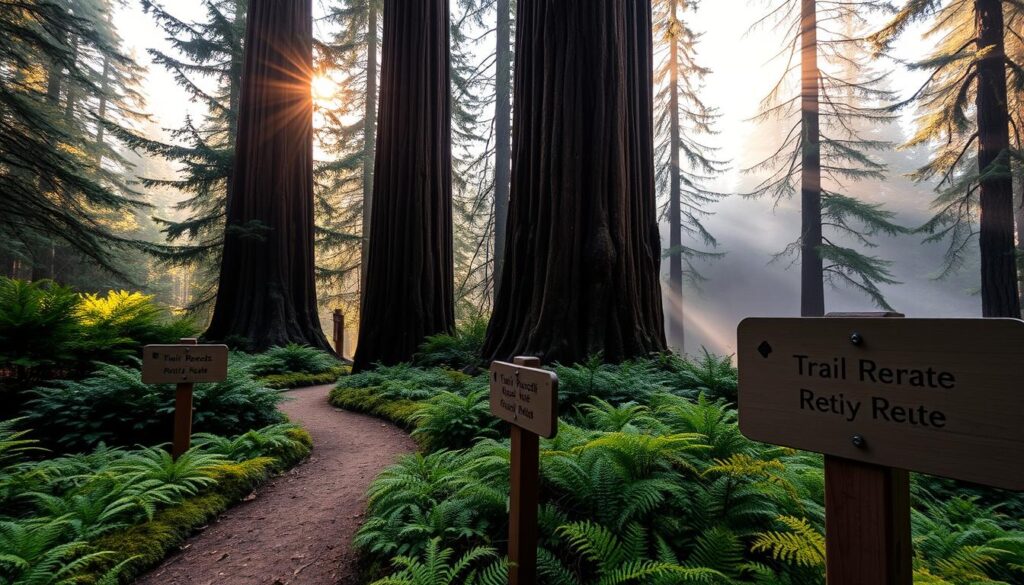
Marin County, home to Muir Woods, is the polished icon. It’s where many tourists visit. The work here is precise and focused on small details. For example, moving trails to protect the trees.
Volunteering here means teaching visitors about the forest. It’s about protecting the trees from too many admirers.
Santa Cruz County is the southern outpost. The redwoods here are fewer but just as vital. The work here is about keeping the forest healthy and expanding its reach.
Visiting these places helps the local economy. In 2023, over 400,000 people visited Redwood National Park. They spent nearly $30 million in the area. This money supports the park and local groups.
So, where should you go?
- For scale and raw impact: Humboldt or Del Norte.
- For education and surgical precision: Marin’s Muir Woods.
- For biodiversity and holding the line: Santa Cruz.
Your choice of venue shapes your role in the show. Whether you’re on the frontier or at the icon, your efforts matter.
Planning a Stewardship + Hike Weekend
Forget the usual views. The real magic is in the work. This isn’t a vacation; it’s a working holiday. It’s a weekend that works your muscles and your sense of wonder.
Your day starts with forest weeding. This work removes invasive species that harm young redwoods. It’s hard work, but you see your progress in the piles of pulled plants.
Then, you take a break for lunch. This break is more than just eating. It’s a chance to recharge for the hike ahead.
The hike is more than just a walk. It’s a victory lap through a restored grove. You see the results of your hard work. The redwoods feel like colleagues you’ve helped.
The sense of sweat equity is key. The sunset is special when you’ve worked to protect the view. It’s not just tourism; it’s deep travel. You’re part of the ecosystem’s story, even if just for a weekend.
Choosing the right camp is essential. True camp volunteering needs a site that’s both refuge and rally point. You need a place to clean up, share stories, and get ready for the next day. Not all camps are equal for this mission.
| Campground | Region | Proximity to Projects | Key Vibe & Amenity | Booking Tip |
|---|---|---|---|---|
| Prairie Creek Redwoods State Park | Humboldt | Excellent (adjacent to major restoration zones) | Classic park atmosphere. Flush toilets, hot showers. | Reserve 6 months ahead for summer. Elk frequent the meadows. |
| Jedediah Smith Redwoods State Park | Del Norte | Superb (heart of the tallest groves) | Riverside serenity. Some drive-in sites, more walk-in. | Snag a site along the Smith River for the best soundscape. |
| Gold Bluffs Beach (Fern Canyon) | Humboldt | Good (short drive to inland sites) | Unbeatable oceanfront camp volunteering base. Basic facilities. | Prepare for fog and wind. The roar of the Pacific is your soundtrack. |
| Samuel P. Taylor State Park | Marin | Very Good (central to several watershed projects) | Redwoods meet grassland. More secluded feel. | Great for smaller groups. Hiker/biker sites often available last-minute. |
Pack your work gloves next to your hiking boots. The perfect Northern California weekend is made by hand. It’s rewarded with grandeur and slept in under the trees you’re helping to stand tall for another century. That’s a souvenir no gift shop can sell.
Wildlife/Ecology 101 for Field Days
Before you start pulling weeds, remember, you’re not a gardener. You’re an ecological strategist. The redwood forest is a living system with checks and balances. Your actions will affect a drama that’s millions of years old.
Let’s meet the cast. First, the Northern Spotted Owl. It’s not just a cute bird. It’s a sign of a healthy forest. If it leaves, the forest’s health declines.
Then, there’s the Banana Slug. It’s the unsung hero of the forest floor. It breaks down leaf litter, recycling nutrients. Without it, the soil wouldn’t be fertile.
Your mission is invasive removal. Plants like English ivy or Himalayan blackberry are not just annoying. They take over, using up resources. Your work helps native plants like ferns and huckleberries.
Why does thinning trees matter? More sunlight reaches the forest floor. This boost in light helps native shrubs grow. These shrubs provide food and shelter for wildlife.
These forests are home to clear streams and diverse wildlife. Projects like reconnecting streams help wildlife habitats thrive. You’re part of bringing these habitats back to life.
To visualize the roles, here’s a breakdown of the key players:
| Species/Role | Function | Why It Matters |
|---|---|---|
| Northern Spotted Owl | Indicator Species | Signals healthy, complex, old-growth forest structure. |
| Banana Slug | Decomposer | Recycles nutrients, enriching soil for new plant growth. |
| Salmonberry Bush | Understory Provider | Offers food and shelter for birds & mammals after canopy thinning. |
| Invasive Species (e.g., Ivy) | Ecological Disruptor | Smothers native plants, reduces biodiversity, alters soil. |
Every act of invasive removal or careful thinning is a vote for a specific ecological future. You’re empowering native species and rewriting the script. Now, grab your tools with the confidence of a sage, not just a volunteer.
Safety & Weather in Temperate Rainforests
Welcome to the forest, where the air is also a drink and the ground is a challenge. California’s sunny image is far from here. Your sunscreen won’t help, and your optimism will soon get wet.
This is a temperate rainforest. The “temperate” name is misleading. It suggests calm, but you’ll face constant, gentle rain. Fog is like rain you can walk through, and drizzle is the usual weather.
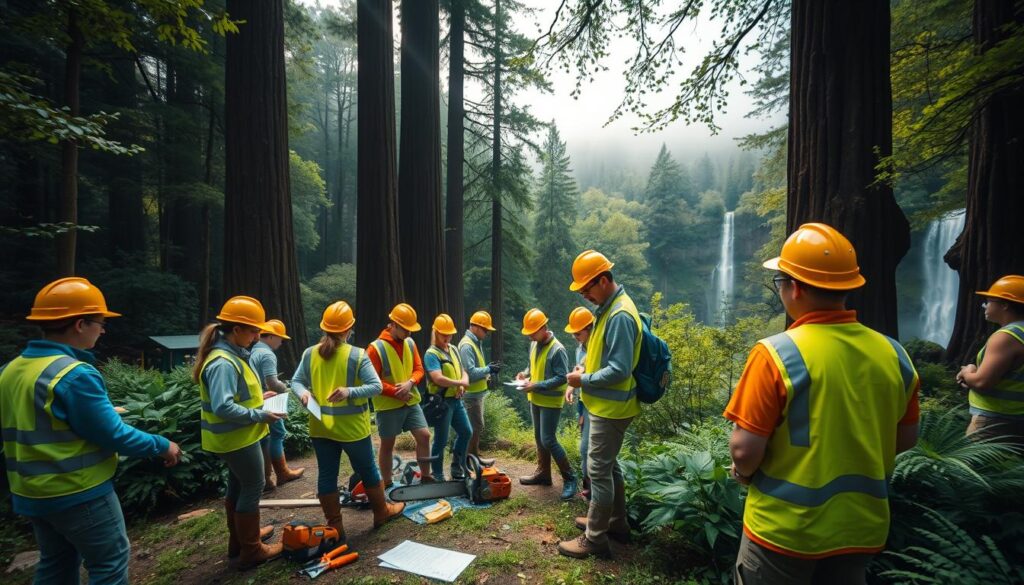
Getting ready for this isn’t about being tough. It’s about smartly dealing with the damp. Think of it as a clever, ongoing battle with nature. You might not win, but you can avoid looking silly.
The Onion Strategy: Your Personal Microclimate
Forget the single puffy coat. Dressing for the redwoods is an art of layers. You’re creating a personal weather system that can change between cold foggy spots and warm fern groves.
The base layer is non-negotiable. Choose merino wool or synthetic. Cotton is bad—it holds moisture and never dries.
The middle layer keeps you warm. Use a fleece or thin puffer. The outer layer is your shield: a waterproof, breathable shell. “Water-resistant” is just a mall store’s dream.
Always add or remove layers before you sweat. Sweat makes you cold. Cold makes you miserable. It’s a simple, damp rule.
Foot Care: The Battle Against Squelch
Your feet will be wet. Accept it. The goal is to manage the wetness. “Trekker’s trench foot” isn’t a big deal. It’s just constant dampness.
Waterproof boots are a start, but they’re not perfect. Moisture gets in from rain or sweat. The solution is good wool socks and a dry pair in your car.
Change your socks at lunch. It’s a quick ritual that feels like a spa day. Also, think about gaiters. They keep debris and water out of your boots.
Hazard Awareness: The Forest is Dynamic
The dangers here aren’t usually animals. They are gravity and water. A “widowmaker” is a dead branch or tree limb hanging overhead. Wind or water can drop it. Don’t camp or stay under obvious hazards.
The mud is deep. It can pull a boot off your foot. It hides roots and rocks. Test it with a trekking pole. Slow down. This isn’t a race.
Streams can rise fast. What’s a trickle in the morning can be a torrent by afternoon. Watch the weather upstream. Understanding these natural cycles shows respect for the system you’re trying to restore.
For more on outdoor safety essentials, the rainforest adds its own twist.
| Category | Essential Item | Why It Matters Here | Common Mistake |
|---|---|---|---|
| Core Clothing | Merino Wool Base Layer | Wicks moisture, stays warm when wet, odor-resistant. | Using cotton, which holds moisture and causes rapid heat loss. |
| Rain Protection | Breathable Rain Jacket & Pants | Keeps constant drizzle out while allowing sweat vapor to escape. | Relying on a “water-resistant” windbreaker that wets through in an hour. |
| Footwear System | Waterproof Boots + 2 Wool Sock Pairs | Manages inevitable moisture to prevent blisters and cold feet. | Wearing thin cotton socks that offer no cushion or warmth when damp. |
| Safety & Navigation | Headlamp, Whistle, Paper Map | Fog and dense canopy can bring darkness early; electronics fail in wet conditions. | Depending solely on a phone GPS with a dying battery. |
| Hydration & Food | Insulated Water Bottle, High-Energy Snacks | Cool, damp air masks thirst; constant activity requires fuel. | Carrying a single, large water bladder that’s hard to refill on the go. |
Safety here is a mindset. It’s not being paranoid. It’s smartly accepting you’re a visitor in a powerful, wet, and beautiful place. Come prepared, layer like an onion, take care of your feet, and watch the sky. You’ll be comfortable enough to focus on the important work: saving the giants.
How to Support Tribally Led Efforts
Supporting tribal stewardship means changing how we think about ‘help’. It’s about listening more than giving solutions. This approach builds real relationships and is key to healing the land.
The old volunteer model often feels like taking without giving back. But, supporting tribal efforts is different. Your most valuable tool is your ability to listen and follow their lead.
This work is based on Traditional Ecological Knowledge (TEK). It’s like the forest’s cultural GPS, guiding us for thousands of years. It tells us not just what to do, but why and when, in harmony with nature.
So, what does real support look like? It’s about small, focused actions, not big gestures.
- Follow the Financial Trail: Give money directly to tribal nations and their natural resources departments. This supports their sovereignty.
- Seek Culturally Informed Volunteer Days: Join public workdays run by tribes. Here, you follow their instructions, not lead.
- Amplify, Don’t Appropriate: Share information from tribal sources. Let their voices lead in discussions about their lands.
The progress in co-management agreements is a partnership between old wisdom and new science. It’s a shared vision between tribes and the state.
Seeing this as an add-on to conservation is wrong. It’s the heart of conservation. Tribal stewardship is leading the way in protecting redwood forests for the future. Supporting it is not just right; it’s essential.
Progress Indicators & How to Stay Involved
So, how do we know if we’re winning? In forest restoration, the scoreboard isn’t points on a screen. It’s clear streams where you can see your boots. It’s salmon returning to creeks that were once silent.
It’s the slow growth of a complex canopy. It’s the saplings we plant today, growing thicker by a millimeter each year. They’re the future old-growth.
The human side is just as important. We’ve trained over 70 apprentices in forest restoration careers. More than 90% of contractor hours go to local residents. This is more than just volunteering; it’s a growing economy.
We’re building a workforce that knows how to use tools like the McLeod. Your role doesn’t end when the weekend does. Become a stakeholder, not just a spectator.
Follow the progress of projects like Redwoods Rising. Advocate for conservation funding, even when it’s hard. Think about pivoting your career to work with the earth. Those apprentices did.
The legacy of the giants is a long game, measured in centuries. Our commitment must be the same: connected, persistent, and smart. The forest’s next chapter is being written. Make sure your name is in the footnotes.