

Welcome to nature’s Hollywood set – where sequoias outshine influencer selfies and desert nights drop temperatures faster than a startup’s valuation. I learned the hard way that preparedness here isn’t optional. My first Joshua Tree camping trip ended with me using a map as kindling while shivering like a tech bro at Burning Man.
The Ten Essentials framework isn’t just Boy Scout propaganda. It’s like your iPhone’s survival mode. You get navigation tools sharper than a Mission District barista’s espresso shots, layers that adapt quicker than a Silicon Valley pivot, and emergency supplies more reliable than LA’s “five-minute” taco truck wait. Pro tip: That state park safety checklist you’re ignoring? It’s the difference between trending on Instagram and becoming a Search & Rescue TikTok cautionary tale.
California’s weather mood swings make Kanye look stable. Coastal fog gives way to desert infernos before lunch, while mountain passes swap wildflower selfie backdrops for blizzard warnings by sunset. Organized hikes and adventure clubs thrive here precisely because they treat forecasts like subpoenas – non-negotiable.
Think of your gear like a political campaign: It needs to work harder in diverse territories. That ultralight jacket saving space in your pack? Useless when Sierra Nevada winds hit harder than a Sacramento policy reversal. And sunscreen? More essential than avocado toast at a Bay Area brunch – UV rays here don’t care about your influencer aesthetic.
Understanding Local Risks: California’s Triple Threat of Weather, Terrain & Wildlife
If California’s ecosystems were a movie genre, they’d be a mix of disaster flicks and nature documentaries. The state’s outdoor safety depends on three changing factors: weather, terrain, and wildlife. Weather changes fast, trails are tough, and animals have great PR.
The california weather is unpredictable. That “sunny California” postcard is outdated every 50 miles. Coastal fog can last all afternoon, and Sierra snowstorms are intense. Death Valley heat can cook an egg on your car dashboard.
Pack layers, like a Netflix hero, for changing weather. A light jacket might need a waterproof version in your bag.
California’s terrain is thrilling but challenging. Trail difficulty ratings are like a director’s commentary:
- “Moderate” = “Requires more grip than your last relationship”
- “Rocky Section” = “Free ankle-sprain simulator included”
- “Seasonal Creek Crossing” = “April showers bring May quicksand”
California’s wildlife is the real star. Black bears, rattlesnakes, and mountain lions are all impressive. Treat their home with respect, hiding food like a secret.
Survive microclimates by checking elevation changes. A 75°F start can turn into a 45°F summit quickly. Coastal hikes need fog-resistant navigation skills.
Basic First Aid for Outdoor Activities
Is your first aid kit ready for California’s wild side? Think again. Mother Nature doesn’t care about your Pinterest-level organization. The National Park Service suggests kits that could be mini field hospitals.
But let’s be real, you’re not carrying an E.R. tent up Half Dome. Your kit needs strategic versatility, not just Instagram-worthy bandage patterns.
Start with the non-negotiables:
- Blister armor: Those Sierra Nevada switchbacks turn feet into bubble wrap. Hydrocolloid patches > flimsy bandaids
- Trauma triage: QuikClot gauze for when rocks win arguments
- Snakebite kit: Because California has more rattlers than Coachella has influencers
- Duct tape: Fixes gear, splints fingers, and mends egos after failed summit attempts
Pro tip: Swap that tiny scissors for trauma shears. You’re not opening Amazon packages – you’re potentially cutting through climbing harnesses. And always pack triple the antiseptic wipes you think you’ll need. Wilderness infections make TikTok trends look tame.
Remember: Preparedness isn’t about packing everything – it’s about packing smart. Your kit should weigh less than your water filter but handle more drama than a Hollywood agent. Now go forth, but maybe keep the pressure bandages within reach.
Safety Gear Must-Haves: Surviving California’s Mood Swings
Packing for California’s outdoors is like planning a movie deal. You need the right gear to stay safe. The National Park Service’s Ten Essentials are key, adapted for California’s unpredictable weather.
Your base layer should be as snug as a startup’s budget. Choose merino wool or synthetic fabrics that dry fast. Cotton is a no-go, as it holds moisture like California’s droughts.
- Navigation duo: A GPS device and old-school topographic maps. Tech can fail, but maps never do.
- Sun armor: Use SPF 50+ sunscreen and polarized sunglasses. The Central Valley’s UV rays are intense.
- Emergency comms: Satellite messengers are vital. They work when cell service doesn’t.
California’s weather is unpredictable. Bring a windbreaker and insulation layers for Lake Tahoe’s changes. For coastal hikes, waterproof gear is essential.
Don’t confuse BearVault canisters with trash bins. Store food right to avoid black bears. Carry a whistle to signal for help.
Your gear should work flawlessly. Test it before heading out. In California’s wilderness, being prepared is a must.
Hydration & Nutrition
In California’s wilderness, your water bottle is more valuable than a crypto bro’s NFT collection during a market crash. State park guidelines show you’ll need 1 liter per hour during tough summer hikes. That’s a lot of water, enough to make a pack mule rethink its job.
Let’s break down your water plan like a Silicon Valley VC analyzing a pitch deck:
- Water: The OG hydrator – works until you start sweating like a politician at a fact-checking convention
- Electrolyte tablets: Nature’s Gatorade for when your muscles cramp harder than a Millennial’s budget
- Coconut water: The Whole Foods solution that works until you need actual medical attention
Now, let’s talk trail mix – the edible equivalent of a diversified investment portfolio. Your ideal mix should have:
- Protein (almonds) – the blue-chip stock
- Complex carbs (oats) – your steady index fund
- Dark chocolate – the high-risk, high-reward crypto play
| Hydration Option | Pros | Cons |
|---|---|---|
| Plain Water | Zero calories, universally available | No electrolyte replacement |
| Sports Drinks | Fast electrolyte delivery | Enough sugar to start a soda fountain |
| DIY Electrolyte Mix | Customizable sodium/potassium ratios | Tastes like seawater with commitment issues |
Your body is like a Tesla, not a gas-guzzler. Feed it premium fuel. That Clif Bar isn’t just a snack – it’s your emergency propulsion system when the trail gets steep.
Pro tip from PCT thru-hikers: Freeze-dried mango has more potassium than a Banana Republic outlet store. Pair it with jerky that’s tougher than a DMV clerk, and you’ve got a meal that’ll power you through switchbacks like a Tesla on Autopilot.
Group vs. Solo Safety
Solo hiking in California looks great in photos, but it’s not always safe. State park rangers stress the importance of hiking with a buddy. Yet, 37% of search-and-rescue missions last year were for solo hikers who didn’t share their plans.
Groups offer safety, but solo trips give you freedom. I learned this when I got lost in Big Sur. I wished I had someone to laugh at my bad compass skills. Here’s a simple guide to help you decide:
| Solo Adventures | Group Expeditions | |
|---|---|---|
| Decision Speed | Faster than a Tesla Ludicrous Mode | Slower than DMV lines |
| Safety Net | You vs. the mountain | 5 possible first-aid kits |
| Social Dynamics | Zero arguments | Like managing a crowd at Coachella |
If you want company without a long-term commitment, adventure clubs California offer great options. Here’s how to pick the right group:
- Make sure they have Wilderness First Aid certifications
- Choose groups with 8-12 people for safety and not too much chaos
- Test how well you get along on day hikes before longer trips
California’s outdoor safety isn’t just about being alone or with others. Mixing both can be smart. I’ve done solo mornings and joined groups for the tough parts. Just make sure someone knows where you are, even if you’re with a camera crew.
Navigation & Weather Apps
Think your phone’s weather app is reliable? Mine once said “sunny skies” during a Sierra Nevada hailstorm. It’s clear that meteorology isn’t its strong suit. Modern explorers need better tools than default apps that work like Magic 8-Balls with better graphics. Here’s how to avoid becoming the main character in your own backcountry horror story.
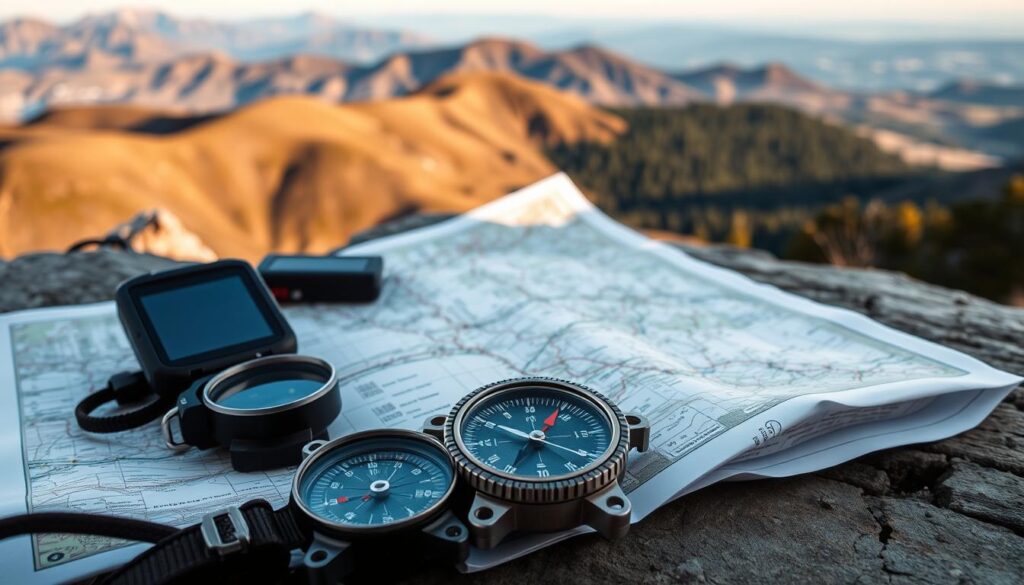
- Gaia GPS: The Swiss Army knife of navigation, with offline maps detailed enough to spot poison oak clusters
- Windy.com: Weather predictions so precise they’ll make your local TV forecaster blush
- AllTrails Pro: Real-time trail reviews California adventurers actually trust (minus the influencer sunset selfies)
But here’s a secret National Park Service rangers whisper about: Your $300 GPS unit becomes useless when its battery dies. I learned this the hard way near Joshua Tree, rescued by a $12 compass and survival skills from a California outdoor workshops veteran. Pro tip: Magnetic north doesn’t care about your Instagram followers.
The smart play? Layer tech like a paranoid prepper:
- Download offline maps for your entire route
- Carry a physical topo map in a waterproof case
- Bookmark the NPS’ secret menu of trail updates (their website’s “Alerts” section)
Remember when that viral TikTokker got lost in Big Sur because “Google Maps said it was fine”? Don’t be that guy. Your phone’s great for finding artisanal coffee shops – less so for navigating switchbacks in coastal fog. As any seasoned trail reviews California contributor will tell you: Tech fails, terrain doesn’t negotiate.
Emergency Planning
Your emergency plan needs more layers than a Hollywood disaster movie script. Malibu mansions have panic rooms, but California’s wilderness demands multi-dimensional escape blueprints. These plans should be as detailed as a CIA extraction team’s.
California parks say treat emergency shelters like Tinder matches – have many options and know how to reach them quickly. My rule is “Three is the magic number”. Always have:
- Primary shelter (park ranger stations)
- Secondary refuge (natural rock formations)
- Bug-out location (pre-arranged GPS coordinates)
Sierra Nevada training camps suggest practicing your escape routes backwards in daylight. If you can’t navigate to safety with your eyes closed, you’re not ready for night emergencies.
California’s Shelter Hierarchy: Know Your Options
| Shelter Type | Best For | CA Park Examples |
|---|---|---|
| Ranger Stations | Medical emergencies | Yosemite Valley |
| Natural Caves | Sudden storms | Joshua Tree NP |
| Pre-stocked Caches | Multi-day crises | Sequoia Backcountry |
Modern trip planning is about fighting chaos with tech. Sync your Garmin inReach with CalTopo maps and share updates like you’re live-tweeting the apocalypse. Choose an emergency contact who won’t freak out when you text “bearnado situation.”
Last summer, I saw a group in Big Sur do a moonlight evacuation that impressed even Navy SEALs. Their secret? Monthly disaster drills for different scenarios. Wildfires and flash floods need different escape plans.
Environmental and Fire Safety
Managing fire risks in California is more complex than a TikTok influencer’s lighting setup. With droughts and Instagram-fueled adventure tourism, our campfire ethics must evolve quickly. This is faster than Elon Musk’s Twitter changes.
Let’s break down California’s fire regulations like a true crime podcast host:
- Campfire curfews change quickly – always check local alerts
- Portable gas stoves are like the Tesla Cybertrucks of organized hikes California
- That “perfect fire pit spot” you found? It’s probably illegal – like streaming Succession from shady websites
Leave No Trace: 2024 Edition
The seven principles now have a California twist:
| Original Principle | California Translation | Enforcement Level |
|---|---|---|
| Plan Ahead | Download 3 fire apps minimum | Park ranger side-eye |
| Travel on Durable Surfaces | Avoid areas drier than British humor | $500 fine territory |
| Dispose of Waste Properly | Pack out micro-trash like it’s evidence | Social media shaming risk |
For outdoor meetups California organizers, fire safety prep is as complex as wedding planning. Your checklist:
- Permit acquisition skills matching a Hollywood agent
- Water sources mapped like Taylor Swift’s tour dates
- Emergency exits planned with White House-level security detail
Remember: A single spark here causes more drama than a Real Housewives reunion. Stay smarter than the average bear – and definitely smarter than that guy who tried to BBQ during fire season.
Community Safety Networks
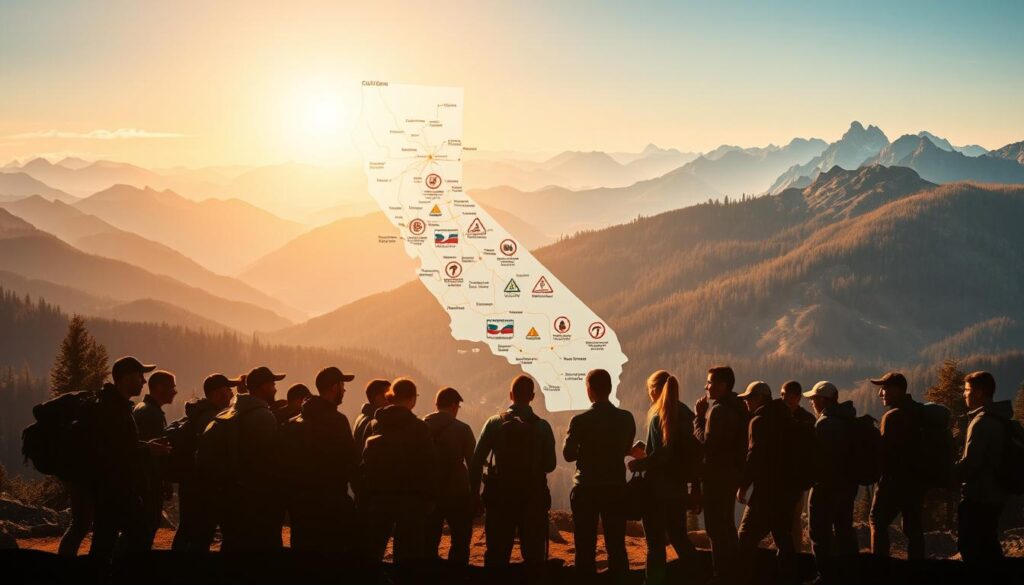
California’s wilderness doesn’t care about your LinkedIn connections. But the right outdoor crew might save your Instagram-worthy backside when mountain lions outnumber cell towers. While tech bros chase unicorn valuations, savvy explorers tap into adventure clubs California networks tighter than a venture capitalist’s poker circle.
These three community layers transform solo risks into group safeguards:
| Network Type | Safety Superpower | Best For |
|---|---|---|
| Sierra Club Chapters | Permit-savvy leaders + emergency training | High-altitude missions |
| Park Volunteer Squads | Local terrain intelligence + ranger access | Canyon country navigation |
| Adventure Meetups | Gear-sharing economies + trauma kits | Coastal trail blitzes |
| Blogger Coalitions | Real-time condition updates + extraction plans | Off-grid explorations |
Last month, a Bay Area outdoor meetups California group turned a stranded hiker’s disaster into a rescue operation faster than Uber Eats delivers sushi. Their secret? Scheduled check-ins and members carrying Garmin inReach devices – because “pinging your location” here means survival, not social clout.
Pro tip: Follow hiking bloggers who post trail condition spreadsheets with the rigor of a Tesla engineer. Their crowd-sourced updates often beat official park alerts – even after winter storms rearrange familiar routes like Elon reshuffles Twitter’s algorithm.
Volunteer with organizations maintaining the Pacific Crest Trail, and you’ll gain more than karma points. You’ll inherit tribal knowledge about which creek crossings require ropes in May, and which “shortcuts” turn into Bear Grylls audition reels by August.
Conclusion
California’s trails and peaks don’t care about your social media or coffee habits. They demand smart outdoor safety strategies. Think of preparedness as your ticket to nature’s best shows.
We’ve given you survival tools like a superhero’s belt: apps, snack rules, and emergency plans. Whether you’re climbing Mount Whitney alone or camping in Big Sur with friends, these tips are key. Your Yeti mug won’t protect you from sudden thunderstorms.
True preparedness means being ready for anything, like a Christopher Nolan movie. Your Garmin Mini 2 is like a Bat-Signal. REI’s layers are your superhero outfit. Local updates are like top-secret intel.
California rewards those who are careful. Use AllTrails and CalTopo for updates and maps. Join Sierra Club groups or local hiking communities for support. When wildfires come, you’ll be ready.
The main rule? Adventure should exhaust you, not need a rescue. Carry knowledge like you carry your backpack. Respect fire bans and remember, the best stories end with tacos, not emergencies. Why risk it when you can be prepared?