

Ever dreamed of a wild escape but worried about traffic? We get it! Our favorite natural spots are now super crowded.
But here’s the good news. A quieter way to adventure is available. Just hop on a bus or train instead of driving.
Choosing public transportation is more than avoiding parking. It’s a step towards a greener travel choice. You’ll reduce your carbon footprint and feel more relaxed.
Get ready to enjoy fresh mountain air or sandy beaches without the stress of driving. Plus, your wallet will love it too!
This guide is our way of saying thanks to the amazing networks that connect us to nature. Let’s explore the iconic trails, beaches, and peaks that are just a ride away.
Planning Tools: maps, schedules, first/last‑mile options, bike policies
Exploring California without a car is easier with the right tools. You’ll need real-time maps, schedule apps, and smart last-mile plans. We’re here to show you how to plan your adventures with ease and excitement!
Your adventure starts with your phone. Apps like Google Maps and Transit are essential. They give you live updates, route choices, and alerts for public transport. Knowing the schedule helps you have a worry-free day.
Then, think about the “first and last mile.” This is the short walk from transit to your destination. It’s easy to cover! Many cities have great bike-sharing or scooter rentals. Or, a quick walk can be a nice warm-up. Planning this part saves you time and energy for the fun stuff.
For bike lovers, using bikes with transit is a great idea. Many trains and buses in California have bike racks. But, bike policies differ. Always check the rules for your chosen service before you go.
For example, visiting Muir Woods National Monument requires planning. You can reserve a spot, join a tour, or ride the shuttle. The Golden Gate Transit bus gets you close, but the Muir Woods Shuttle finishes the trip. Checking these details in advance shows you’re a smart traveler.
With these tools—digital maps, apps, a plan for the last mile, and bike policy knowledge—you’re set. You’re ready to explore confidently and ditch the car. Let’s start planning!
NorCal Routes: BART/Caltrain to Peninsula/East Bay parks; Muni/Golden Gate Transit to Marin trails
San Francisco is a hub for outdoor adventures. Two main transit paths lead to different landscapes. The south and east offer hills and bay-side preserves. The north has buses and ferries to redwoods and coastlines.
We love how easily you can move from city to nature. It’s a seamless transition.
BART and Caltrain: Your Gateways to the Peninsula and East Bay
BART is our go-to for quick outdoor escapes. It offers direct access to East Bay parks. For great bart hiking, try Orinda for East Bay trails or North Berkeley for Tilden Regional Park.
For more, check BART’s transit connections guide for maps.
Caltrain takes you to the Peninsula’s trailheads. Stanford station offers walks through beautiful grounds. Hillsdale or San Carlos stations connect to SamTrans buses for Santa Cruz Mountains adventures.
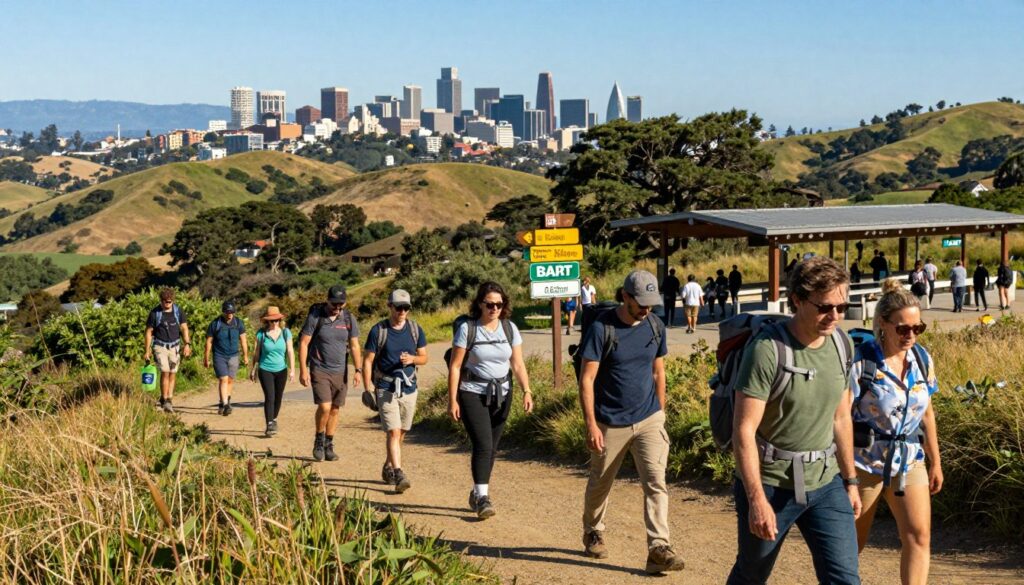
Marin County’s landscapes are a truly spectacular transit journey. Muni and Golden Gate Transit buses take you across the Golden Gate Bridge. Each destination has its own charm.
| Destination | Primary Transit Access | Key Detail | Travel Tip |
|---|---|---|---|
| Muir Woods National Monument | Golden Gate Transit Route 30 to Sausalito, then Muir Woods Shuttle | Hundreds of acres of towering coastal redwoods. | Shuttle requires a reservation; the $17 bus + $3 shuttle is a fantastic value. |
| Angel Island State Park | Ferry from San Francisco’s Pier 41 | A 30-minute ferry ride to a historic island with 360° views. | Pack a picnic and bikes can be brought on the ferry to explore the perimeter road. |
| Mount Tamalpais State Park | West Marin Stagecoach (connecting from GGT) or ride-share from Sausalito | Over 60 miles of trails across the “Sleeping Lady” mountain. | This is a prime destination for ambitious hikers seeking panoramic summit views. |
| Point Reyes National Seashore | West Marin Stagecoach Route 68 from San Rafael | Vast seashore with beaches, bluffs, and tule elk. | A longer journey (2h 40min, ~$10) but an unforgettable wilderness experience. |
Muir Woods is a classic trip. A short bus ride to Sausalito, then a shuttle to ancient giants. Angel Island’s ferry is a half-day wonder.
Mount Tamalpais offers extensive trails with careful planning. Point Reyes is wonderfully within reach by bus. We’re grateful for the region’s transit vision.
Central Coast/Statewide: Amtrak/Thruway to coastal hikes and bike routes
Amtrak’s legendary routes turn a simple train ride into a gateway for coastal exploration and hiking. The Central Coast of California is full of rugged cliffs, rolling vineyards, and iconic state parks. We’re excited to share how the national rail network, combined with local connectors, unlocks these wonders without a car.
This region is the perfect mix of long-distance travel and local discovery. From the dramatic Big Sur coastline to the charming missions of Santa Barbara, your adventure starts the moment you step aboard.
Amtrak’s Coast Starlight and Pacific Surfliner: Scenic Rail to Adventure
Two iconic trains offer a moving viewpoint to the Pacific. The Coast Starlight goes from Seattle to Los Angeles, giving you a full-day view of California’s beauty. The part between San Luis Obispo and Santa Barbara is famously stunning, with tracks hugging ocean bluffs for miles.
The Pacific Surfliner connects San Diego to San Luis Obispo, perfect for a weekend escape. Both lines have spacious seating, large windows, and cafe cars, making the journey part of the destination.
To help you choose your route, here’s a quick comparison:
| Route | Key California Stops | Scenic Highlight | Perfect For |
|---|---|---|---|
| Coast Starlight | Emeryville, Oakland, San Jose, San Luis Obispo, Santa Barbara | Ocean cliffs between San Luis Obispo & Santa Barbara | Multi-day, epic coastal journey |
| Pacific Surfliner | San Diego, Los Angeles, Santa Barbara, San Luis Obispo | Sunset views over the Pacific from Ventura to Carpinteria | Flexible day trips or weekend getaways |
Getting off in cities like San Luis Obispo or Santa Barbara puts you close to amazing amtrak california hikes. Local transit systems are ready to take you from the station to the trailhead.
Amtrak’s Thruway bus service is key for reaching places beyond the rail line. These buses meet trains at major stations, connecting you to the wilderness.
For a classic Big Sur adventure, take the Coast Starlight to Salinas or the Pacific Surfliner to San Luis Obispo. Then, an Amtrak Thruway bus takes you to Monterey. In Monterey, hop on the Monterey-Salinas Transit Bus 22 for a stunning ride along Highway 1 into Big Sur.
In Santa Barbara, the train station is a hub. Local MTD buses can take you to foothill trailheads for hikes in the Santa Ynez Mountains. Or, use the downtown electric shuttle to explore the Urban Wine Trail—a perfect post-hike activity.
We are deeply grateful for this integrated network. It makes exploring the majestic Central Coast easy, turning logistics into part of the fun. Planning your amtrak california hikes is an exciting first step toward an unforgettable car-free journey.
SoCal Routes: LA Metro/Metrolink to San Gabriels and beaches; San Diego MTS/Coaster to North County trails
Forget about traffic—LA Metro and Metrolink trains make getting to the San Gabriel peaks easy. Southern California’s wide area is balanced by its growing train and bus network. We’re excited to show you how to get from the city to beautiful natural spots without a car.
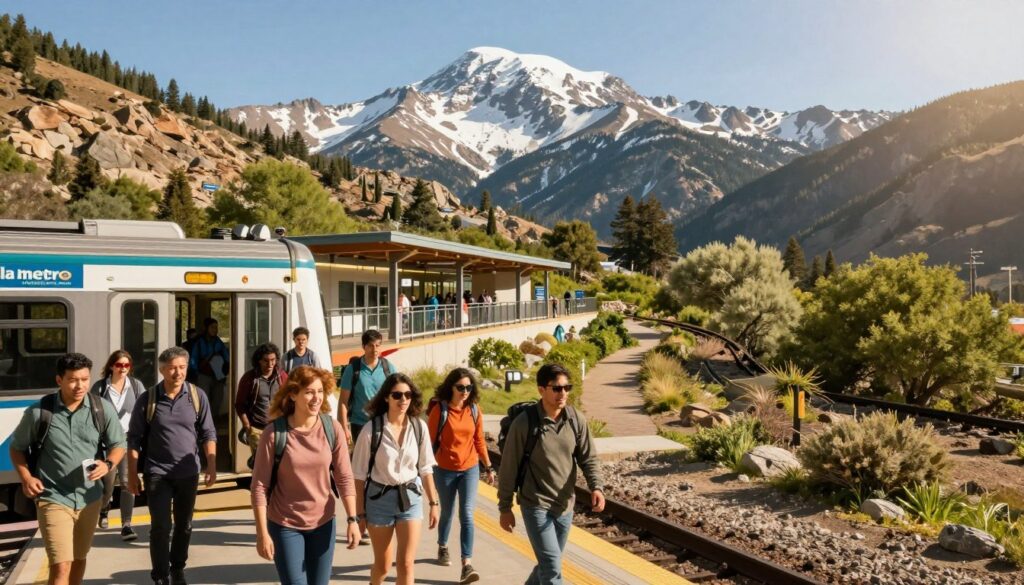
LA Metro and Metrolink: From Urban Core to Mountain Trails
The LA Metro Rail and bus system is your first step to exploring the region. For a beach day, head to Point Dume in Malibu. You’ll find amazing bluffs and tide pools.
Start on the Expo Line. Ride it to Santa Monica. Then, take the LADOT Transit 534 bus to the Pacific Coast Highway.
For a la metro to mountains adventure, go east to the San Gabriels. Several Metro bus lines lead to trailheads. This makes planning a day hike easy.
For alpine air, Metrolink opens up more options. The Antelope Valley Line takes you to the high desert. You can even go to Mammoth Lakes.
Start at Los Angeles Union Station. Take the Metrolink to Lancaster. Then, the Eastern Sierra Transit bus takes you into the Sierra Nevada.
San Diego’s MTS and Coaster: Beaches and Inland Adventures
Heading south, San Diego’s transit network is impressive. The MTS Trolley and buses cover the city and inland areas well. For beach fun, a bus or trolley ride to Pacific Beach or Ocean Beach is easy.
The Coaster commuter train is great for exploring North County. It runs along the coast. You can get off near Torrey Pines State Reserve or Carlsbad beaches.
For hiking inland, MTS buses go to trails near Mission Trails Regional Park or Escondido. The connections are smooth. We love how this system supports a car-free lifestyle in SoCal.
Remember, the Amtrak Pacific Surfliner connects these cities. It offers a scenic, three-hour coastal trip from Los Angeles to San Diego.
| Transit System | Key Route/Destination | Sample Adventure | Approximate One-Way Fare |
|---|---|---|---|
| LA Metro (Expo Line + Bus) | Santa Monica to Point Dume, Malibu | Coastal bluff hiking & tidepooling | $4.25 combined |
| Metrolink + Connecting Bus | LA Union Station to Mammoth Lakes | Skiing, hiking, & alpine lakes | $47.50 combined |
| San Diego MTS Trolley | Green Line to Mission Trails | Hiking Cowles Mountain | $2.50 |
| San Diego Coaster | Downtown to Solana Beach | Beach day & Cedros Design District | $5.00 |
This table shows some amazing car-free journeys you can take. Each trip is affordable and offers stunning views. We’re thankful for these networks that make exploring easy for everyone.
Planning your la metro to mountains trip or coastal getaway is now easier. Always check the latest schedules and connection times before you go. Your next Southern California adventure is just a tap away!
Park Shuttle Systems: Yosemite/Sequoia/Tahoe examples
Traveling without a car in California is rewarding, thanks to the park shuttle systems. These systems are more than buses. They protect nature, reduce traffic, and make exploring easy. They’re a great example of sustainable travel.
Yosemite’s YARTS: Year-Round Access to the Valley
The Yosemite Area Regional Transportation System (YARTS) changes the game for Yosemite. It offers year-round access from several cities. You can ride an Amtrak or Greyhound to Merced and then take YARTS to Yosemite Valley.
The cost is about $34 one-way, which also gets you into the park. Inside, free shuttles take you to amazing spots. This way, you can enjoy the views without worrying about parking. It’s a profoundly rewarding experience.
Seasonal Shuttles in Sequoia, Kings Canyon, and Lake Tahoe
Sequoia and Kings Canyon National Parks have great summer shuttles. They go to places like the Giant Forest and General Sherman Tree. These buses help keep the ancient trees safe from too many cars.
The Lake Tahoe area has its own shuttle network. It’s free or low-cost and connects towns, ski resorts, and trails. It helps keep the lake clean. Mammoth Lakes also has free daily trolleys.
Choosing park shuttles is a smart move. It helps nature and makes your trip more enjoyable. These shuttles show how we can protect our environment and have fun adventures.
Weekend Itineraries (SF Bay, LA/OC, San Diego) with Hike, Surf, and MTB Options
Your ultimate guide to car-free weekends is here! We’re excited to share our favorite multi-activity itineraries accessible by transit in SF, LA, and San Diego. These plans blend hiking, surfing, and mountain biking into seamless two-day escapes. They prove adventure is a bus, train, or ferry ride away.
Each itinerary uses reliable public transit. We include key connections and timing tips. You can enjoy nature without the stress of driving and parking.
San Francisco Bay Area: Redwoods, Bluffs, and Islands
The Bay Area’s network is a gateway to stunning diversity. You can journey from urban BART stations to serene forests in under an hour. The key is linking different transit modes.
Ferries add a scenic element to your trip. They connect to islands and coastal towns perfect for exploration.
Sample Two-Day Itinerary
Day 1: East Bay Hills & Island Escape
- Morning: Take BART to Rockridge Station. Walk or use a rideshare to the Redwood Regional Park trailhead in Oakland. Enjoy a 3-mile hike among towering redwoods. This is a classic example of easy transit to trailheads.
- Afternoon: Return to BART and go to San Francisco’s Ferry Building. Catch a Golden Gate Ferry to Angel Island State Park. Hike or bike the perimeter trail for panoramic views.
- Evening: Ferry back to the city for a well-earned meal.
Day 2: Marin Headlands & Muir Woods
- Morning: Board a Golden Gate Transit bus (Route 130) from San Francisco to the Marin City Hub. Transfer to the Marin Transit Route 66 shuttle (seasonal) directly to Muir Woods National Monument. This is a premier bart hiking connection.
- Afternoon: After exploring the redwoods, hike up the Dipsea Trail to the slopes of Mount Tamalpais for breathtaking coastal vistas.
- Option: For mountain bikers, bring your bike on the bus and explore the fire roads on Mount Tam after your hike.
Los Angeles & Orange County: Beaches, Mountains, and Urban Oases
LA’s vast metro system reaches surprising natural escapes. From downtown, you can be at a beach or mountain trail quickly. The key is planning around shuttle connections for the final mile.
This region perfectly blends surf and summit adventures. You don’t need a car to experience both.
Sample Two-Day Itinerary
Day 1: Santa Monica Mountains & Surf
- Morning: Take the LA Metro Expo Line to its terminus at Downtown Santa Monica. Connect to Metro Bus 534 heading north into Topanga State Park. Disembark for a hike on the Eagle Rock Loop.
- Afternoon: Return to Santa Monica. Rent a surfboard or simply enjoy the iconic pier and beach. This trip showcases versatile la metro to mountains and coast access.
Day 2: San Gabriel Foothills Challenge
- Morning: Ride Metrolink‘s San Bernardino Line from Union Station to the Arcadia Station. From here, use a rideshare or bike to the Mt. Wilson Trail head in Sierra Madre. This is a strenuous but rewarding hike with epic city views.
- Afternoon: Return via Metrolink. Consider stopping in Pasadena for a post-hike refreshment before heading back.
San Diego County: Coastal Bluffs and Desert Foothills
San Diego’s coast-hugging trains and extensive bus routes offer laid-back adventures. The climate allows for year-round exploration. You can find everything from coastal bluffs to arid foothills.
The Coaster train provides some of the most scenic transit to trailheads in Southern California.
Sample Two-Day Itinerary
Day 1: Carlsbad Coast & Surf
- Morning: Board the Coaster train from downtown San Diego and ride north to the Carlsbad Village Station. It’s a short walk to Tamarack Surf Beach. Rent a board and catch some waves or stroll along the beach.
- Afternoon: Hike the scenic Carlsbad Bluff Trail for stunning ocean views before catching the Coaster back south.
Day 2: Torrey Pines & Mission Trails
- Morning: Take San Diego MTS Bus 101 to the Torrey Pines State Natural Reserve. Hike the razor-edged bluffs and spot rare pine trees.
- Afternoon: For a different landscape, take MTS Bus 815 to the Mission Trails Regional Park visitor center. Hike the Cowles Mountain trail for a panoramic view of the county, from ocean to desert.
| Region | Primary Transit Hubs | Core Activities | Ideal For |
|---|---|---|---|
| SF Bay Area | BART, Golden Gate Transit & Ferry | Redwood Hiking, Island Biking, Coastal Views | Forest lovers and those wanting diverse landscapes. |
| LA & Orange County | LA Metro, Metrolink | Beach Surfing, Mountain Hiking, Urban Exploration | Adventurers seeking a surf-and-summit challenge. |
| San Diego County | Coaster Train, San Diego MTS | Coastal Bluff Hikes, Beach Days, Foothill Treks | Sun-seekers and relaxed coastal explorers. |
These itineraries are just a starting point. We encourage you to mix and match days based on your interests. With a little planning, your next great California weekend awaits at the transit stop.
Packing and Safety for Transit Adventures
Having the right gear and taking a few precautions is key for exploring California without a car. Being well-prepared lets you enjoy the views, not worry about the details. This makes every trip more enjoyable.
Your comfort and safety are important. A lightweight, comfy backpack is your mobile home. It carries all you need for a great day outdoors.
Packing smart is essential. Here are the must-haves for any transit adventure:
Hydration & Fuel: Carry enough water and snacks to keep you going.
Sun & Weather Protection: Don’t forget sunscreen, a hat, and clothes for different weather.
Navigation & Communication: Bring a phone charger and maps you can use offline.
Health & Safety: Pack a basic first-aid kit and any medicines you need.
Plan your safety before you go. Travel with a buddy and tell someone your plans. Offline maps help you stay on track, even without internet.
Be mindful of your surroundings at bus stops and trailheads. Keep your valuables safe and out of sight. Remember, places like the Golden Gate Bridge are prone to theft. Never leave your bags alone.
If you’re biking and using transit, a strong U-lock is as important as your helmet. Always park your bike in a well-lit area. When biking on a bus or train, make sure your bike is secure before you sit down.
Thinking ahead gives you confidence. This transit with a bike plan lets you explore freely while feeling secure. For more tips, check out our guide on outdoor safety essentials for exploring California. We’re here to help you get ready for anything.
Tips for Boards, Skis, and Bikes on Transit
Don’t let carrying your gear stop you from exploring new places. Your adventure equipment can ride the bus or train right with you. With a few smart tips and basic transit etiquette, moving your gear is easy and stress-free.
For bikes, the system is clear. Most regional buses have racks at the front for two bikes. Just load your bike yourself—it’s quick. On trains, look for bike cars or storage areas. Check online before you go for the latest policies.
Here’s a quick guide to common policies across different transit types in California:
| Transit Mode | Bike Policy | Ski/Snowboard Policy | Surfboard/Large Gear |
|---|---|---|---|
| Regional Buses | Front-mounted racks for 2 bikes; first-come, first-served. | Usually allowed as baggage if space permits; use a protective bag. | Allowed off-peak; driver discretion; board bag is essential. |
| Commuter Trains (Caltrain, Metrolink) | Designated bike cars or areas; may require a free bike pass. | Allowed in baggage areas; often no extra fee in winter. | Can be challenging; best on weekends or very off-peak hours. |
| Amtrak | Roll-on service on many CA routes; some require advance check-in. | Checked baggage (where offered); fees and seasonal rules apply. | Limited; call ahead. Best suited for checked baggage on certain routes. |
| Mountain Town Shuttles (e.g., Mammoth) | Racks or interior storage common. | Explicitly welcomed; designed for winter sports gear. | Generally not applicable for these locations. |
Planning your amtrak california hikes or ski trips? Amtrak is a great choice. Many routes let you check skis and snowboards for a fee. Some even offer roll-on bike service, making trips easy.
Surfboards and large items need a bit more planning. Travel during off-peak hours to avoid crowds. Always use a board bag to protect your gear and others. Be kind and communicate with the driver or conductor.
Many transit systems are built for adventurers. Places like Mammoth Lakes have free trolleys for winter sports gear. They expect skis and snowboards, so you can ride with confidence.
With simple planning and etiquette, your gear becomes part of the journey. We’re excited to see you bring your boards, skis, and bikes. This unlocks amazing amtrak california hikes and coastal adventures car-free.
Resources, Passes, FAQs
We believe having the right tools makes your car-free California adventure seamless. Let’s explore some key resources, passes, and answers to common questions.
Essential resources include transit agency apps like 511 SF Bay, LA Metro, and SDMTS. Check trail conditions on AllTrails or the CA State Parks website. Advocacy groups like TransForm offer great planning tips.
For passes, regional cards simplify travel. The Clipper Card works across the Bay Area. LA’s TAP Card and San Diego’s Pronto Card are equally useful. Consider Amtrak’s California Rail Pass for multi-day scenic journeys. A National Parks pass is valuable for frequent visitors.
Many park shuttles are free, but some require a small fee. The Muir Woods shuttle, for example, needs a reservation and payment. Always check the specific shuttle’s website before you go.
Pet policies vary. Service animals are always allowed. For other pets, a secure carrier is often required on buses and trains.
Missing the last bus is a real concern. We advise knowing schedules in advance. Have a backup plan like a rideshare app ready. Your adventure awaits, and we are excited for you to explore California sustainably.