

California’s Pacific coastline is experiencing an unusual marine transformation in October 2026. Tropical fish, whale sharks, hammerhead sharks, manta rays, and sea turtles have appeared in waters where some of these species are rarely observed. At the same time, scientists are recording exceptionally high ocean temperatures and raising concerns about kelp forests, marine food supplies, and coastal conditions.
On October 19, a sea-surface temperature of 74.5°F was recorded at Scripps Pier in San Diego, the highest reading for that late in the year in more than a century of records, according to the San Francisco Chronicle. Temperatures along much of the California coast were running 5 to 9 degrees Fahrenheit above normal on October 21. Researchers say the warming reflects the influence of a strong El Niño developing on top of an existing marine heat wave that began in 2025. (San Francisco Chronicle)
The changes are already visible beyond scientific monitoring stations. Anglers, beachgoers, and marine researchers have reported unusual species from Los Angeles County to Orange County and San Diego. In September, two olive ridley sea turtles nested on Orange County beaches, marking the first documented sea turtle nesting on the U.S. West Coast.
These discoveries are drawing attention from wildlife enthusiasts and tourism businesses, but the story has a more complicated side. Warmer water can create favorable conditions for some mobile tropical species while disrupting habitats and food sources that California’s native marine wildlife depends on.
A Record-Warm Pacific Is Changing California’s Coastal Waters
The current warming reflects a combination of factors rather than a single weather event. El Niño is a naturally occurring climate pattern associated with unusually warm surface waters in the central and eastern tropical Pacific. It influences ocean circulation and atmospheric conditions, often changing temperatures and weather patterns far from the equator.
California is also experiencing the effects of a marine heat wave that developed before the current El Niño strengthened. According to researchers at UC San Diego’s Scripps Institution of Oceanography, the two events are adding to the heat already present in the Pacific.
A report published by UC San Diego on October 20 said the National Oceanic and Atmospheric Administration had announced an 83% probability of a strong-to-very-strong El Niño during January through March 2027. Scientists are monitoring how the event develops because its eventual strength and regional effects will influence California’s winter weather and marine ecosystems. (UC San Diego: 10 Things to Know About This Very Strong El Niño)
One important process involves a coastally trapped Kelvin wave, which can push warmer water along the coast and deepen the boundary between warm surface water and colder water below. When that boundary moves deeper, winds and currents may become less effective at bringing cold, nutrient-rich water to the surface.
That matters in California, where seasonal upwelling helps support plankton, small fish, seabirds, marine mammals, and larger predators. Changes in water temperature and nutrient availability can affect the entire food web, even when the ocean looks clear and inviting from shore.
Tropical Fish And Sharks Are Appearing In Unexpected Places
The warmer Pacific has brought several notable visitors to Southern California. Reports published in October identified whale sharks, hammerhead sharks, manta rays, mahi-mahi, wahoo, and other warm-water fish in regional waters.
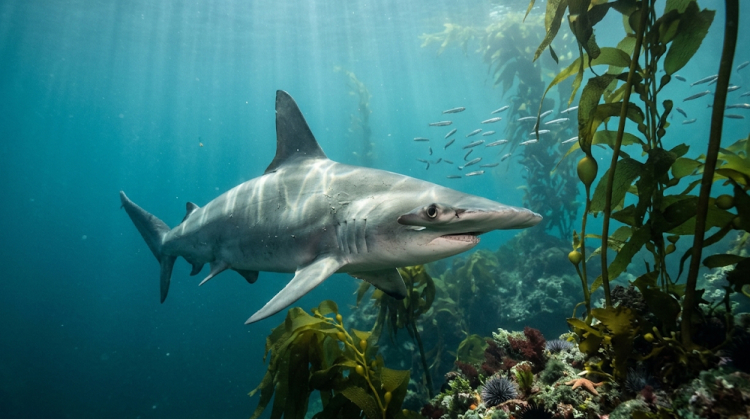
The Natural History Museum of Los Angeles County has been tracking unusual arrivals. In an announcement published September 16, the museum reported hammerhead sharks off Los Angeles, Orange, and Ventura counties, a whale shark near Malibu, and mahi-mahi near the Southern Channel Islands.
Another discovery involved a longfin bigeye fish, scientifically known as Cookeolus japonicus. Local angler Julius Cardines caught the fish off Venice Fishing Pier in Los Angeles. The specimen entered the museum’s ichthyology collection, giving researchers a documented example of a species not previously recorded in California waters. (Natural History Museum of Los Angeles County)
The sightings do not mean that every tropical species is permanently moving north. Some animals may follow warmer water temporarily, while others appear during particular ocean conditions and disappear when temperatures change. Researchers must distinguish unusual individual sightings from evidence of a lasting shift in species distribution.
Whale sharks, the largest fish on Earth, are filter feeders that consume small organisms such as plankton. Hammerhead sharks are predators with different feeding habits and ecological roles. Their appearance in California waters attracts attention, but the presence of these animals does not automatically mean that local waters are becoming a permanent tropical habitat.
Scientists are also watching how the unusual conditions affect animals that already depend on California’s coastal ecosystems. The effects will vary by species, location, food availability, and how long the warmer conditions persist.
Orange County’s Sea Turtle Nests Mark A Historic First
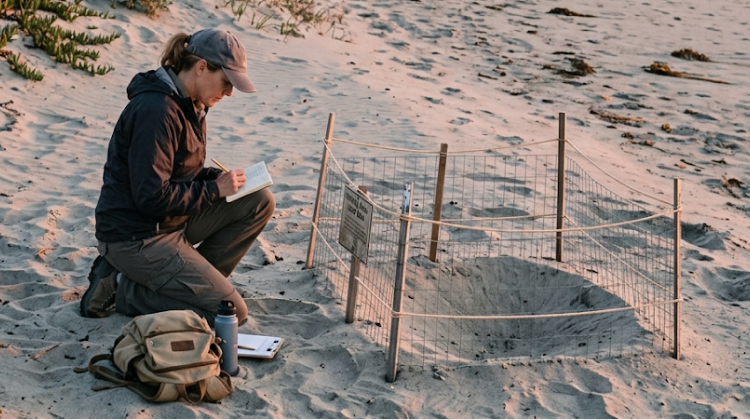
Two olive ridley sea turtle nests discovered in September 2026 represent one of the most remarkable developments associated with California’s warm-water period.
According to Reuters reporting published October 17, the first nest was discovered by a beachgoer in Seal Beach on September 16. Lifeguards found the second in neighboring Huntington Beach three days later. The reports marked the first recorded sea turtle nesting on the U.S. West Coast, according to the National Oceanic and Atmospheric Administration.
Olive ridley turtles are generally associated with tropical and subtropical waters. Their arrival and nesting in Southern California raise questions about how ocean temperatures, currents, and other environmental conditions may influence where marine animals travel and reproduce.
A nesting event, however, does not by itself prove that California has become a new regular breeding area for the species. Scientists will need further observations to determine whether these were isolated events or the beginning of a broader change.
The discovery also highlights why documentation matters. Photographs, location details, and reports to wildlife authorities can help researchers verify unusual sightings and identify changes in species distribution over time.
Beachgoers who encounter a sea turtle, hatchling, or nest should keep their distance and avoid touching or moving the animal. Nesting wildlife can be vulnerable to disturbance, and trained responders are better equipped to determine whether intervention is necessary.
Readers interested in the wider scientific context can consult NOAA Fisheries for information about sea turtle biology, conservation, and reporting wildlife encounters.
Warm Water Is Creating New Opportunities For Sportfishing
The unusual marine conditions have also affected recreational fishing along the Southern California coast. Sportfishing operators have reported increased catches of warm-water species, including yellowfin tuna and mahi-mahi.
Reuters reported on October 17 that Dana Wharf Sportfishing & Whale Watching, based in Dana Point, had caught approximately 5,000 yellowfin tuna during 2026, compared with only two the previous year. Co-owner Donna Kalez also described catches of wahoo and dorado, another name for mahi-mahi.
The difference is striking, but it should not be treated as proof that all fishing has improved. Catch numbers depend on ocean conditions, the number of fishing trips, where boats operate, and how fish are distributed offshore. A productive season for some species can coincide with difficulties for others.
The Los Angeles Times reported on October 13 that Dana Wharf boats had recorded more than 5,800 yellowfin tuna and over 150 mahi-mahi during the year, while noting that total catches remained below some expectations associated with the current El Niño. The article also described a reduction in angler trips compared with 2015, another period of unusually warm ocean conditions. (Los Angeles Times)
For visitors, the changing conditions may create unusual opportunities to see marine wildlife or book a fishing excursion. But sightings and catches remain unpredictable. Travelers should check with established operators for current conditions and follow local fishing regulations, including species-specific limits and reporting requirements.
A fish that appears in California during an unusual warm-water event may not remain abundant after the ocean cools. Tourism and fishing businesses therefore need to avoid treating a temporary ecological shift as a permanent change in what visitors can expect.
Kelp Forests And Seabirds Face A Different Side Of Ocean Warming
While some mobile animals may benefit from warmer water, California’s cold-water ecosystems face growing pressure. Kelp forests are particularly vulnerable because giant kelp and related species thrive in conditions that provide suitable temperatures and nutrients.
Jennifer Smith, a marine biology professor at UC San Diego, told the San Francisco Chronicle that unusually warm water was reaching the seafloor off Southern California. Prolonged exposure to those temperatures can damage kelp, which provides shelter and feeding habitat for fish, invertebrates, and other marine organisms.
Kelp forests are more than scenic underwater landscapes. They support biodiversity, help sustain fisheries, and provide habitat for animals at multiple levels of the food web. When kelp declines, the effects can spread beyond the plants themselves.
Warm water can also reduce the supply of nutrients that support plankton. These microscopic organisms form the foundation of many marine food chains. When their availability changes, seabirds and other animals may have to travel farther to find food.
The San Francisco Chronicle reported on October 22 that hundreds of seabirds were dying from starvation along Northern California’s coast, citing the nonprofit International Bird Rescue. Researchers are monitoring the relationship between changing ocean conditions and food shortages, although individual wildlife events can have several contributing factors. (International Bird Rescue)
These impacts underline an important distinction: more sightings of charismatic tropical animals do not necessarily indicate a healthier ocean. A warmer sea may provide temporary advantages for certain fish while creating serious problems for species that rely on cold, nutrient-rich coastal waters.
What Beachgoers And Wildlife Watchers Should Know
People visiting California’s beaches and coastal parks may have a better chance of encountering unusual marine life during this period, but they should not approach wildlife or assume that every rare animal is safe to handle.
The yellow-bellied sea snake is one example. Reuters reported that a snake believed to belong to this venomous species came ashore in Orange County in September. William Ludt, associate curator of ichthyology at the Natural History Museum of Los Angeles County, told Reuters that only six or seven sightings of the species had been confirmed in California.
If a sea snake or unfamiliar marine animal appears on a beach, keep a safe distance and contact local lifeguards, wildlife authorities, or park staff. Do not touch, pick up, or attempt to return a potentially dangerous animal to the water.
Visitors should also remember that the warm-water event is occurring alongside elevated sea levels, large waves, and coastal erosion. These hazards can affect beach access even when the weather appears calm. Check local advisories before swimming, snorkeling, diving, or walking along exposed rocks.
For a broader look at places to explore responsibly, readers can visit the California destinations guide. Wildlife tours and fishing trips should be chosen with attention to operator safety practices and respect for animals and protected habitats.
What Could Happen To California’s Marine Life During Winter?
Scientists expect unusual ocean conditions to continue as the current El Niño develops, but the timing and extent of ecological changes remain uncertain. The Natural History Museum of Los Angeles County has encouraged residents to report rare marine sightings because each verified observation can help researchers understand how species respond to changing conditions.
The current event may bring additional tropical fish, sharks, rays, and sea turtles into California waters. It may also contribute to higher coastal water levels and challenging conditions for beaches and marine habitats. The exact effects will depend on how the ocean temperatures, currents, storms, and food supplies evolve over the coming months.
The long-term outlook is not the same for every species. Highly mobile animals may move to find suitable conditions, while kelp forests and animals that depend on particular habitats may struggle to adapt quickly. Researchers will need continued observations to determine which changes are temporary and which may persist.
For residents and travelers, the most useful response is to stay curious without disturbing wildlife, follow coastal safety notices, and support responsible marine tourism. Reporting unusual sightings to qualified researchers can also help build a clearer picture of what is happening beneath the surface.
California’s record-warm Pacific is producing remarkable encounters, from the longfin bigeye found near Venice Fishing Pier to the olive ridley nests in Seal Beach and Huntington Beach. But the larger story is about a marine ecosystem in transition. The same warm water that brings rare visitors closer to shore can place familiar coastal habitats under strain, making scientific monitoring and conservation more important as winter approaches.