

Orange County’s beaches are facing a difficult stretch of coastal erosion, flooding and infrastructure damage after powerful surf and elevated tides associated with Tropical Storm Rachel and Kelvin waves battered Southern California’s shoreline in October 2026. Crystal Cove State Park, Doheny State Beach and San Onofre State Beach have all experienced storm-related impacts, prompting emergency cleanup, repairs and restrictions on public access.
In an October 15 update, California State Parks confirmed that recovery work was continuing at all three destinations. Some areas remained closed because of unstable bluffs, damaged infrastructure, standing water or construction activity, while other sections continued to welcome visitors with restrictions. The announcement followed an October 9 emergency closure notice for portions of Crystal Cove and San Onofre. California State Parks’ official storm recovery update provides the latest detailed account of the response.
The damage matters beyond the immediate cleanup. These beaches support surfing, walking, camping, wildlife viewing and coastal tourism, while their roads, parking areas, restrooms and historic structures depend on infrastructure vulnerable to wave action. For visitors planning fall outings, checking conditions before departure is now essential.
Crystal Cove State Park Faces Erosion and Historic District Closures
Crystal Cove State Park, between Newport Beach and Laguna Beach, sustained significant coastal erosion, bluff instability, utility damage and impacts to historic facilities during the recent ocean conditions.
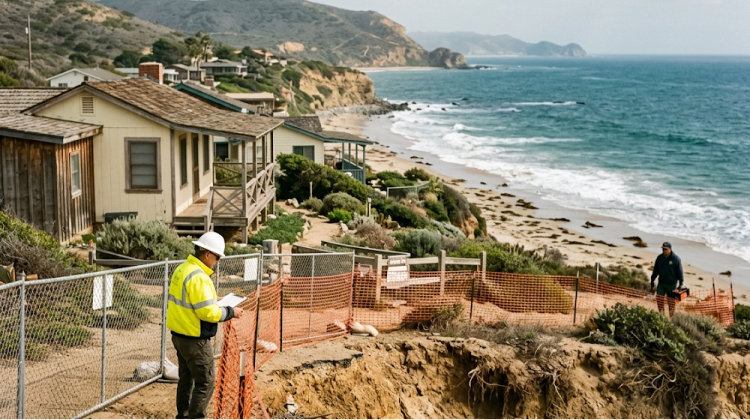
The Historic District beach remains partially closed where erosion, high tides and large surf have created unsafe conditions. Another restricted area is Moro Cove, south of Lifeguard Headquarters, where a significant crack and instability in the coastal bluff prompted a closure until further notice as of the October 15 state update.
The situation has required coordination between California State Parks, Caltrans and coastal regulatory agencies. Caltrans is leading the associated bluff stabilization and repair project, while State Parks is supporting access and coordination for assessments and construction.
The state also reported that the North Beach Cottages in the Historic District reopened on October 14, with reservations resuming for those units. That reopening is an important distinction: the storm did not make the entire park inaccessible, but individual beach sections and facilities may have different operating conditions.
During the initial response announced October 9, officials evacuated occupants of 26 cottages in vulnerable parts of the Historic District and canceled reservations through at least October 13. Crews also installed temporary sand-filled barriers in exposed areas to absorb some wave energy and reduce further damage to facilities and historic resources. Those initial measures reflected concern that additional high surf could worsen existing erosion.
Visitors should avoid closed beach sections and follow signs around unstable bluffs. Even where the sand appears accessible, waves can reach farther inland than expected, and erosion can leave abrupt drop-offs or weaken the ground near the edge of a bluff.
For trip planning, check the official Crystal Cove State Park website before setting out. Conditions may differ between the Historic District, Moro Cove and other day-use areas.
Doheny State Beach Remains Open as Cleanup Continues
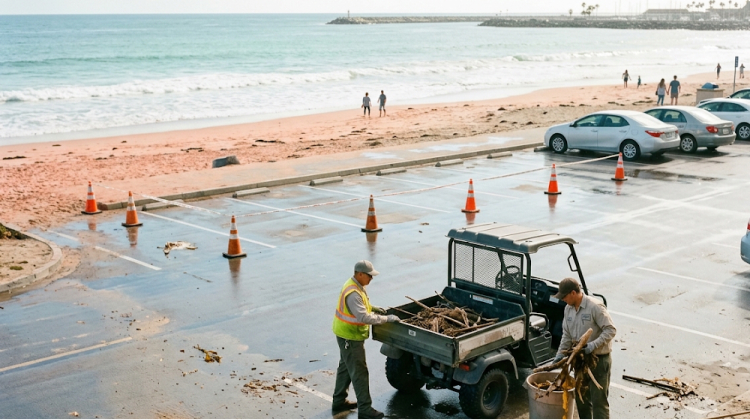
Doheny State Beach in Dana Point has also experienced coastal flooding and storm-related debris. However, California State Parks confirmed on October 15 that the beach remained open to the public while maintenance teams continued cleanup and recovery operations.
The main concern for visitors is access to affected parking areas. Portions of the parking facilities remain temporarily closed or restricted because of standing water and storm impacts. Maintenance staff are removing debris, clearing affected areas and restoring facilities, while crews inspect and service stormwater drainage systems.
These repairs are important because drainage problems can compound coastal flooding. When stormwater systems cannot move runoff efficiently, water may collect in parking areas and other low-lying spaces, limiting access even after the most powerful surf has passed.
The state is also coordinating with local partners to address drainage and cleanup needs. Visitors should expect that parking availability may vary and that some areas could remain occupied by maintenance crews during recovery.
Doheny is a popular destination for day trips, picnics, beach walks and ocean recreation. Its continued operation gives visitors an alternative to closed sections of other coastal parks, but the open status should not be interpreted as a guarantee that every parking area or facility is available.
Before visiting, check the official Doheny State Beach website for current alerts and access information. Follow staff directions and posted restrictions, especially near standing water, debris piles or active maintenance zones.
Travelers considering other coastal stops can also consult the CaliforniaTimes.com California destinations guide to plan alternatives if their preferred beach has limited access.
San Onofre Surf Beach Has Road, Parking and Water Service Problems
At San Onofre State Beach, storm damage has affected Surf Beach, including its access road, parking areas, restroom facilities and water infrastructure. The October 15 state update confirmed that the Surf Beach access road remained closed to vehicle traffic because of damage and unsafe conditions.
Surf Beach remained open to pedestrians, bicyclists and surfers outside designated construction and unsafe areas. However, the small upper paved parking lot offered limited space, and visitors were encouraged to consider alternative transportation. State Parks suggested rideshare drop-offs or parking near Trail 1 and bicycling to Surf Beach where permitted.
The restrictions create practical challenges for people carrying surfboards, beach equipment or supplies for a long visit. Visitors should travel light where possible and confirm the permitted route before arriving. Access can change as crews work on damaged infrastructure.
Another serious issue is the damaged water line serving the beach’s restroom facilities. State Parks reported that crews were working to repair the line and restore essential services. Until water and restroom service are confirmed as available, visitors should plan accordingly and check the official alerts rather than assume facilities are operating normally.
Longer-term recovery will involve more than repairing the immediate damage. State Parks is coordinating with the Surfrider Foundation, San Onofre State Parks Foundation, the Achjachemen Nation, San Onofre Surfing Club and U.S. Marine Corps Base Camp Pendleton, the landowner, to evaluate shoreline protection and restoration strategies. The work includes considering how to protect vulnerable infrastructure and restore additional on-site parking over the coming months.
Visitors can review current alerts through the official San Onofre State Beach website. The page also matters for another reason: park conditions can change independently of the broader storm-recovery announcement, and separate restrictions may affect particular areas.
Why Southern California’s Coastal Infrastructure Is Vulnerable
The damage at Crystal Cove, Doheny and San Onofre reflects a wider challenge along California’s coast: beaches and infrastructure occupy a dynamic shoreline shaped by waves, tides, currents and sediment movement.
Large surf can strip sand from beaches and expose infrastructure that normally remains buried or protected. Elevated tides allow waves to reach farther inland, increasing pressure on access roads, utilities, parking areas and buildings near the water. Where erosion affects a bluff, cracks and unstable slopes can create additional hazards even after waves become smaller.
The October storm impacts also arrive as California communities prepare for the winter season and monitor potential El Niño-related weather patterns. El Niño does not determine the outcome of every coastal storm, but changing ocean and atmospheric conditions can influence wave patterns, rainfall and coastal hazards. Local damage assessments and current forecasts remain more useful for immediate travel decisions than relying on a seasonal outlook alone.
San Clemente offers another example of the infrastructure risks associated with erosion. Recent reporting has highlighted damage to its coastal rail corridor and the cost of maintaining a transportation route close to the ocean. While the challenges at San Clemente differ from those at Orange County’s state beaches, both illustrate how shoreline change can affect public access, transportation and recreation.
The state’s current response combines urgent repairs with planning for longer-term resilience. At Crystal Cove, agencies are assessing stabilization and protective options for the bluff and historic resources. At Doheny, drainage maintenance and debris removal are central to restoring normal operations. At San Onofre, the damaged water line and access limitations underscore the need to protect utilities and parking areas against future wave impacts.
There is no single repair approach that works everywhere. Protective barriers, drainage upgrades, shoreline restoration and infrastructure relocation each have different costs, environmental effects and limitations. Agencies must weigh immediate public safety against the long-term goal of preserving coastal access and natural resources.
How Visitors Can Plan Safer Beach Trips During Recovery
The current restrictions do not mean visitors must avoid every Orange County beach. They do mean that a little preparation can prevent a wasted trip or an encounter with a hazardous area.
Before leaving home, check the official park webpage and recent California State Parks alerts. Confirm whether your intended beach entrance, parking lot, restroom and trail are available. A park can remain open while specific facilities are closed, and access conditions can change as crews assess damage or carry out repairs.
Visitors should also avoid walking across closed sections of beach or approaching cracked bluffs. Coastal erosion can undermine ground without obvious warning, while large waves can surge well beyond the normal waterline. Keep children and pets away from construction zones, debris and unstable slopes, and follow instructions from park employees.
At San Onofre Surf Beach, the access-road closure makes transportation planning particularly important. Check the current rules for bicycle access and permitted parking before relying on an alternative route. At Doheny, allow extra time for parking restrictions. At Crystal Cove, confirm which sections of the Historic District are accessible and whether your planned activity is affected by a closure.
Anyone planning to surf should review ocean conditions and respect restricted areas, even if other portions of a beach remain open. Do not enter the water near active construction, damaged utilities or locations identified by officials as unsafe.
California residents can also prepare for future coastal storms by signing up for local emergency alerts, learning whether their usual routes are vulnerable to flooding and checking weather and surf forecasts before traveling. The state recommends avoiding flooded roads and closed coastal areas rather than attempting to pass through hazardous conditions.
The most reliable source for current access is the park agency itself. California State Parks said reopening timelines would depend on site conditions, damage assessments and completion of necessary repairs, rather than a single regionwide date.
Coastal Recovery Will Shape the Fall Visitor Experience
The recovery at Crystal Cove, Doheny and San Onofre is likely to remain an evolving story as crews restore infrastructure and agencies assess longer-term protection measures. The immediate priorities are clear: keep visitors away from dangerous areas, repair essential services, remove storm debris and reopen access when conditions are safe.
For travelers, the key distinction is between a park that remains open and a particular beach section or facility that is safe to use. Crystal Cove has reopened its North Beach Cottages while maintaining restrictions in other areas. Doheny continues to welcome visitors with parking limitations and cleanup underway. San Onofre Surf Beach remains accessible to some visitors, but vehicle access, parking and water service have been affected by storm damage.
These details may change as repairs progress. Checking official updates on the day of a visit is the best way to plan responsibly and avoid adding pressure to active recovery operations.
Orange County’s beaches remain important places for recreation, local tourism and coastal habitat. Restoring access while protecting people, historic facilities and vulnerable infrastructure will require careful work well beyond the first round of cleanup.