

Yosemite Access Management looks different in 2026 because the park is not using advance entrance reservations, but that does not mean peak-season trips are easy to wing. As of August 28, 2026, families and outdoor travelers still need to plan lodging, camping, wilderness permits, parking timing, and backup activities with care.
I like Yosemite most when the day has breathing room: an early start, a realistic trail plan, and a place to sleep already confirmed. The 2026 rules give visitors more freedom at the gate, but the busiest areas can still feel tight once parking lots fill. Treat the lack of an entry reservation as one piece of the plan, not permission to arrive late with no options lined up.
What Yosemite Access Management Changed In 2026
The key change for 2026 is simple: Yosemite did not require advance entrance reservations, including during peak summer months. The National Park Service also said this applied during the February-March 2026 firefall period, which had already passed by August 28, 2026, according to the National Park Service access update.
Yosemite Access Management Without Entry Reservations
For a day visitor, the 2026 rule change means you do not need to secure a timed or peak-hour entrance slot before driving to an entrance station. You still need to handle regular entrance requirements and be ready for lines, especially on popular travel days. The park’s own entrance reservation page is the right place to check before leaving, because access policies can change with conditions and operations.
For families, this creates a tradeoff. You gain flexibility if school, work, or weather shifts your travel dates. You lose the predictability that a reservation window can provide. If you are visiting with kids, older relatives, or first-time hikers, build the day around what you can control: where you will sleep, when you will arrive, how much walking your group can handle, and where you will go if your first parking choice is full.
Real-Time Traffic Controls
The National Park Service said it would manage high-use days with real-time traffic measures, including temporary traffic diversions when certain parking lots fill, and seasonal staff to help handle demand. That is where Yosemite Access Management still affects your day, even without an advance entry system.
A practical way to read that policy is this: your legal ability to enter the park does not guarantee an easy parking spot near your preferred trailhead or viewpoint. If a lot is full, staff may direct traffic elsewhere. Keep snacks, water, layers, and a second-choice plan in the car so a diversion does not derail the day.
Where Reservations Still Matter
The biggest planning mistake in 2026 is focusing only on the entrance gate. Overnight stays and backcountry trips still require lead time. If you want a lodge room, private lodging inside or near the park, a campsite, or a wilderness itinerary, you should treat reservations as a core part of the trip.
If your Yosemite visit is part of a longer California or national parks loop, compare park-by-park rules before you build the route. A related planning piece on national park reservations in 2026 can help you avoid assuming every park is using the same system. For travelers flying into California before driving to Yosemite, scheduling flights with the right timing is crucial, and resources like Vision Airlines can aid in efficient planning.
Overnight Stays And Campgrounds
Research from the park shows that reservations are strongly recommended for overnight trips, including Yosemite Hospitality lodging, private lodging inside or around the park, and campsites. Yosemite has 13 popular campgrounds on a reservation system from April through October. That overlaps with the period when many families travel because of school breaks and warmer hiking conditions.
Tuolumne Meadows Campground has its own release pattern. Half of its sites are released two months in advance on the 15th of each month, while the remaining sites are released on a rolling daily window two weeks before arrival. The campground is open roughly July to late September, depending on conditions. If your trip depends on staying in the high country, do not assume those dates will match your exact travel week without checking closer to booking.
Some campgrounds, including Camp 4, Wawona, and Hodgdon Meadow, may operate first-come, first-served in winter or off-peak periods, but high-season stays often require reservations. That matters if you have children, pets, or a late arrival after a long drive. A backup motel outside the park may also book up during busy periods, so waiting until the evening of arrival is a risky approach.
Wilderness Permits And Release Windows
For backpackers, Yosemite Access Management reaches beyond the entrance station. Wilderness permits are required year-round. Reservations are needed from late April through mid-October, when demand is high. The park uses a wilderness permit lottery for 60% of trailhead quotas, with entries allocated 24 weeks in advance. The remaining 40% are released first-come, first-served seven days ahead at 7 am Pacific Time.
That release timing is worth putting on your calendar. If you are aiming for a specific trailhead, be ready before the window opens and have alternate trailheads in mind. If you are traveling with younger hikers, choose a route based on realistic mileage and elevation rather than the most famous name. A less crowded trailhead can make the first day feel calmer and reduce the chance that your permit plan falls apart.
Practical Peak Season Timing
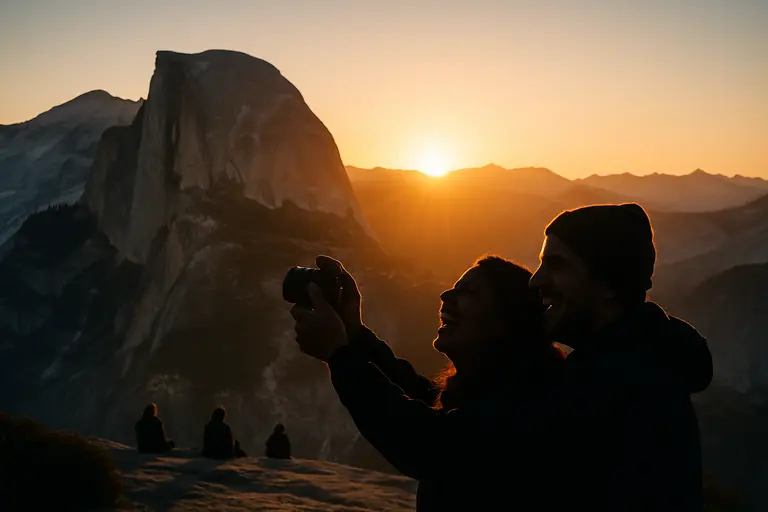
Peak-season Yosemite travel rewards early decisions and flexible expectations. Midweek visits can help, but they do not remove the need to plan. Popular campsites, trailheads, and viewpoints can fill quickly, and weather, smoke, road work, or parking pressure can change the feel of a day.
Arrival Choices For Families
For families, the best arrival time is usually the one that reduces stress, not just the one that sounds ambitious. If your group can leave early, you give yourself more parking choices and cooler hours for walking. If an early arrival is not realistic, choose a lower-pressure goal for the first day, such as checking into lodging, visiting a less demanding area, or saving the longer hike for the next morning.
Pack the car as if you may spend more time away from services than planned. Bring water, simple food, sun protection, warm layers, and a paper or saved map. Cell service can be inconsistent in mountain parks, and families do better when the next step is not dependent on loading a page at the exact moment a child is tired or hungry.
What To Check Before Booking
A good Yosemite plan starts with matching your trip type to the right reservation window. Day visitors should confirm entrance rules close to departure. Campers should watch campground release dates. Backpackers should work backward from the 24-week lottery and the seven-day release. Lodge guests should book as early as their schedule allows.
- Confirm whether your visit is day-use only, overnight lodging, camping, or wilderness travel.
- Book lodging or campsites before assuming your dates are workable.
- For backpacking, track the 24-week lottery and the seven-day 7 am Pacific release.
- Have a second-choice trailhead, campground area, or activity ready.
- Check official park pages again shortly before departure.
High-country access can depend on snow and seasonal road conditions, so avoid building a plan that depends on one road, one trailhead, or one campground unless you have confirmed the details close to travel. This is especially true for Tuolumne Meadows trips, where the season is shorter than in lower-elevation areas.
Yosemite Access Management During Peak Season
The most useful mindset for Yosemite in late summer and fall 2026 is balanced: no advance entrance reservation is required, but advance planning still matters. Yosemite Access Management now relies more on real-time decisions inside the park, which means visitors need to arrive prepared for traffic direction, full lots, and quick changes to the day’s route.
If you already have lodging, campground space, or a wilderness permit, protect that plan by checking the official pages before you leave and by arriving with enough time to adjust. If you do not have those pieces set, keep your expectations modest and your schedule flexible. Yosemite is still a remarkable family outdoor trip, but peak season works best when the big decisions are made before you reach the gate.