

Los Angeles Steps Into Knockout Stage Pressure
Los Angeles takes center stage on July 1, 2026, when the United States faces Bosnia & Herzegovina in the Round of 32 at the World Cup 2026. The match carries weight far beyond a single fixture. It marks the point where group stage rhythm ends and elimination pressure begins, set inside one of the most scrutinized host cities of the tournament.
The United States enters the knockout stage with expectations tied to squad depth, home advantage, and a fan base spread across California and the wider country. Bosnia & Herzegovina arrives with a different profile, shaped by disciplined defensive structure and compact match control that has made them difficult in high-stakes games.
Los Angeles hosting this match adds another layer. The city already holds multiple World Cup fixtures across stadium venues and public fan zones. The Round of 32 placement turns July 1 into a full-scale football day across transportation lines, viewing events, and public gathering points.
Local demand stretches beyond the stadium. Public screenings and organized fan spaces are expected to absorb thousands of fans who will not access match tickets. That includes watch zones near Exposition Park and city-led viewing setups across Los Angeles neighborhoods.
Ticket access for knockout matches remains limited, which increases attention on alternative experiences like the FIFA Fan Festival Los Angeles experience guide that has become a reference point for public participation during the tournament.
The match also ties into broader World Cup scheduling across the United States, where knockout fixtures are spread across major host cities. FIFA outlines the full tournament structure and match calendar through official competition records at FIFA World Cup 2026 schedule details.
United States Tactical Identity and Match Control Pressure
The United States approach in this match centers on tempo control and transition speed. The team’s recent tournament profile shows stronger performance when midfield lines compress space quickly and wide players push into early attacking lanes.
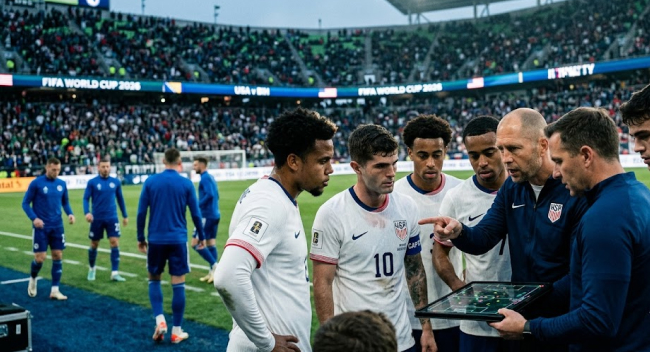
Bosnia & Herzegovina presents a different challenge. Their structure leans toward compact defensive organization and selective forward movement. That style often slows matches into lower scoring margins, where single moments decide outcomes.
Los Angeles conditions add physical factors. July heat, long travel days, and stadium crowd density influence player rotation and match rhythm. Coaches on both sides must manage energy distribution across 90 minutes plus stoppage time.
Below is a simplified breakdown of matchup dynamics shaping expectations:
| Factor | United States | Bosnia & Herzegovina |
|---|---|---|
| Match Tempo | High transition speed | Controlled, slower build |
| Defensive Shape | Press-oriented structure | Compact block system |
| Attack Style | Wide channel penetration | Direct counter chances |
| Match Risk | High possession exposure | Low-margin efficiency |
This type of matchup often produces narrow scorelines in knockout rounds. One early goal shifts tactical balance and forces structural adjustments from both sides.
The match also carries emotional weight for U.S. supporters in California. Large diaspora communities and youth soccer networks across Los Angeles, San Diego, and the Bay Area create strong local engagement. That fan base contributes to stadium atmosphere and public viewing density across the region.
Los Angeles sports venue event guide listings show how major event planning in the city often overlaps with public safety coordination, transit adjustments, and park usage changes during large-scale fixtures like this World Cup match.
Los Angeles Matchday Pressure and City Movement Patterns
Knockout matches reshape movement across Los Angeles in measurable ways. Stadium entry windows, fan zone clustering, and transit peaks converge into a short time span around kickoff.
Public transport systems are expected to carry increased load through Metro Rail lines connecting central Los Angeles to major stadium areas. Road congestion patterns typically peak two to three hours before kickoff and again after full-time.
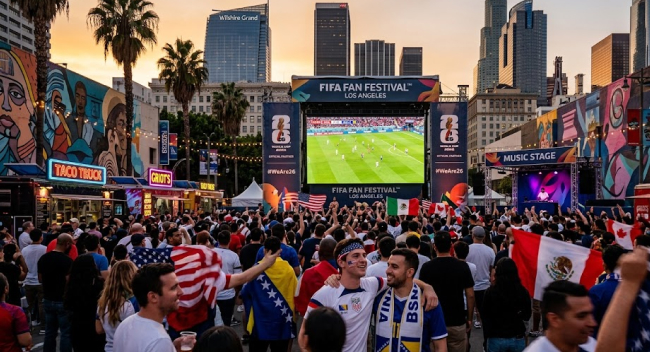
City planners prepare for layered crowd movement. That includes pedestrian corridors between fan zones, transit hubs, and hospitality districts.
The World Cup effect in Los Angeles is not limited to the stadium footprint. It spreads across neighborhoods where fans gather before and after matches. Restaurants, bars, and public plazas function as secondary viewing environments.
LA Metro official service updates provide operational information for extended service schedules and route adjustments during large-scale events.
Fan behavior in knockout matches also changes compared to group stage games. Arrival times shift earlier, dwell time inside fan zones increases, and exit timing spreads out more unevenly after final whistle.
Fan Access, Ticket Scarcity, and Public Viewing Growth
Knockout stage matches bring higher ticket scarcity. Allocation systems and resale pricing reduce access for many local fans. This creates stronger demand for public viewing alternatives across Los Angeles.
Fan zones and festival spaces function as parallel match environments. These spaces combine broadcast screens, music programming, and food vendors into shared viewing areas.
A simplified overview of access options for the match day:
- Stadium attendance through official ticket allocation systems
- Public fan zones with live broadcasts
- Community screenings in parks and civic spaces
- Hospitality venues with match coverage
Each option reflects different levels of cost, access, and crowd density.
The United States match draws additional attention from national media due to knockout stage pressure. That coverage increases visibility across California, where soccer participation has grown steadily across youth leagues and club systems.
Global context also shapes demand. FIFA reports continued expansion of tournament viewership and international travel tied to World Cup events, detailed through official tournament resources at FIFA tournament overview and attendance data.
Travel Flow, Security Planning, and Stadium Environment
Security planning for Los Angeles knockout matches follows layered entry control, bag screening, and perimeter zoning. Stadium access times open several hours before kickoff, creating extended pre-match windows inside controlled areas.
Travel flow around the venue changes significantly on match day. Ride-share congestion zones expand, while parking availability tightens near stadium perimeters. Transit alternatives become the primary recommendation for most attendees.
Fans moving through the city encounter staggered movement patterns. Early arrivals concentrate near stadium gates, while later arrivals cluster around secondary entrances and fan zones.
Weather conditions in Los Angeles during July influence hydration and shade planning. Long outdoor queues create exposure to direct sun, which affects pacing for families and group travel.
Broader California Impact of a Knockout Stage Match
A United States knockout match in Los Angeles carries regional impact beyond the stadium. Hotels, tourism services, transportation networks, and public venues all register increased demand.
Youth soccer programs across California also align viewing events around major matches. Schools and clubs often organize group screenings that turn the match into a shared community moment.
The economic layer extends into hospitality and retail sectors, with match-day spikes in foot traffic across central Los Angeles districts.
California’s World Cup role continues to expand through multiple host cities, but Los Angeles remains the primary focal point due to stadium concentration and public infrastructure capacity.
This match between the United States and Bosnia & Herzegovina sits at the center of that activity, combining sport performance, city logistics, and public participation into a single high-density event window.
Matchday Strategy for California Fans
Fans attending or following the match in Los Angeles adjust plans around timing, mobility, and crowd distribution.
Two common approaches emerge:
- Early arrival at fan zones followed by group viewing transitions
- Direct stadium attendance with structured transit planning
Matchday planning often includes staggered movement rather than single-location stays, especially for families and larger groups.
The knockout stage format adds pressure to every moment. One goal can shift the entire structure of the match, which affects crowd reactions inside stadiums and public viewing areas across the city.
Los Angeles becomes more than a host city on July 1. It functions as a distributed viewing network, where the United States vs Bosnia & Herzegovina match connects stadium energy with public spaces across California’s largest urban center.