

SoFi Stadium’s Global Spotlight Creates A Preview Of Los Angeles Olympic Operations
SoFi Stadium has become one of the clearest examples of how Los Angeles is preparing for the next generation of major sporting events.
When FIFA World Cup 2026 matches arrived in Inglewood, the venue was more than a place where international teams competed. It became a real-world test for how Southern California manages global visitors, transportation demand, security coordination, hospitality operations, and large-scale fan experiences before the Los Angeles 2028 Olympic and Paralympic Games.
The stadium’s success carries significance beyond soccer. Los Angeles is building an Olympic model based on existing venues, regional transportation networks, and multiple entertainment districts rather than constructing an entirely new sports infrastructure system. That approach places additional importance on facilities that already operate at an international level.
SoFi Stadium, located within the Hollywood Park development in Inglewood, represents the type of venue Los Angeles hopes will define its Olympic future: modern, flexible, connected, and capable of hosting audiences from around the world.
The FIFA World Cup experience showed how a stadium can function as a destination rather than only a competition site. Visitors arrived early, explored surrounding areas, used nearby transportation options, and combined matches with broader Southern California experiences.
For California travelers interested in major sporting events, the lessons from SoFi Stadium connect with previous California Times coverage about Los Angeles sports events and how global competitions are changing the way visitors experience the region.
Hollywood Park And SoFi Stadium Represent A New Event District Model
Traditional sports venues often operate independently from their surrounding communities. SoFi Stadium was built with a different vision.
The stadium sits inside Hollywood Park, a 298-acre mixed-use development that combines entertainment, residential areas, retail spaces, public areas, and event infrastructure. This creates a more complete visitor environment where fans can spend time before and after competitions.
The FIFA World Cup highlighted the importance of this approach. International visitors were not simply arriving for a 90-minute match. Many planned entire days around the experience, including restaurants, transportation, sightseeing, and cultural activities.
This model closely matches the direction Los Angeles is taking for the 2028 Olympics. Instead of concentrating everything around one Olympic village and one central area, the Games will use venues throughout the region.
Key locations include:
- SoFi Stadium in Inglewood
- Los Angeles Memorial Coliseum
- Crypto.com Arena
- Intuit Dome
- UCLA facilities
- Long Beach waterfront venues
The success of SoFi Stadium demonstrates how existing destinations can support major international events while creating economic benefits for surrounding communities.
The LA28 Olympic plan emphasizes using existing venues and reducing unnecessary construction, making facilities like SoFi Stadium central to the city’s long-term event strategy.
World Cup Crowd Management Provides Olympic Lessons
Hosting FIFA World Cup matches gave Los Angeles valuable information about managing large international crowds.
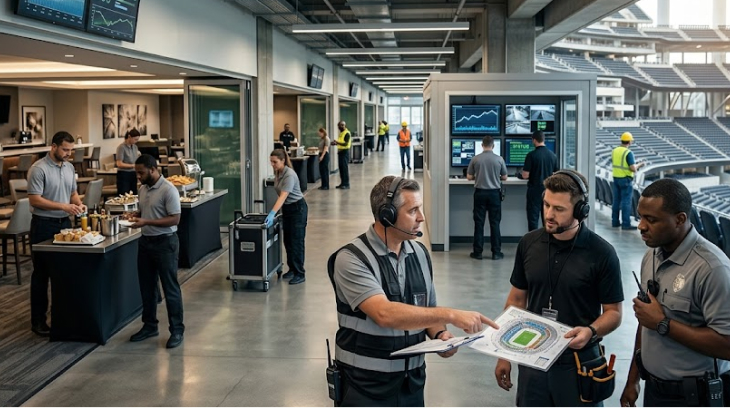
A stadium can have world-class architecture and technology, but the visitor experience depends on dozens of operational details working together:
- Entry procedures
- Security screening
- Transportation access
- Food and beverage services
- Accessibility systems
- Emergency response coordination
World Cup matches allowed organizers to observe how fans moved through the venue, where delays occurred, and how visitors interacted with surrounding areas.
For the Olympics, those lessons become even more important because the event schedule is much larger. Thousands of athletes, officials, media members, and spectators will move between multiple venues every day.
| Operational Area | World Cup Lesson | Olympic Application |
|---|---|---|
| Crowd Flow | Managing international soccer audiences | Supporting daily Olympic spectators |
| Transportation | Coordinating arrivals and departures | Connecting multiple competition sites |
| Security | Testing screening procedures | Protecting larger event operations |
| Hospitality | Supporting global visitors | Improving tourism experiences |
The ability to test these systems before 2028 gives Los Angeles an advantage. Organizers can identify challenges during World Cup operations rather than discovering problems during the Olympic Games.
Inglewood’s Transformation Shows The Economic Impact Of Major Events
SoFi Stadium has played a major role in changing Inglewood’s identity.
The city was historically known for sports because of the former Hollywood Park racetrack and its connection to major entertainment events. The arrival of SoFi Stadium and the surrounding development accelerated a broader economic transformation.
Major events create opportunities for:
- Hotels
- Restaurants
- Transportation services
- Local retailers
- Entertainment businesses
The World Cup increased international attention on Inglewood, introducing visitors to an area that many global fans may not have previously considered part of the Los Angeles experience.
This regional approach is important because Los Angeles tourism is not limited to traditional attractions such as Hollywood or Santa Monica. Major events are expanding visitor activity into areas like Inglewood, Downtown Los Angeles, and the South Bay.
The economic impact of future events will depend on how effectively communities connect visitors with local businesses and experiences.
Transportation Remains The Biggest Test Before Los Angeles 2028
The success of SoFi Stadium operations depends heavily on transportation.
Los Angeles is one of the most car-dependent metropolitan areas in the United States, making event transportation a major challenge. Moving tens of thousands of visitors efficiently requires coordination between roads, public transit, shuttles, and pedestrian systems.
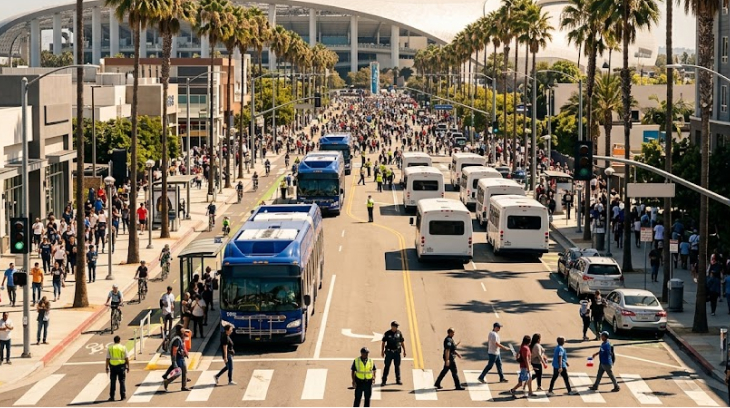
World Cup operations provided a practical test for transportation planning around Inglewood and other venues.
The lessons include:
- Encouraging visitors to avoid driving alone
- Improving transit connections
- Managing arrival and departure periods
- Providing clear travel information
The Olympics will require even greater coordination because competitions will happen throughout the region.
Transportation agencies, including Los Angeles Metro, are using major events as opportunities to improve service planning and demonstrate alternatives to traditional car-based travel.
The Los Angeles Metro expansion projects will play an important role in supporting visitors during the 2028 Games while creating long-term benefits for residents.
Technology And Fan Experience Shape The Future Of Stadium Events
SoFi Stadium represents a new generation of sports venues where technology influences nearly every part of the visitor experience.
The stadium includes advanced features such as:
- Large-scale digital displays
- Mobile ticketing systems
- Cashless operations
- Connected fan services
- Modern hospitality areas
During World Cup matches, these systems helped support international visitors who may have different expectations and travel habits.
The Olympic Games will require even more personalized experiences because visitors will come from hundreds of countries with different languages, accessibility needs, and cultural expectations.
Technology will help organizers provide information, manage crowds, and improve communication during the event.
The challenge is making technology useful without creating barriers. The best systems should make the experience easier rather than adding complexity for visitors.
Sustainability Goals Connect SoFi Stadium With The Olympic Future
Sustainability is another area where SoFi Stadium provides lessons for Los Angeles 2028.
Modern stadium projects are increasingly evaluated by their environmental performance, including energy use, water management, transportation access, and waste reduction.
The Olympic strategy follows a similar approach. Los Angeles has promoted the use of existing facilities as a way to reduce construction impacts and avoid creating unused venues after the Games.
SoFi Stadium demonstrates how a major venue can operate as part of a larger community instead of functioning as an isolated structure.
This approach supports a broader California goal: creating entertainment and tourism experiences that protect resources while supporting economic growth.
SoFi Stadium’s World Cup Legacy Extends Beyond Soccer
The importance of SoFi Stadium’s World Cup success is not only measured by the matches played inside the venue. Its larger value comes from what Los Angeles learned about hosting the world.
The stadium showed that international events require cooperation between venues, transportation systems, neighborhoods, businesses, and public agencies.
Those lessons will influence how Los Angeles approaches the 2028 Olympics.
The city is not simply preparing for another sporting competition. It is testing a model for how a major metropolitan area can welcome millions of visitors while using infrastructure that already exists.
SoFi Stadium has become a symbol of that approach. Its World Cup performance demonstrated that Los Angeles can transform a modern entertainment venue into a global meeting point.
When the Olympic Games arrive, the lessons learned in Inglewood will help shape everything from transportation decisions to visitor experiences. The stadium’s biggest contribution may be proving that the future of major sporting events is not only about the competition itself, but about how an entire region participates.