

Welcome to California’s four-season apocalypse bingo. Our weather forecasts have changed from simple temperature predictions to complex guides for disaster readiness.
We’ll show you how to understand National Weather Service warnings like a pro. You’ll learn to read Caltrans road closure updates before getting stuck in I-80 purgatory.
We’ll help you understand AQI indexes from “hazy” to “literally breathing campfire.” This guide is your key to understanding atmospheric rivers and other weather changes.
Think of this as your decoder ring for modern disaster forecasting. “It might get a bit hot today” doesn’t even begin to describe what’s coming to your backyard.
Wildfires: defensible trip planning, smoke exposure limits, reroutes, closures, campfire rules
Remember when forest fires were just news? Now they’re part of our outdoor adventures. We need to understand fire behavior for our safety.
Defensible Trip Planning: Your Pre-Game Strategy
Smart planning today means thinking about evacuation routes. The Caldor Fire showed us how fast danger zones can form.
Here are key steps:
- Book refundable accommodations near multiple exit routes
- Identify emergency meeting points with travel companions
- Download offline maps – cell service disappears when towers burn
- Pack a “go bag” even for leisure trips
Smoke Exposure Limits: When the Air Turns Toxic
That hazy Instagram filter look? It’s harmful to your lungs. Knowing wildfire smoke AQI readings is key.
AQI above 150 means rethink outdoor plans. Above 200? It’s time to leave. During the Camp Fire, AQI hit 500+ – like smoking 20 packs at once.
Reroutes: The Art of the Emergency Detour
When Red Flag warnings happen, normal routes are closed. Emergency responders focus on evacuation routes.
Apps like Caltrans QuickMap are vital. But, digital tools fail when infrastructure burns. Always carry paper maps as backup.
Closures: When Nature Says “Not Today”
Forest closures are serious. They’re based on fire behavior physics. The 2021 Caldor Fire showed how fast danger can spread.
Check closure notices often. Many national forests use tiered systems to show danger levels.
Campfire Rules: Beyond Smokey Bear’s Basics
Campfire romance needs updating. Many areas ban fires during fire season. Where fires are allowed, new rules apply:
| Fire Type | Permitted Conditions | Safety Requirements |
|---|---|---|
| Open Campfire | Only in designated rings | Water bucket and shovel mandatory |
| Propane Stove | Usually allowed | Must have on/off switch |
| Charcoal Grill | Often prohibited | Never leave unattended |
Your evacuation readiness kit should include N95 masks, eye protection, and a battery-powered radio. Preparation can make all the difference.
Heatwaves: warning signs, route/time adjustments, water logistics
Seeing three-digit temperatures on your weather app before breakfast is unsettling. California heatwaves change how we live outside. They turn your car into a sauna and make staying hydrated a survival task.
Warning signs
Knowing the signs of a heatwave is key. It’s not just about the temperature. The real dangers are more subtle.
Look for sudden temperature rises in late morning. A 20-degree jump before noon is a sign. When the pavement looks like a mirage at 105°F, it’s real heat radiation.
Your body gives clear warnings. Headaches from dehydration? That’s a sign. If sweat stops evaporating, your cooling system is failing. Not feeling thirsty is the worst sign.
Route/time adjustments
Heat requires smart planning. Avoiding the sun is key. It’s not about finding the shortest route.
Travel early in the morning when it’s cooler. Desert roads are best at night. Mountain passes offer relief but watch for thunderstorms.
Freeways get hotter during rush hour. Los Angeles traffic jams become deadly at 110°F. Always know where to find shade or services.
Water logistics
Staying hydrated in heatwaves is a science. Forget the “eight glasses a day” rule. We need more advanced strategies.
Plan for at least one gallon of water per person per day. Double it for exercise. Triple it for Death Valley hikes. Carry extra – evaporation takes 20% before you drink it.
Water storage is vital. Insulated containers are better than plastic bottles. Freeze water overnight for cold drinking water. Your car’s interior can reach 140°F, turning water bottles into hot tea.
| Heatwave Response | Smart Strategy | Rookie Mistake | Risk Level |
|---|---|---|---|
| Highway Travel | Pre-dawn departure | Midday freeway crawl | Extreme |
| Hydration Planning | Insulated containers | Plastic bottles in hot car | Critical |
| Route Selection | Elevation gain routes | Desert basin highways | High |
| Rest Stops | Shaded service stations | Unplanned roadside stops | Moderate-High |
| Vehicle Prep | Coolant system check | Assuming AC will suffice | Essential |
Climate changes make water planning tricky. Last year’s water surplus can turn into drought. Always check water availability at your destination – assumptions are dangerous in heatwaves.
Vegetation from wet years can fuel fires in dry heat. Lush hills from winter rains can become fire fuel. Heatwaves test your comfort and emergency plans.
Storms & Atmospheric Rivers: trail/road hazards, lightning protocol, river crossings, mudslides
California’s weather changes fast, like a teenager’s mood swings. One minute you’re applying sunscreen, the next, you’re building an ark. Atmospheric rivers bring heavy rain, making up for past droughts.
Trail and Road Transformations
That easy hiking path? Now it’s a Class V rapid. Roads turn into urban kayaking courses with great views. Nature’s changes are so quick, it’s like a Hollywood special effects team.
Always check the weather before you go out. What was safe yesterday might be flooded today. Have a backup plan.
Lightning Protocol
When you hear thunder, go inside or find a safe spot. Californians see lightning rarely, so we treat it like an alien invasion.
Remember the 30-30 rule: Count seconds between lightning and thunder. If it’s less than 30, seek shelter fast. Wait 30 minutes after the last thunder before going back outside.
River Crossings
That small creek from August is now a dangerous river by January. Water moving at 6 mph can knock you down. At 10 mph, it can move boulders.
If you must cross, take off your backpack. Use a stick for balance. Face upstream and move sideways. Never cross alone.
Mudslide Awareness
The 2018 Montecito tragedy showed how wildfires and heavy rain can cause destruction. It’s like climate whiplash, with fires and floods in the same area.
Watch for these warning signs:
- New cracks in soil or pavement
- Unusual water flow patterns
- Rumbling sounds from hillsides
- Sudden changes in stream water clarity
| Hazard Type | Warning Signs | Immediate Actions |
|---|---|---|
| Flash Flooding | Rising water levels, debris movement | Seek higher ground immediately |
| Lightning Storm | Less than 30 sec flash-to-bang | Crouch in low area, avoid trees |
| Mudslide Risk | Soil cracks, rumbling sounds | Evacuate perpendicular to flow |
Good storm safety means respecting nature’s power and enjoying the show. Sometimes the best adventure is watching from a safe place with a warm drink.
Sierra Winter: storm cycles, avalanche awareness, chain controls, resort vs backcountry decisions
Winter in the Sierra Nevada is more than just beautiful snow and warm fires. It’s a time when nature shows who’s boss. The mountains are now more unpredictable than ever.
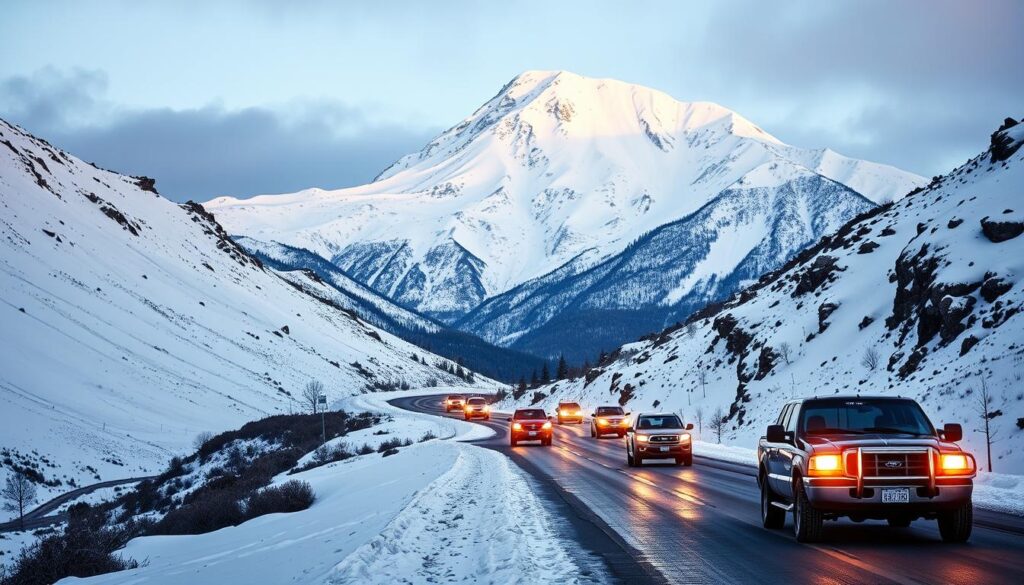
Reading the Storm Cycles
Sierra storms have become two-faced. Climate change brings huge snowfalls followed by rain that makes snow hard as stone. This mix makes skiing very dangerous.
First, you get lots of soft snow. Then, warming turns it into ice. It’s like getting a fast car without brakes.
Avalanche Awareness: Beyond the Basics
Avalanche basics turn into survival skills when you see a whole slope slide. It’s the mountain’s way of saying “I mean business.”
Knowing how stable the snow is is as important as parallel parking. The Sierra’s snow needs respect and constant learning. It’s not just about having the right gear, but also about reading nature’s signs.
Chain Controls: California’s Winter Rite of Passage
Chain controls are California’s winter test. You can either learn to put on chains quickly or watch YouTube in a cold parking lot.
These chain controls are not optional. Caltrans workers check your chains before you can go up the mountain. It’s like trying to get into a club where they check your tires instead of your ID.
Mastering chain controls takes timing and patience. Sometimes, you just have to wait. It’s like winter’s version of “hurry up and wait.”
Resort vs Backcountry: The Eternal Winter Dilemma
Choosing between resorts and backcountry is tough. Do you prefer the crowds of resorts or the unknown of backcountry?
Resorts are safe but crowded. Backcountry is wild but risky. It’s like choosing between a crowded elevator and a rickety zip line.
Knowing avalanche basics helps in these choices. The mountains don’t care about your plans. They have their own rules.
Go/No‑Go Checklists & Decision Matrix
NASA doesn’t launch without checklists, and neither should you venture into California’s wilderness. We’ve created a system that combines mission control protocols with seasonal hazard forecasts. This is because sometimes the smartest adventure is the one you postpone.
Our decision matrix considers everything from Red Flag warnings to whether you checked Caltrans’ Twitter. Government websites might struggle with updates, but Twitter is honest about road closures or evacuation orders.
Think of this as your reality check before your outdoor trip becomes a news headline. The matrix looks at things like “probability of becoming a statistic” and “FOMO intensity level.” It weighs these with scores for important factors.
Remember Oregon residents in 2020 who learned about power line ignitions the hard way? Their decision to evacuate could have used this framework. Sometimes, it’s wise to let nature’s drama play out without your involvement.
The Essential Pre-Trip Checklist
- Verify current NWS forecasts for your entire route
- Check Caltrans for road closures and chain requirements
- Monitor AQI indexes and fire weather warnings
- Confirm campfire regulations with local authorities
- Establish communication protocols for your group
This isn’t about paranoia – it’s about recognizing patterns. When the National Weather Service says “life-threatening conditions,” it’s not a suggestion. It’s nature’s way of telling you to stop.
Adventure Decision Matrix
| Scenario Factors | Green Light Conditions | Yellow Light Considerations | Red Light Immediate Cancel |
|---|---|---|---|
| Weather Forecast | Stable conditions, no advisories | Changing patterns, watch alerts | Warning issued, extreme predictions |
| Fire Danger | Low risk, recent precipitation | Moderate, red flag possible | Active fires, evacuation orders |
| Group Preparedness | Experienced, full safety gear | Mixed skills, adequate equipment | Novices, missing critical items |
| Official Updates | All systems normal | Partial information available | Contradictory or alarming reports |
The matrix doesn’t just ask “can we go?” but “should we go?” Looking at atmospheric river predictions can help you decide to watch Netflix instead.
Evacuation decision-making becomes clearer when you quantify variables. Assign weights to each factor based on its impact. This way, you respect the risks more.
Real-time updates make this practical wisdom. Refresh feeds, trust the experts, and remember: canceled trips make great stories. Failed trips make great cautionary tales.
Car Kit & Shelter Strategies
Your car is more than just a ride; it’s a survival shelter in disaster times. Forget the small roadside kits your mom gave you. We’re talking about the difference between a rough adventure and a life-saving escape.
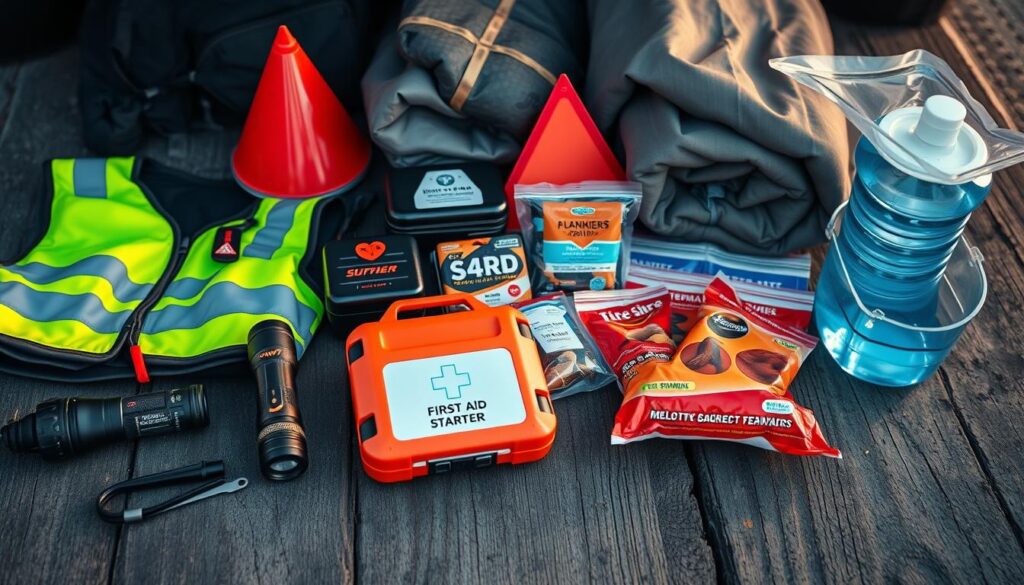
The Camp Fire evacuation showed us the importance of vehicle preparedness. People found out their cars weren’t ready for driving through flames. The right supplies could have saved precious minutes when batteries died and oxygen tanks ran out.
Your car kit must prepare for two extreme situations: heatwaves or making a bunker in floods. It’s about being the one who survives to tell the tale, not the story itself.
Here are the must-haves for your car survival kit:
- Air quality management: N95 masks, portable HEPA filter, wet towels for sealing gaps
- Thermal regulation: Emergency blankets (both reflective and insulating), battery-powered fan
- Communication lifelines: Hand-crank radio, satellite messenger, external battery packs
- Emergency sustenance: Water purification tablets, high-calorie bars, electrolyte packets
Your shelter strategies must adapt to California’s disasters. In heatwaves, your car turns into an oven. Park in shade, use reflective sunshades, and create cross-ventilation. At night, use emergency blankets for insulation.
For wildfires, think like a submarine commander. Seal air vents, close windows, and have respirators ready. Your car kit should include goggles and fire-resistant gloves—because sometimes you need to drive through hell to escape it.
Winter brings different shelter strategies. Snowbound? Run the engine for heat while keeping exhaust pipes clear. Keep a small shovel and traction mats for self-rescue. Your vehicle preparedness kit should include chemical hand warmers and insulated clothing.
Remember: your emergency supplies need regular checks. Water goes stale, batteries degrade, and food expires. Make inventory checks part of your seasonal routine—like checking your smoke detectors when daylight saving time changes.
The psychological aspect is key. Include comfort items: dark chocolate, playing cards, a paperback. During long waits, morale is as important as your emergency supplies. Panic is the real enemy in any disaster.
Your vehicle’s transformation into a survival pod is essential in California. It’s the smartest insurance policy you’ll ever create—one that might save your life when disaster strikes.
Insurance, Permits & Refund Tips
Welcome to the world of adventure dreams and fine print. California’s insurance scene is like a theater where wildfires and floods play out. It’s a mix of drama and reality.
Think your policy covers natural disasters? Think again. Most policies don’t account for climate change, which is our reality today.
Wildfire coverage needs extra riders that cost more than your trip. Flood damage is usually not covered unless you pay extra. And finding coverage for “atmospheric river” damage is tough.
Permits add another layer of risk. That wilderness permit might be useless when forests close due to fire danger. The system assumes nature will cooperate, which is risky.
Refund strategies help you avoid disappointment. Paying for a cabin rental only to find it’s snowed in or closed for fire is a letdown.
| Scenario | Insurance Coverage | Permit Status | Refund Strategy |
|---|---|---|---|
| Wildfire Closure | Usually excluded | Revoked | Travel insurance claim |
| Flood/Road Damage | Special rider needed | May remain valid | Lodging cancellation policy |
| Red Flag Warning | Rarely covered | Suspended | Advance reservation negotiation |
| Avalanche Risk | Sometimes covered | Conditional | Credit card dispute option |
Smart adventurers read reservations like lawyers. Always check cancellation policies. Document changes due to weather. And remember, “unprecedented atmospheric river” means different things to insurers and adventurers.
Your best defense is to read policies like novels. Ask about exclusions. And have a backup plan, because nature doesn’t care about your plans.
Preparation is key, not paperwork. Knowing these systems can make your next adventure successful, not expensive.
Post‑Event Recovery & Trail Stewardship
When the cameras stop rolling, the real work starts. We face climate whiplash head-on, seeing our favorite trails change after storms. True evacuation readiness means caring for the environment as much as our safety.
Trail stewardship is our way to make up for enjoying these fragile places. Helping with burn area restoration or learning from Yurok cultural burns is more than just good deeds. It’s about adapting to climate change. The White House Environmental Justice Advisory Council says communities facing big challenges often have the best answers. Their local knowledge is key to recovery plans.
We must ask ourselves: Are we rebuilding better or just setting up the next disaster? Places like Paradise and Grizzly Flats show us that recovery is more than just fixing things. It’s about rethinking how we live. Your evacuation kit should include support for communities in their long-term recovery.
The best way to enjoy California’s stunning landscapes is to make sure they’re here for future generations. Adventure and responsibility meet where trail care meets climate resilience. The best views come with a responsibility to protect them.