

For families planning late-summer and fall trips after the busy 2026 season, national park access now needs a different checklist than it did a few years ago. Some parks dropped broad reservation systems, while others kept tighter controls at specific roads, trailheads, shuttles, or parking lots. As of September 25, 2026, the safest approach is to check each park’s rules close to your travel date, build in heat and traffic margins, and avoid treating any entrance gate as the only decision point.
I plan park trips with the same mindset I use for mountain drives with kids: the entry rule is only one part of the day. Parking, water, shade, road closures, shuttle timing, and how tired everyone feels after lunch can matter just as much. That is especially true after Summer 2026, when several major parks adjusted crowd controls and heat became a serious safety issue in desert and canyon destinations.
How National Park Access Changed In 2026
National Park Access Without A Timed Entry Window
Yosemite National Park made one of the clearest changes for 2026. On February 18, 2026, park management announced that Yosemite would not require vehicle reservations for 2026. The park cited 2025 data showing manageable weekday traffic, available parking, and overall visitation patterns as reasons for removing the system, according to the Yosemite NPS announcement.
That change did not mean Yosemite stepped away from crowd management. The park said it would use real-time traffic monitoring, active parking management in Yosemite Valley, extra staff at busy intersections, visitor alerts about road and congestion conditions, and encouragement for weekday visits. It also pointed visitors toward areas such as Tuolumne Meadows, Wawona, and Hetch Hetchy, which can help spread demand beyond the most crowded valley stops.
Site-Specific Controls Replaced One-Size Rules
The broader pattern across major parks in 2026 was not simply “reservations or no reservations.” Park-by-park tactics included temporary access restrictions when parking lots filled at Arches, a three-hour parking limit at Logan Pass, and a ticketed express shuttle test for Going-to-the-Sun Road at Glacier, as reported by The Washington Post.
That means national park access rules now vary by corridor, parking area, shuttle system, and sometimes time of day. A family could enter a park without a vehicle reservation and still find a specific overlook, road segment, or trailhead temporarily limited. The practical move is to read the park’s alerts page before leaving lodging, not just the night before the trip.
Reservation-Free Does Not Mean Plan-Free
Yosemite As A Planning Example
Yosemite is a good case study because the 2026 change sounded simple but still required smart timing. Without a vehicle reservation requirement, visitors had more flexibility on paper. In practice, Yosemite Valley parking can still shape the day. If you arrive late on a busy date, you may spend more time circling than hiking, eating, or getting kids settled for a shuttle ride.
For families, I would treat a no-reservation day like a flight with open seating: you still want to arrive early if your plans depend on a popular spot. Weekdays remain the better choice when school calendars and work schedules allow. If your group includes grandparents, small children, or first-time hikers, choosing Wawona, Hetch Hetchy, or Tuolumne Meadows can reduce the pressure to compete for the same Valley parking areas.
Check Rules By Road, Not Just By Park
In 2026, the key planning question shifted from “Does the park require a reservation?” to “Does the place inside the park require a timed entry, shuttle ticket, parking limit, permit, or backup plan?” That difference matters at parks with famous corridors. A road can be open, while a parking area fills. A shuttle can run, while tickets are limited. A trail can be accessible, while heat or maintenance makes it a poor family choice.
If you want a broader compare-and-check step before booking, our 2026 park reservation notes can help you frame the questions to ask. For families building park visits into longer western road trips, I also like pairing park alerts with practical vehicle planning from resources like Drives at Mile High, especially when passes, heat, and long distances are part of the same trip.
Heat, Staffing, And Road Choices
Heat Changed The Risk Calculation
Summer 2026 showed why access planning and safety planning belong together. In Arches and Canyonlands, rangers responded to 23 heat-related search and rescue incidents during Summer 2026: 11 in Arches and 12 in Canyonlands. Research notes from the National Park Service reported that summer temperatures there often exceeded 100 degrees Fahrenheit.
Grand Canyon National Park also saw three hikers die in heat-related incidents in mid-June 2026. The events occurred on June 12 and June 16 along the South Kaibab Trail and North Kaibab Trail, with Inner Canyon daytime temperatures reported above 109 degrees Fahrenheit. These were not minor comfort issues. They were trip-ending and life-ending conditions in places many travelers associate with classic vacation views.
Death Valley reported a visitor fatality on August 17, 2026, when high temperatures were about 116 degrees Fahrenheit. The visitor had become stranded after his vehicle got stuck, and cellular service was out. The park’s safety guidance stressed bringing water, staying on paved roads, avoiding hiking during extreme heat, and carrying emergency communication devices.
Staffing And Maintenance Affect Safety
Staffing also matters for visitor safety. Research notes show that National Park Service full-time staffing fell by about 15 percent between fiscal years 2011 and 2022, or about 3,400 employees. Further staffing pressure in fiscal years 2025 and 2026 affected seasonal hiring, emergency responses, facility maintenance, and trail closures.
Travelers cannot fix staffing shortages, but they can plan around the effects. Expect slower answers at visitor centers on peak days. Do not assume every water station, restroom, food stop, or road pullout will work exactly as hoped. Carry more water than your group thinks it needs, keep snacks in the vehicle, and know where you can turn around if a road or lot fills.
Family Timing And Backup Routes
Build The Day Around The Hardest Condition
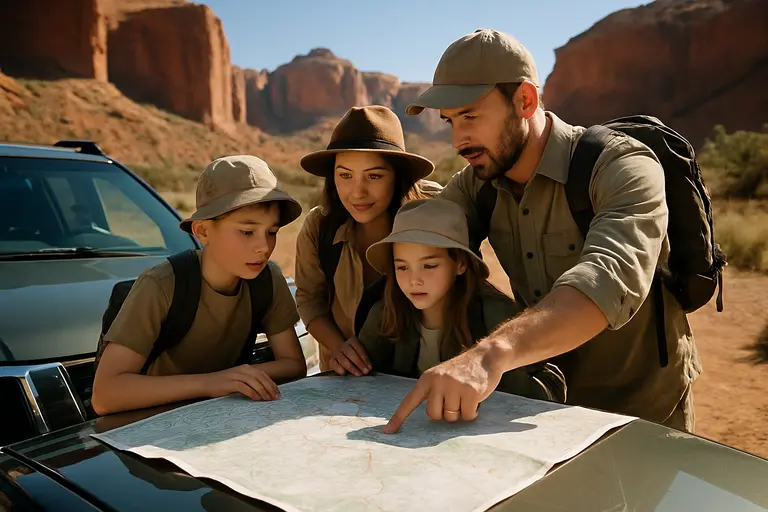
With kids, I plan the day around the toughest condition, not the prettiest stop. In canyon and desert parks, that usually means heat. In alpine parks, it may mean parking, shuttle tickets, afternoon storms, or road crowding. In Yosemite Valley, it may mean finding a legal parking space before everyone is hungry and impatient.
A realistic family day has fewer stops than a map suggests. Pick one priority area, one nearby backup, and one easy exit option. If you get your first choice, great. If not, the day still works. This is especially useful at places such as Old Faithful, Midway Geyser Basin, Norris Geyser Basin, and Canyon Village in Yellowstone, where research notes show heavy summer visitation pressure in high-traffic areas.
Use A Short Safety Checklist
Before leaving lodging, I use a short checklist instead of relying on memory. It keeps the group honest and helps avoid the common mistake of focusing only on the entrance gate.
- Check the official park alert page for road, trail, shuttle, parking, heat, smoke, and facility updates.
- Confirm whether the exact road, trailhead, or shuttle you need has a separate ticket, permit, time limit, or closure.
- Start earlier than feels necessary during peak season, especially if the plan depends on a small parking area.
- Carry water, food, sun protection, paper maps, and a backup communication option where cell service is unreliable.
- Set a turnaround time before starting a hike, then stick to it if heat, traffic, or fatigue rises.
This checklist does not remove risk, but it prevents the most avoidable problems: late starts, empty water bottles, no shade plan, and no backup when a lot is full.
National Park Access Checks Before Booking
Questions To Ask Before You Pay
Before booking lodging or flights, ask a few plain questions. Has the park changed its reservation rule for your travel dates? Does your main activity depend on one road, shuttle, or trailhead? Are you visiting during the hottest part of the year? Is your group prepared to skip a famous stop if parking, heat, or staffing conditions make it a poor choice?
Treat national park access as a living part of trip planning, not a single box to check after you buy everything. The 2026 pattern points toward flexible, site-specific controls rather than one national rule. That gives travelers more freedom in some places, but it also puts more responsibility on each visitor to check conditions close to departure. For families, the safest high-season park trip is usually the one with an early start, a simple plan, and a backup that everyone can still enjoy.