

World Cup Quarterfinal Stage Turns East Rutherford Into a Cross-Border Economic Zone
MetLife Stadium in East Rutherford, New Jersey has shifted into one of the most economically active zones of the World Cup 2026 knockout stage. As quarterfinal matches concentrate global attention in the New York–New Jersey region, the stadium is operating less like a single sports venue and more like a regional economic engine linking tourism, hospitality, transportation, and cross-border visitor flows between New Jersey and New York City.
The quarterfinal schedule has elevated MetLife Stadium into a global spotlight position. Hosting high-stakes knockout matches draws significantly higher international attendance compared to group-stage fixtures, with fans arriving from South America, Europe, and Asia in concentrated waves. This influx is reshaping hotel occupancy patterns, transit usage, and local spending behavior across multiple boroughs and counties.
MetLife Stadium’s capacity of over 82,000 seats places it among the largest venues in the tournament rotation, which directly amplifies its financial impact per matchday. When combined with its proximity to New York City’s tourism infrastructure, the stadium functions as a dual-city asset rather than a standalone venue.
For broader tournament context and scheduling structure across host cities, FIFA’s official framework for the competition is outlined at FIFA World Cup tournament operations overview.
Hotel Occupancy and Tourism Demand Surge Across New York and Northern New Jersey
The quarterfinal run at MetLife Stadium is producing one of the strongest regional tourism spikes of the tournament. Hotels in Manhattan, Brooklyn, Queens, and northern New Jersey are experiencing sustained occupancy pressure during match weeks, with international fans choosing to stay across both states due to price dispersion and transit connectivity.
Unlike single-city stadium markets, the New York–New Jersey metro area distributes demand across multiple lodging zones. Fans attending matches at MetLife Stadium often base themselves in New York City, combining match attendance with broader tourism activities across landmarks such as Times Square, Central Park, and the Hudson waterfront.
This dual-purpose travel behavior increases per-visitor economic output. A single matchday often extends into multi-day stays, with visitors allocating additional spending toward dining, transportation, and entertainment beyond the stadium itself.
A simplified breakdown of tourism impact patterns around MetLife Stadium shows how demand spreads across sectors:
| Sector | Impact Pattern | Regional Effect |
|---|---|---|
| Hotels | High occupancy spikes during quarterfinal weeks | Price increases across NYC and NJ |
| Transportation | Increased cross-state travel volume | Pressure on NJ Transit and PATH systems |
| Hospitality | Extended dining and nightlife activity | Revenue growth in Manhattan and Hoboken |
| Retail | Match-related merchandise demand | Concentrated near transit hubs |
This distribution effect is one of the reasons the New York–New Jersey host region is considered uniquely valuable in World Cup planning structures.
For official venue and event infrastructure details, MetLife Stadium provides operational information at MetLife Stadium official site.
Transit Pressure and Cross-State Movement Define Matchday Flow
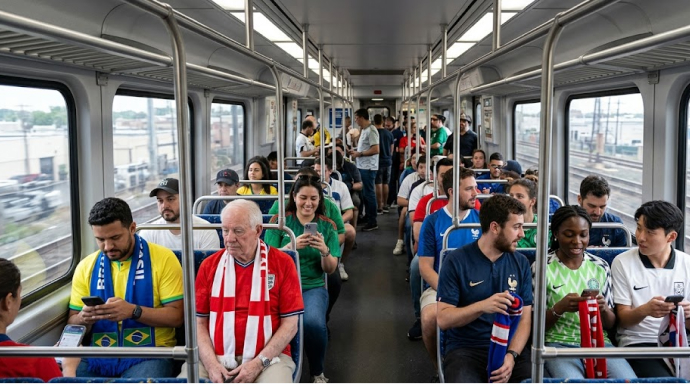
MetLife Stadium’s location in East Rutherford creates a distinctive transportation dynamic compared to other World Cup venues. Fans typically move through a combination of rail, bus, and cross-river transit systems connecting New Jersey with Manhattan.
On quarterfinal matchdays, NJ Transit services experience peak loads several hours before kickoff, with additional demand extending into post-match departure windows. PATH trains and regional bus networks also absorb spillover traffic from fans who base themselves in New York City.
This cross-state movement pattern effectively turns the World Cup into a regional transit test case. Unlike stadiums embedded within dense urban cores, MetLife Stadium relies heavily on coordinated mobility infrastructure across jurisdictions.
Transit agencies have responded by increasing service frequency, adjusting staffing levels, and coordinating departure schedules with match timing to prevent congestion bottlenecks.
Fan behavior has adapted accordingly. Earlier arrival times are now common, with many attendees planning transit routes in advance to avoid peak congestion periods. Post-match departures are staggered, reducing pressure on any single transit wave.
For fans unfamiliar with the region, transit coordination has become a key part of matchday planning rather than a secondary concern.
Stadium Economics and Matchday Spending Behavior
The financial impact of World Cup quarterfinal matches at MetLife Stadium extends beyond ticket sales. Matchday spending patterns show significant increases in surrounding hospitality zones, particularly in areas connected by rail lines to Manhattan.
Food and beverage consumption patterns shift toward extended pre-match and post-match periods, especially in neighborhoods near transit hubs. Local businesses in Hoboken, Secaucus, and parts of Midtown Manhattan benefit from sustained fan movement throughout the day.
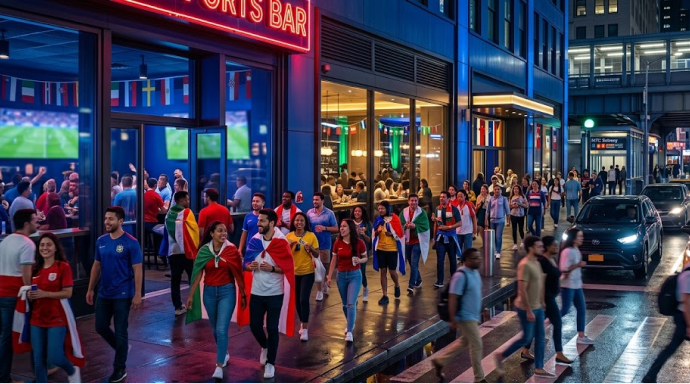
Merchandise sales tied to national teams also increase during knockout stages, with higher demand for jerseys, scarves, and limited-edition tournament items. These purchases are often concentrated around stadium-adjacent zones and major transit terminals.
The stadium itself functions as a high-density economic node, but its true financial impact is distributed across a wider geographic footprint that includes two states and multiple municipal jurisdictions.
This distributed spending model differentiates MetLife Stadium from more isolated venues, where economic benefits tend to concentrate in a smaller surrounding radius.
Cultural and International Fan Mix Shapes Regional Identity During Matches
Quarterfinal matches at MetLife Stadium bring together a highly diverse international fan base. The New York–New Jersey region’s global connectivity makes it a natural landing point for supporters traveling from Europe, South America, and Asia.
This diversity is reflected in public spaces across the metro area. Subway platforms, ferry terminals, and pedestrian zones near major attractions become informal gathering points where fans interact before and after matches.
The cultural layering effect extends beyond the stadium environment. Restaurants, public viewing areas, and tourist districts incorporate match-related activity into their daily operations, creating a blended tourism-sport environment.
For broader context on how global sporting events shape cultural exchange and urban identity in major host cities, see insights from the Brookings Institution analysis on mega-events and urban impact.
This dynamic reinforces New York’s role as a global sports city while positioning New Jersey as a critical operational extension of the World Cup infrastructure.
The interaction between local residents and international visitors becomes more visible during quarterfinal stages due to increased stakes and longer visitor stays.
Why MetLife Stadium Represents a Regional Economic Model for Mega Events
MetLife Stadium’s quarterfinal role illustrates how modern mega-events generate value across entire metropolitan regions rather than isolated venues. The World Cup amplifies this effect by concentrating global attention into compressed time windows where infrastructure, tourism, and entertainment systems operate simultaneously under peak demand.
The stadium’s integration into the broader New York–New Jersey ecosystem demonstrates how shared metropolitan regions can distribute economic and logistical pressure more efficiently than single-city models.
As match intensity increases during knockout stages, so does the complexity of managing cross-border mobility, tourism distribution, and hospitality demand. The result is a layered economic system where multiple sectors respond simultaneously to a single event schedule.
MetLife Stadium’s performance during the World Cup quarterfinal run is therefore not only a sporting milestone but also a demonstration of how large-scale international events reshape regional economies in real time.