

Dawn at Rincon. The fog hangs like a theater curtain, waiting to rise. You smell it before you see it—that distinct cocktail of salt, neoprene, and stale coffee. A lineup of silhouettes bobs on the horizon, a silent congregation awaiting their sacrament.
This isn’t just a sport. It’s a living anthropology project conducted in board shorts. The Golden State coastline isn’t merely geography; it’s the petri dish where the modern wave-riding ethos was cloned, mutated, and occasionally went feral.
What began as a niche pursuit for a few rugged individuals has swollen into a global phenomenon. But the postcard version is a lie. The real data points—the unvarnished, hilarious, and sometimes brutal narratives—are traded in the lineup between sets.
Consider this your thesis statement, delivered with the casual authority of someone who’s spent too much time staring at that horizon. What follows are the real stories from the break. You won’t find them in any tourism brochure.
Dawn Patrol Stories from Mavericks
The true surf community California comes alive in the dark at Mavericks. It’s not a cheerful morning like at other beaches. Instead, it’s a quiet journey through fog, with headlights like searchlights.
Getting ready in the dark feels like making a promise. There’s no talk about the swell or tide. Just the shhhhk of neoprene and the sound of leashes.
The lineup at Mavericks sorts people quickly. The veterans paddle with ease, like plumbers fixing a leak. They’ve seen it all.
The groms paddle with energy, eager to prove themselves. They’re the new faces in big wave surfing, ready for anything. Sometimes, you see famous surfers who leave before the real action starts.
What happens when a huge wave comes? Does everyone fight or work together? The answer is complex. In quiet moments, it’s all about who’s in charge. But when a big wave comes, everyone works together.
When a big wave is coming, you’re not competing with others. You’re both facing the same challenge. A nod replaces a snarl, and fear becomes a bond.
After surfing, the parking lot reveals who’s respected. It’s not about catching the biggest wave. It’s about who took the worst beating and came back. The ones who show bravery get quiet nods.
Mavericks shows who you really are. It strips away the fancy surfing looks and shows raw courage. The surf community California here values who shows up when it matters most. The bond is strong, earned through shared fear.
This extreme place creates a deep bond. It’s like joining a polar expedition, not a book club. The madness is real, but it creates a surf community California like no other.
Longboard Revival in Malibu
The longboard’s comeback at Malibu’s famous break raises a key question: is it a true spiritual return or just a fancy dress-up? First Point is more than a surf spot; it’s like Rodeo Drive for wave-riders. Every piece of gear here makes a statement. The longboard, once almost forgotten, is now the top choice.
This isn’t just about looking back. It’s a bold statement against the fast pace of today. Imagine a surfer riding a nine-foot log into a Malibu wave. The clean design, the way they move, and the old logos all show a careful choice. It’s surfing as art, with a purpose.
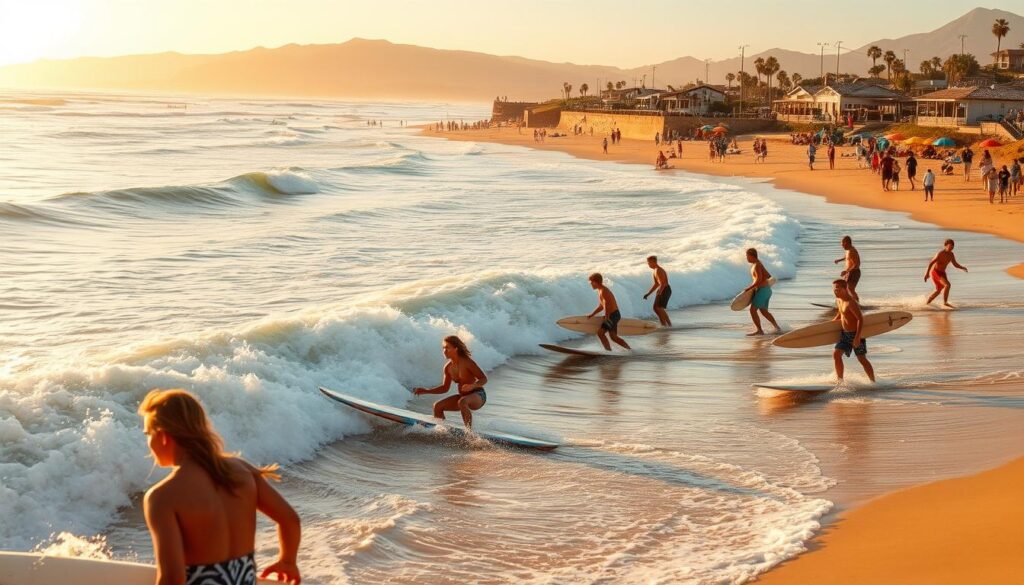
The reasons behind this trend are intriguing. Is it about finding a simpler way to connect with the ocean? Or is it a way to show off, like Thorstein Veblen’s “conspicuous leisure”? Longboarding takes patience and values style over speed. In a world obsessed with tricks, choosing a longboard is a quiet stand.
Think of other trends coming back. Vinyl records and craft cocktails aren’t just about quality; they’re about the experience. The longboard revival is about enjoying the journey, not just the destination.
But there’s also a fashion side to it. The right board and wetsuit are like a badge of honor. This echoes the California surf culture of the 1960s, now seen as a lifestyle. The question is, are these surfers truly embracing that era, or just wearing its clothes?
I see two main groups at First Point:
- The Purists: They study old surf legends like Mickey Dora. Their boards are works of art. For them, it’s about recapturing a lost feeling in modern surfing.
- The Aesthetes: They love the atmosphere. The longboard fits their personal style. They value both the experience and the photo opportunity.
Most surfers blend these two views. The revival’s strength lies in its ability to mix authenticity with showmanship. This mix makes Malibu’s surf scene fascinating to watch.
Is it just for show? Sometimes, yes. But even the act of dressing up can have meaning. By challenging the fast surfing trend, these surfers are starting a new chapter in California surf culture. They’re not just copying the past; they’re using it to question today. The longboard is their statement: surfing should be graceful, not just about speed.
The verdict? The revival is both real and staged. The quest for authenticity is true. The desire to show off is clear. At Malibu, the longboard is the perfect tool for this complex dialogue, one ride at a time.
Santa Cruz Cold Water Warriors
Southern California surfing is like a sunny Instagram post. Santa Cruz, on the other hand, is like a gritty documentary. The water is cold, and sharks are a real concern. Crossing Point Conception changes everything.
The Pacific Ocean here is fierce. It’s not just a gentle wave. The surfers have become tough, like pirates. They face challenges that make SoCal seem easy.
The environment is the main character in every surfing story. The water is so cold it freezes your enthusiasm. Kelp beds grab at your fins, and great whites lurk in the shadows.
This isn’t just surfing. It’s a battle with nature. You don’t just check the surf report. You weigh the risks of entering a wild ecosystem.
Necessity drove the invention of the modern wetsuit in Santa Cruz. Without it, surfing wouldn’t last more than ten minutes. Shapers created boards that match the coastline’s powerful waves.
This practicality shapes the surfer’s identity. They focus on function, not fashion. Their conversations are about the ocean, not brands.
The result is authentic surfing stories. They’re about perseverance, not perfect waves. It’s about facing challenges head-on.
The relationship with the ocean is deep and respectful. It’s a partnership that demands respect. Locals have earned their place in the lineup through hard work.
Understanding Santa Cruz reveals how geography shapes culture. The cold water selects a dedicated community. Their stories are about survival, not just surfing.
San Diego Year-Round Surf Lifestyle
The surf community California has found its perfect place in suburban areas. Surfing is like the city’s background software, always running smoothly. It’s part of daily life.
San Diego mornings are special. A lawyer drives to work with a longboard on his roof. Tech CEOs check the surf while they work. School times are set around the tides.
This isn’t just a hobby; it’s a way of life.
What makes San Diego unique? Three key systems:
- The Swing Shift Economy: Restaurants and shops run by surfers who work early or late. Their days revolve around the surf.
- The Mobile Office: Surfing pros work from the beach, making deals with salt in their hair.
- The Infrastructure Adaptation: Offices have showers, and law firms store surfboards. Surfing is part of wellness programs.
This setup creates interesting economic effects. Homes near the beach cost more, known as the “surf tax“. The difference is huge, not just in price but in seconds to sand.
But, there are subtle social layers. The lineup shows who’s who:
| Position in Water | Typical Profile | Unspoken Rules |
|---|---|---|
| Peak at Tourmaline | Tech founders, retired executives | Polite but distant; equipment conversations replace personal ones |
| Middle at Pacific Beach | Service industry workers, students | More communal, shared waves, after-session beers |
| Inside at Sunset Cliffs | Local legends, lifelong residents | Territorial but earned; respect through consistency not credentials |
While biking along Mission Bay, you might wonder. Has San Diego perfected the California Dream or turned it into a product? Surfing is everywhere, even in real estate ads.
I saw a surgeon rush to Blacks Beach from the hospital. His board was by the nurses’ station. His pager was covered. It’s not rebellion; it’s the system adapting.
San Diego’s success and challenge are in making surfing mainstream. The surf community California works like a well-oiled machine. It turns waves into daily life, saltwater into social bonds, and tide charts into schedules.
But, there’s a cost. Spontaneity is lost for the sake of routine. That lawyer catches the same wave every Tuesday and Thursday. His surfing is predictable, his excitement scheduled.
San Diego might have lost the raw edge of surfing. The question is, did it need to? Or did it build systems that look like the ones surfers once escaped?
Women Breaking Barriers in Surfing
Many thought California surf culture was only for guys. They believed it was a place where girls weren’t welcome. But, women didn’t just wait to be let in. They took matters into their own hands and now lead the way.
This change is huge. It’s not just about surfing better. It’s about changing the whole culture. Women are now seen as equals, not just in surfing but in every aspect of the sport.
At the professional level, the fight for equal pay was key. It showed that women’s surfing is just as exciting as men’s. Fans now see surfing as a sport, not just a male activity.
At local beaches, a quiet change is happening. Moms surf before school, and professionals make sure to surf early. They’re not fighting for space; they’re just being there. This change is slowly making surfing more welcoming for everyone.
The rise of surf brands for women is also significant. These brands are not just for women; they’re made by women. They focus on how women surf, not how men think women should surf.
| Aspect | The Old Guard Model | The New Power Dynamic |
|---|---|---|
| Primary Narrative | Male-centric, focused on aggression and territorial dominance. | Diverse, celebrating technical prowess, style, and community regardless of gender. |
| Industry Focus | Gear and marketing designed for men, with women as an afterthought. | Explosion of women-founded brands creating performance gear and media that represent authentically. |
| Lineup Etiquette | Unspoken rules favoring local men, often intimidating to newcomers and women. | A push for shared, respectful norms where competence and respect, not gender, dictate wave priority. |
| Role Models | Few, often stereotyped as “beach bunnies” or extreme outliers. | Abundant: from world champions like Marks to everyday local icons, moms, and professionals. |
| Impact on California Surf Culture | Insular, repetitive, and resistant to change. | Richer, more innovative, and appealing to a broader, sustainable audience. |
Surfing is like other industries that broke through barriers. The real change came when diverse teams worked together. Now, surfing is more exciting and welcoming to everyone.
The shift in California surf culture is clear. With more women involved, surfing has improved a lot. The old ways are being replaced by something new and better.
Environmental Activism Through Surfing
Want to know about coastal environmentalism? Ask a surfer who’s seen their home turn toxic. We’re like canaries in the coal mine, and our chirping has turned to a loud roar. Today’s surfing stories aren’t about big waves or secret spots. They’re about loss.
Loss of clean water, blocked beach access, and damaged reefs are real. These aren’t just abstract climate change issues. They’re personal.
Take the Tijuana Sloughs. Surfers there don’t need science to know pollution is bad. They have skin rashes, ear infections, and staph as proof. Their fight isn’t about numbers. It’s “I got sick from the water you’re poisoning.” This personal story is powerful.
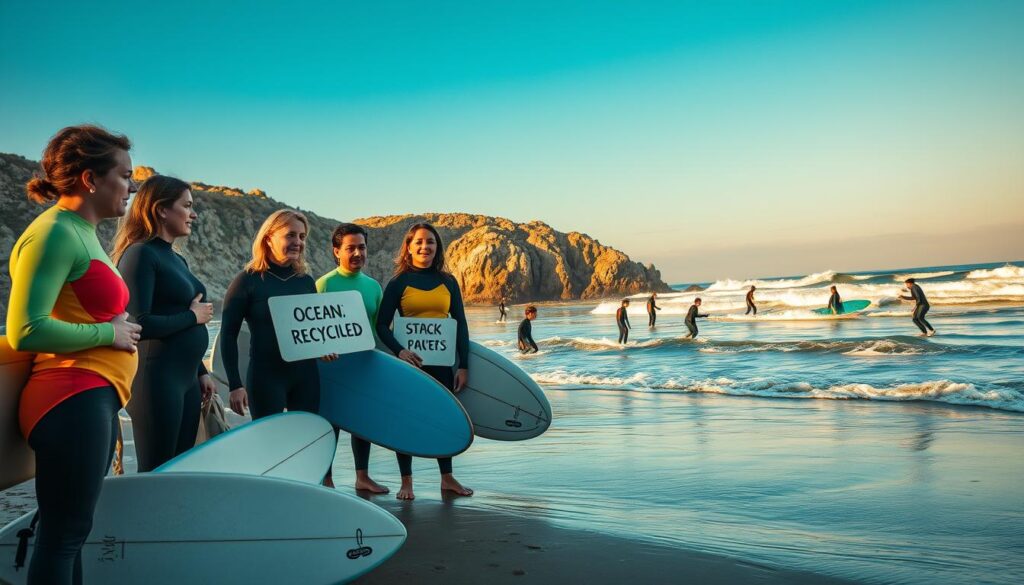
Surfing has become a strong environmental lobby in America. Groups like the Surfrider Foundation started as locals tired of paddling through trash. Now, they’re winning battles, shaping policy, and making protecting the coast cool.
Surf activism works because it’s real. Surfers speak from experience, not theory. When Kelly Slater talks about ocean plastics, he’s talking from decades of seeing it happen. His credibility is built on saltwater.
But it’s not all pure. Celebrity surfers, corporate sponsors, and local activists all play roles. It’s a mix of love for waves and shared goals, not perfect agreement.
This mix makes the movement stronger. The pure activists keep it real. Celebrities spread the word. Corporations provide resources when pushed. It’s a complex alliance, but it works because the threat is real.
The shift in focus is necessary. Surfing used to be about personal glory. Now, it’s about protecting the coast. The next surfing stories will be about saving the waves, not just riding them.
This activism is surfing’s most mature form. It’s moved beyond local disputes to face big threats. The enemy is now the pipeline, polluters, and policies that harm the coast. The stakes are high, and so is the response.
Yes, today’s surfing stories are often tough. But they’re also hopeful. A community is using its unique voice to fight for something bigger than itself. The coast is a front line, and activists are ready.
Multi-Generational Surf Families
In California’s surf culture, family isn’t just about blood ties. It’s also about the traditions we inherit. These traditions can be both warm and cold.
On one hand, grandparents teach their grandkids to surf. Parents share their love for the ocean with their kids. This creates a strong bond within the family.
On the other hand, some families pass down a legacy of suspicion and hatred. This can lead to a toxic environment in the surf community.
The positive side of family surfing is what we usually celebrate. Fathers teach their daughters how to surf. Mothers and sons share stories of their surfing adventures.
This creates a sense of community and shared passion. It’s what makes the surf community California style so special.
These families also teach respect for the ocean and its creatures. They pass down important values like environmental care and respect for others.
For example, a grandfather who surfed in the 60s now watches his granddaughter surf at the same spot. It’s a beautiful way to keep the tradition alive.
But there’s also a darker side to surfing families. Take Lunada Bay, for instance. Here, families didn’t share the surf. They guarded it with aggression.
The “Bay Boys” were a group that believed in hoarding the surf. Their actions were supported by some adults and law enforcement. This is a disturbing legacy.
Children learned that violence was okay to protect their territory. They were taught to exclude others. This is a twisted way of protecting one’s family.
This shows how culture can be passed down in harmful ways. It’s a stark contrast to the positive legacy of surfing families.
| Aspect of Inheritance | The Legacy of Stoke | The Legacy of Exclusion |
|---|---|---|
| What’s Taught | Wave reading, environmental care, etiquette | Territoriality, intimidation tactics, silence codes |
| Community Impact | Expands and enriches the surf community | Creates fear and fractures the surf community |
| Transmission Method | Open sharing, patient coaching, joyful example | Covert instruction, endorsed aggression, normalized hostility |
| Long-term Result | Stronger, more inclusive California surf culture | Isolated, paranoid localism that harms everyone |
Lunada Bay is a cautionary tale. It shows how tradition can turn toxic. The Bay Boys’ actions were learned over generations.
But most California breaks have healthier surfing families. They surf together, creating memories. They welcome newcomers, remembering their own experiences.
The question is, which legacy do we want to pass on? Do we teach our kids to share or steal the surf? Our choices today shape the traditions of tomorrow.
California’s coastline needs a legacy of generosity, not greed. The true surf community California thrives on kindness, not hostility. That’s the gift worth passing on.
Local vs Tourist Surf Etiquette
The Lunada Bay story is more than just a surfing tale. It’s a dark chapter in California’s surf culture. Jeff’s act of destroying a kid’s board was not just aggression. It was a show of power.
The Bay Boys, dressed in black wetsuits, became a gang. They enforced their territory with violence.
Most surf spots follow unwritten rules. The surfer closest to the peak gets to go first. You earn your spot through respect, not intimidation. A good surf community welcomes newcomers who respect these rules.
The Bay Boys turned these rules into something sinister. Their “protection” was actually a form of violence. Is it right to respect locals or should we stand up to bullies? Their old-school style and rules were meant to keep others out.
Every wave has a story to tell. Surfers have a choice: create a positive story or contribute to the negative. The choice shows the true spirit of surfing.
Stories from California’s coast show a delicate balance. We need protectors, not enforcers. The surf etiquette is a language of respect. But, it can also lead to tribalism with a beautiful view.