

Grand Canyon Water Supply repairs are now a central planning issue for late-2026 trips, especially for visitors who expected normal South Rim lodging and services. As of October 9, 2026, Grand Canyon National Park remains open on both the South Rim and North Rim, but water limits, suspended South Rim overnight lodging, and modified inner-canyon operations mean travelers should plan with more caution than usual.
The main point for travelers is timing. The damage happened on August 29, 2026, and the park’s restoration schedule points to mid-November for the start of pumping and the Thanksgiving period for the first phase of treated water distribution. That does not mean every visitor service returns at once. It means the park expects a staged recovery, with tank refilling and lodging resumption tied to water availability.
Grand Canyon Water Supply Timeline
The public timeline gives travelers a clearer way to judge whether a day trip, rim-to-rim plan, or overnight stay makes sense. The current schedule is built around restoring pumping from Bright Angel Creek to the new South Rim water treatment plant, then rebuilding enough stored water capacity to support residents, visitors, and lodging.
Grand Canyon Water Supply Damage On August 29
On August 29, 2026, a flash flood in Bright Angel Canyon destroyed a water intake pump and damaged critical infrastructure. The National Park Service said about 40% of the old pipeline between Phantom Ranch and the North Rim was affected, which created a serious break in the system that supplies the South Rim; the projected restoration dates are listed in the NPS water restoration update.
The Grand Canyon Water Supply timeline now has two dates that matter most for visitors. November 16, 2026, is the projected date to begin pumping water from the Bright Angel Creek intake to the new South Rim water treatment plant. The Thanksgiving 2026 period is the projected start for distributing treated water to residents and beginning a phased reopening of overnight lodging.
Key Dates For Late 2026 Trips
| Date | What It Means For Planning |
|---|---|
| August 29, 2026 | Flash flood damaged water infrastructure and led to Stage 4 water restrictions. |
| September 8, 2026 | The recovery and repair plan estimated reliable supply restoration would likely take weeks, not months. |
| October 4, 2026 | Water deliveries had begun, with five trucks delivering about 30,000 gallons and a contract in place to haul about 200,000 gallons per day. |
| November 16, 2026 | Projected start for pumping water from Bright Angel Creek to the new South Rim treatment plant. |
| Thanksgiving 2026 period | Projected start for treated water distribution to residents and phased reopening of overnight lodging. |
| About 45 days after pumping begins | Expected time needed to fully refill storage tanks once pumping resumes. |
What Changed For South Rim Visitors
The biggest visitor-facing change has been lodging. On August 29, 2026, the park implemented Stage 4 water restrictions on the South Rim, including the temporary closure of overnight hotel accommodations. The lodging action was announced in an NPS lodging closure notice.
South Rim Lodging Is Not Back To Normal Yet
As of October 9, 2026, South Rim overnight lodging remains suspended until the post-Thanksgiving resumption described in the restoration timeline. That makes late October and most of November a harder period for travelers who want to stay inside the park. Day visits may still be possible, but travelers should not assume that a normal hotel stay, full guest services, or the usual level of water access will be available.
If you are comparing whether to wait or book near the park boundary, it helps to separate park access from overnight capacity. The rims can be open while lodging is limited. For more related planning context, see our report on Grand Canyon lodging changes, especially if your dates fall before the Thanksgiving recovery window.
Inner-Canyon Plans Need Extra Flexibility
Inner-canyon areas may have modified or restricted operations while repairs continue. The waterline damage affected infrastructure between Phantom Ranch and the North Rim, so hikers should treat any canyon travel plan as conditional. That means checking park updates close to departure, carrying sufficient drinking water, and avoiding plans that depend on a single refill point being available.
Travelers considering routes through the region or looking to pair their visit with high-elevation drives can benefit from resources like the Mile High drives guide, which offers insights on driving conditions without replacing official park updates.
How To Plan Before And After Thanksgiving
Before the Thanksgiving 2026 period, plan for limited services. The park’s water delivery effort is helping stabilize tank levels, but hauling water is not the same as restored system capacity. The target for November 16, 2026, is the start of pumping, not a promise that every tank, hotel, restroom, or visitor service returns that day.
Before November 16, 2026
For trips before November 16, treat the South Rim as a day-use destination unless you have verified lodging outside the affected in-park system. Bring drinking water, reduce nonessential water use, and expect portable restrooms and handwashing stations where the park uses them to reduce pressure on the system. If a weather event occurs close to your travel date, recheck access and service notices.
From November 16 Through The Tank Refill Period
Once pumping begins, the park expects about 45 days to fully refill storage tanks. That refill period is a practical warning for travelers: a phased reopening can still feel limited on the ground. If lodging begins returning after the Thanksgiving period, confirm the reservation status directly before driving long distances. Avoid assuming that a reopening announcement means all rooms, dining, and water-dependent services are operating at previous levels.
Water-Conscious Travel Choices
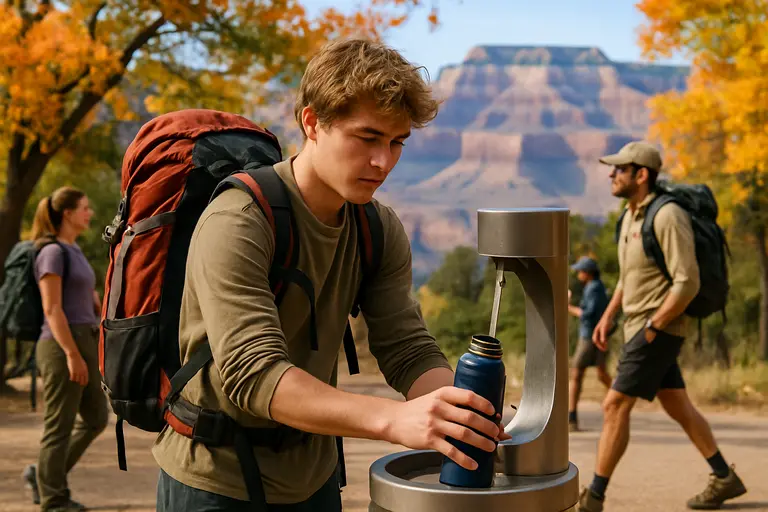
Water restrictions make visitor behavior more visible. A careful trip plan reduces pressure on park staff and infrastructure while still allowing travelers to experience the canyon responsibly. Pack refillable containers filled before arrival, keep handwashing and cleanup simple, and avoid creating extra demand for water inside the park.
- Bring enough drinking water: Do not rely on every usual refill location being available, especially for hikes or canyon travel.
- Keep plans flexible: Choose lodging with clear cancellation terms if your trip depends on South Rim overnight access.
- Reduce water use: Shorten wash-ups, use provided portable facilities where directed, and avoid water-heavy camp routines.
- Check close to departure: Restoration dates can shift after weather events or repair delays.
- Separate access from services: An open rim does not guarantee normal lodging, food service, or water availability.
The larger Transcanyon Waterline replacement project began initial construction in 2023 and was expected to be completed in 2027. The project includes moving the water intake from Roaring Springs to Bright Angel Creek, building a new South Rim treatment plant, and replacing pipeline sections known for problems. The August 29 flood made the transition period harder for travelers, but the replacement work is part of the long-term fix.
Grand Canyon Water Supply Trip Decisions
Treat the Grand Canyon Water Supply restoration as a date-sensitive travel factor, not a reason to write off the park. If your trip is before Thanksgiving 2026, plan for a day visit, outside lodging, and limited water-dependent services. If your trip is after the Thanksgiving period, verify that lodging has actually reopened for your dates and remember that storage tanks are expected to take about 45 days to fully refill after pumping resumes.
The most practical choice is to book only what you can confirm, carry more water than you expect to need, and keep your route flexible. That approach supports park recovery, reduces wasteful last-minute driving, and gives you a better chance of matching your trip to the canyon’s actual operating conditions on the date you arrive.