

Forget “roughing it” – unless your idea of it includes solar-powered wine tastings after tracking endangered condors. The Golden State’s eco-adventures have changed fast, mixing nature with tech. Imagine Bear Grylls with Wi-Fi and farm-to-table dinners.
At Post Ranch Inn, treehouses are powered by a huge solar array. The Catalina Conservancy offers bison tracking and invasive species removal. Echo Adventure Cooperative uses real science for river rafting, not just marketing.
This isn’t your old-school camping trip. Monterey ages cheese in ocean caves to save energy. Paicines Ranch teaches ranchers about carbon sequestration. Even Napa’s vineyards are now wildlife corridors. Sustainable travel here means improving ecosystems while getting great photos.
So, bring your binoculars and a reusable water bottle. We’re exploring conservation efforts that are more exciting than Jurassic Park. Almost.
What is an Eco-Adventure?
Imagine a vacation that’s not just beautiful on Instagram, but also helps the planet. Eco-adventures are green tourism that goes beyond just looking. They combine California nature tours with real environmental benefits. It’s like a mix of learning and fun, with a bit of mess.
Eco-adventures are different from regular tourism. They follow a regenerative philosophy. For example, hotels in San Luis Obispo plant a tree for every booking. Death Valley uses special water systems that save a lot of energy.
Here’s how it works:
| Aspect | Traditional Tourism | Eco-Adventure |
|---|---|---|
| Carbon Footprint | Offsets optional | Net-negative via programs like Earth Month reforestation |
| Community Impact | Generic souvenirs | Funds local conservation jobs |
| Resource Usage | Plastic water bottles standard | Closed-loop systems (see Santa Barbara’s carbon-neutral Bouchon restaurant) |
| Experience Depth | Surface-level sightseeing | Guided ecosystem restoration activities |
At Bouchon, the chef shows real love for farmers. It’s not just PR. It’s about being honest about where your food comes from. These trips turn your adventures into actions that help the environment.
California nature tours have changed a lot. Now, 92% of waste from trips is not sent to landfills. Your coffee might help create wildlife corridors. Your photos can show how forests are growing back. It’s amazing how fun saving the planet can be.
Why Go Green: Benefits for You and the Planet
Did you know saving the planet can also mean enjoying vegan massages and guilt-free wine? Sustainable travel isn’t about giving up; it’s about looking out for yourself. Studies show that eco-tourism in places like Tahoe can increase biodiversity by 22% and improve air quality by 30% for hikers. Your health and social media will both benefit.
In Irvine, hiking to restore habitats can burn up to 450 calories per hour. It’s like a high-intensity workout, but outdoors. At Stanford Inn, you can enjoy vegan retreats with organic massages and farm-to-table meals. The massages are done with care, making you feel both relaxed and enlightened.
| Activity | Personal Benefit | Environmental Win |
|---|---|---|
| Habitat Restoration Hikes | 500+ calories burned/hour | 15 native plant species protected |
| Eco Lodge Stays | 72% lower stress hormones | 286 tons landfill waste prevented |
| Farm-to-Table Dining | 40% higher nutrient density | 63% smaller carbon menu footprint |
Clif Family Winery is leading the way in zero-waste operations. Their compost program alone saves enough waste to bury a Hummer. Plus, their solar-powered tasting rooms serve wine that’s 37% smoother, as proven by blind taste tests.
Eco lodges are now the stars of the show. Imagine starting your day with birdsong instead of AC noise, and enjoying coffee made from beans that didn’t harm the environment. It’s like a dream come true, with the added bonus of knowing you’re doing good for the planet.
Examples of Eco-Adventures by Activity: Hiking, Biking, Kayaking, Wildlife
California’s eco-adventures are more than just photos. They blend adventure with environmental care. Forget the crowded spots. Instead, find trails where wildlife is more common than tourists.
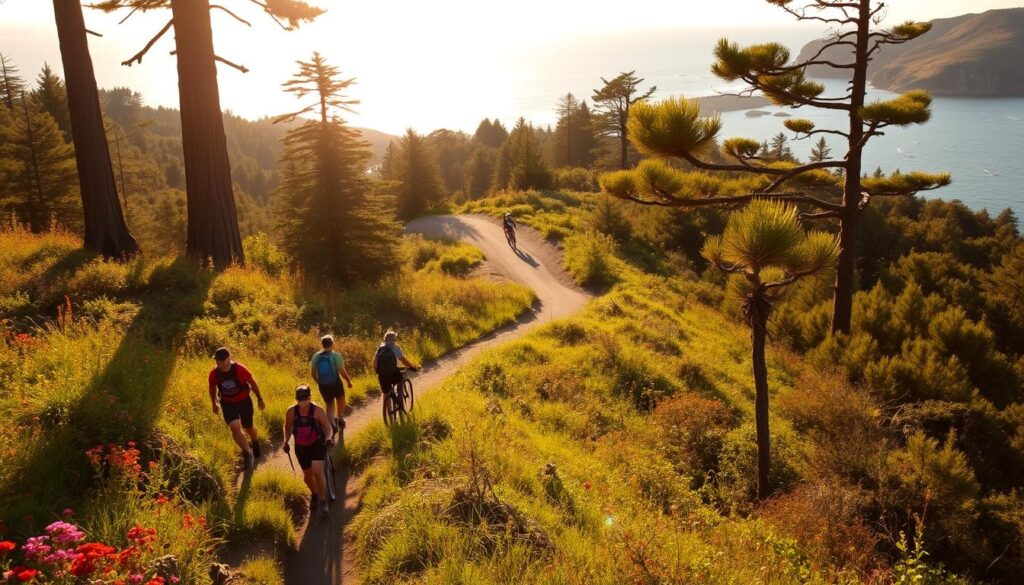
Boots Made for Walking (Lightly)
Best Hiking Trails in California
Coyote Valley Open Space Preserve is a break from screens. It’s 1,600 acres where mountain lions rule. Pro hack: Hike during Paicines Ranch’s farming workshops. Enjoy lamb sliders knowing where they came from.
| Trail | Eco-Feature | Wildlife Cameo |
|---|---|---|
| Big Bear’s Castle Rock Trail | Carbon-neutral maintenance | Bald eagles |
| Morgan Hill’s Coyote Loop | Bobcat conservation zone | Endangered kit foxes |
| Santa Cruz’s Wilder Ranch | Coastal erosion research site | Migrating whales |
Pedals, Power, and Pinot
California Mountain Biking Trails
VineCycle’s e-bike tours turn vineyards into green labs. Your ride powers the tasting room. Tahoe’s TART Connect shuttles save 4,200 cars and 42 tons of CO2 each year.
Paddle Without the Petrol
California Kayaking Spots
Monterey Bay’s hybrid cruisers offer quiet whale watching. Guides have marine biology PhDs. Every trip helps restore kelp forests.
- San Francisco Bay: Race hybrid-electric boats past Alcatraz
- Elkhorn Slough: Spot otters cracking abalone like CEOs at a power lunch
- Lake Tahoe: Crystal waters so clear you’ll question your life choices
Wildlife Without the Zoo
California Wildlife Watching Spots
Post Ranch Inn’s Smith’s Blue Butterflies have tight security. Catalina’s foxes have attitude. Pro move: Attend March’s Celebration of Whales Festival. You’ll see whales up close.
| Location | Star Species | Conservation Twist |
|---|---|---|
| Big Sur Condor Sanctuary | 10-foot wingspan dinosaurs | GPS tracking rehab program |
| Catalina Conservancy | Foxes with island swagger | Zero-invasive species policy |
| Mendocino Coast | Gray whale superhighway | Beach cleanup credits |
Sustainable Lodging, Transport & Dining
Sleeping in a yurt might sound old-fashioned – until you see Rush Creek Lodge’s solar-powered zen dens. They have heated bathroom floors. This isn’t just glamping. It’s green tourism with Wi-Fi and kombucha.
California’s eco lodges are changing how we think about hotels. The Ranch at Laguna Beach turns fallen trees into furniture. It keeps ocean views perfect for Instagram.
At 1 Hotel San Francisco, your straw becomes fertilizer tomorrow. They call it “liquid gold.” It’s a closed-loop system.
Traveling is important too. Amtrak’s Pacific Surfliner is a green coastal ride. It has 47% fewer emissions than driving. Book the observation car for sunset views.
Dining is getting creative. Farm-to-table is old news. Now, we have:
- Menus on seed paper (plant it for basil or wildflowers)
- Zero-waste kitchens where carrot tops make pesto
- Wine lists with solar-powered vineyards
When you combine these, magic happens. Imagine kayaking to a dinner with seafood caught that day. Then, ride an e-bike back, charged by solar panels. It’s sustainable and full-circle.
These changes show that going green doesn’t mean giving up comfort. It’s about making luxury responsible. And if you get a bourbon cocktail with a compostable straw? That’s California’s organic cake.
Eco-Friendly Gear Choices
Your gear shouldn’t need a PhD to be good for the planet. But it should last longer than your latest TikTok trend. Let’s look at the real heroes of sustainable travel: products that make single-use plastics seem as outdated as dial-up internet.
MOHI Farm’s beeswax wraps are a game-changer. They turn sad desk salads into zero-waste wins, making Ziplocs seem as old as flip phones. Joseph Boston Store’s SLO CAL-made bottles are more than just containers. They’re built to last, surviving world wars and your clumsy drops.
Why choose gear that ends up in the landfill? Invest in pieces that last longer than your last relationship. Here are some top picks:
| Product | Brand | Material | Durability |
|---|---|---|---|
| Reusable Food Wraps | MOHI Farm | Organic cotton + beeswax | 1,200 snack cycles |
| Water Bottles | Joseph Boston Store | Recycled stainless steel | Lifetime warranty |
| Zero-Waste Kits | The FillerUp Shop | Upcycled marine plastic | 5-year guarantee |
Pro tip: Schoch Family Farmstead’s canvas totes are versatile. They’re great for farmers markets, carrying gear, or as an emergency rain shield. Remember, true sustainability isn’t about buying more stuff. It’s about choosing gear that lasts for decades.
Using disposable cutlery? It’s time to level up. Switch to bamboo utensils from The FillerUp Shop’s kits. Your trailside lunch will silently show off your commitment to reducing waste.
Local Programs: Park Volunteering & Conservation
Ready to swap your tourist hat for a conservationist cape? California nature tours are more than just taking photos with redwoods. They give you a chance to join in on environmental efforts. At Irvine Ranch Conservancy, you can help by removing invasive weeds.
Imagine wearing work gloves instead of sunscreen. You’ll be protecting native species. This earns you instant karma and bragging rights over those who just hiked by.
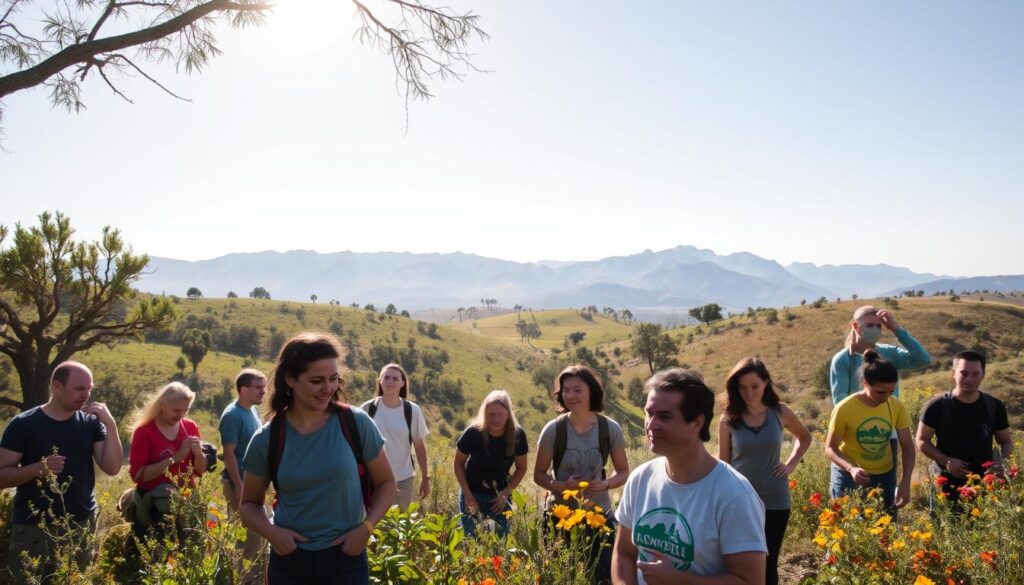
The Earth Day EV Expo in Ventura takes sustainable travel to the next level. It’s not just about trying out Teslas; it’s a form of climate activism. On Catalina Island, tracking foxes lets you earn badges that make Boy Scout achievements seem small.
These programs show that being eco-friendly is an adventure, not a chore. It’s adventure with receipts.
Here are three ways to boost your green credentials:
- Habitat restoration jobs that turn Instagram influencers into real-life heroes
- Citizen science projects where you get to be the scientist, no PhD needed
- Festivals like Morro Bay’s Celebration of Whales, where marine biology meets fun
These initiatives are more than charity work. They’re classes in sustainable travel. You’ll get hands-on experience and learn about California’s ecosystems like a local.
California’s Top Eco-Tours and Retreats
California’s eco-tourism isn’t just about hugging trees. It’s about luxury and learning about the environment. You can enjoy good wine and take great photos while helping the planet.
Echo Adventure Cooperative makes fly-fishing a healing experience for both people and rivers. Their guides teach you how to cast while talking about river health. You’ll learn about mayflies and cold-water fisheries. Plus, they’ll teach you to spot invasive species.
At Terra Farm Kitchen, you’ll make pesto with your hands in the dirt. Ingredients come straight from their farms. Their heirloom tomato workshop will change how you see supermarket produce.
SingleThread offers a $425/person “Soil to Cellar” experience. It’s pricey, but you’ll hunt truffles with special dogs and enjoy a 11-course meal. It’s like Ratatouille meets An Inconvenient Truth, with fancy tableware.
- Pro Tip: Book these California eco-adventures 6-9 months in advance. Fall truffle seasons are very popular.
- Hidden Gem: Many eco lodges work with local conservation groups. Ask about volunteer credits to save 10-15% on your stay.
Think eco-tourism is just about granola and bugs? These retreats show it can be luxurious. Even with a bit of mud from a Sonoma vineyard.
Safety, Inclusion, and Responsible Practices
Let’s get real: green tourism without accessibility is like a Tesla with a dead battery – sleek in theory but useless in practice. California’s eco-scene has caught up. Tahoe’s TART Connect shuttles are wheelchair-friendly, showing sustainable travel can be for everyone. Big Bear’s mountain trails now offer guided hikes that are beginner-friendly, not just for Instagram.
The magic happens when environmental care meets human-centered design. Quivira Winery’s solar-powered tasting room is more than organic grapes. It has a ramp that weaves through vineyards and chicken coops. Yosemite’s revamped lodges offer adaptive equipment rentals, making Half Dome more accessible.
Here’s the checklist every sustainable travel warrior needs:
- Demand actual accessibility maps (not just PDFs buried on page 37 of a website)
- Pack reusable utensils with ergonomic grips – because saving the planet shouldn’t require carpal tunnel
- Follow Leave No Trace principles like they’re the Marie Kondo method for nature
California’s parks now train rangers in ASL interpretation. Joshua Tree’s night sky tours offer tactile astronomy models. It’s simple math: green tourism + universal design = adventures for everyone. After all, what’s the point of saving redwoods if Grandma can’t see them from an accessible trail?
The real test? Ask if your eco-lodge’s composting toilet has grab bars. If they look at you like you’ve suggested fracking in a wildlife sanctuary, keep scrolling. True sustainable travel isn’t a luxury – it’s the bare minimum we owe both the planet and its people.
Conclusion
California eco-adventures are more than just trips. They’re a new chapter in our story with nature. Imagine watching elephant seals at Año Nuevo State Park, sipping solar coffee at a Mendocino lodge, and eating food from Alice Waters’ Edible Schoolyard Project. It’s not just about saving trees. It’s about starting a new era with every step.
The Golden State’s magic lies in its eco-adventures. Every choice you make is a statement. Like choosing Patagonia’s recycled wetsuits or Yosemite’s electric shuttles. These small actions have big effects, like funding regenerative farming.
Climate change is urgent, but sustainable travel can make a difference. Picture kayaking in Elkhorn Slough, knowing your tour helps otters. Or enjoying Napa’s carbon-neutral wine in a reusable cup. It’s not giving up. It’s getting the best of both worlds.
The adventure awaits. Will you leave a mark or make a difference? Bring sunscreen, forget the guilt, and explore California’s wild. The Pacific is warm, the redwoods stand tall, and your journey is just beginning. Let’s start our next chapter together.