

Welcome to California’s great outdoors, where the real housewives are 800-pound bears and the neighborhood watch has fangs. This isn’t Disneyland – there’s no scripted entertainment here.
We’re exploring the secret deal between humans and nature’s creatures. That 100-yard buffer isn’t just a suggestion – it’s a survival strategy for both species.
I’ll explain the key rules that make you a good nature lover. It’s like learning wildlife etiquette for today’s world.
Because nobody wants to be that tourist who gets the side-eye from a mountain lion while violating basic wildlife respect principles.
Bears: food storage, camps, deterrents, bluff vs true charges
California’s black bears are like four-legged food critics. They have great timing and no respect for personal space. Your trail mix isn’t safe, your cooler is an invitation, and your campsite might as well be a Michelin-starred restaurant if you don’t follow proper bear safety California protocols.
Food Storage
Think of your food storage system as Fort Knox for snacks. Bears have noses that can detect a single peanut from three miles away. Your average cooler? That’s just an appetizer container to them.
Proper food storage involves more than just tossing items in your car trunk. Use bear-resistant containers certified by the Interagency Grizzly Bear Committee. Hang food at least 10 feet high and 4 feet from any tree trunk. Remember: if a bear can reach it, a bear will eat it.
Camps
Setting up camp in bear country requires strategic thinking. Designate three distinct zones:
- Cooking area (100+ feet from sleeping area)
- Food storage (another 100 feet from cooking)
- Sleeping zone (odor-free sanctuary)
Never cook or eat in your tent. That scent lingers like bad cologne and tells every bear within miles that you’re serving dinner.
Deterrents
When it comes to bear deterrents, you’ve got options ranging from polite suggestions to absolute “nope” signals.
Bear spray remains the gold standard—when used properly. Practice deploying it before you need it. Air horns work for curious bears who just need a loud reminder about personal boundaries. Electric fencing? That’s for when you’re really not taking any chances.
Remember: feeding wildlife isn’t just illegal—it’s basically signing that bear’s death warrant. Once they associate humans with food, they become dangerous and often face euthanasia.
Bluff vs True Charges
Understanding bear body language could save your life. Bluff charges typically involve:
- Head low, ears back
- Lots of huffing and jaw-popping
- Stops within 10-15 feet
A true charge looks completely different. The bear comes silently with focused intent. Ears forward, head up, and they’re not stopping.
During a bluff charge, stand your ground and speak firmly. Back away slowly once the bear retreats. For a true charge? That’s when bear spray becomes your best friend and exit strategy.
Most encounters end without incident when humans play by the rules. Remember: in bear country, you’re the visitor who needs to be house-trained.
Mountain Lions: behavior, deterrence, what to do if approached
Meeting a mountain lion is like facing a silent, efficient predator. They are not just big cats. They are 150-pound machines with stealth and curiosity.
Decoding Feline Behavior Patterns
Mountain lions see you as either competition or curiosity. Their amber eyes are not just beautiful. They are gathering information about you.
These cats are most active at dawn and dusk. They are like the night shift workers of nature, efficient and focused.
The Art of Deterrence
Making yourself look big is key to mountain lion safety. Raise your arms and open your jacket. You become less appealing to them.
Noise is your ally. Talk loudly, clap, or sing. Your voice can scare them off. You’re showing them you’re not worth the trouble.
When Amber Eyes Lock On
If a mountain lion comes near, do not run. Running makes them chase you. Instead, keep eye contact and slowly back away.
Should they get closer, fight back. Use rocks, sticks, or trekking poles. Aim for their face and eyes. This is not a time for gentle talk.
Keep these safety tips in mind: stay close to kids, hike in groups, and keep a 100-yard distance. Treating these encounters seriously could save your life.
Rattlesnakes: California’s Natural Warning System
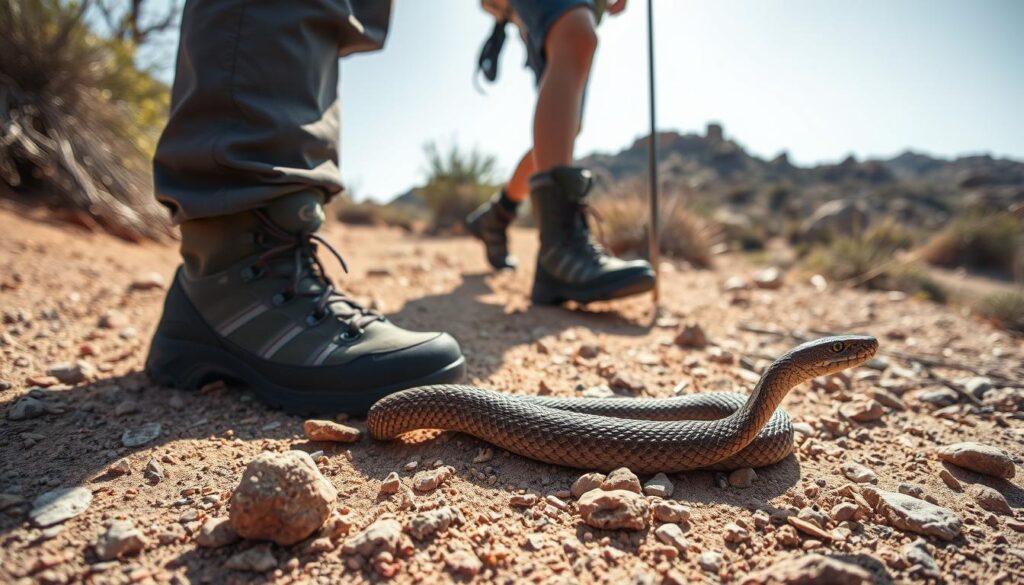
Bears and mountain lions get all the attention, but rattlesnakes are like nature’s neighborhood watch. They have their own warning system – a sound that means “Don’t step on me today.”
Understanding Rattlesnake Real Estate
Rattlesnakes like certain homes. They prefer warm, covered spots like sun-drenched rocks and tall grass. These are perfect for a picnic.
These reptiles need the sun to stay warm. They like to bask on rocks, just like we enjoy the beach.
Mastering Rattlesnake Avoidance
Staying safe from rattlesnakes starts with being aware. Stick to trails instead of wandering off. They’d much prefer to avoid you.
Be careful with your hands and feet, even on rocks. Step on surfaces instead of over them. This lets snakes escape easily.
Listen for the rattle. It’s a sign they want space. If you hear it, freeze, find the snake, and slowly leave. No need for action movie moves.
Bite Protocol: What Not to Do
If bitten, don’t try to suck out the venom. This is a movie trick, not real medicine.
Avoid these mistakes:
- No tourniquets – they can cause more damage
- No ice packs – they don’t help
- No cutting the wound – it raises infection risk
- No alcohol – it makes venom spread faster
Keep the victim calm and quiet. If possible, keep the bite area low. Remove tight jewelry or clothes. Then, get medical help fast. Antivenom is the only cure.
Rattlesnakes aren’t trying to harm you. They just want to enjoy the sun without interruptions. Give them space, and they’ll leave you alone.
Coastal Hazards: sharks, stingrays, sea lions—surf/sup tips
Diving into California’s coastal waters is like crashing an exclusive underwater gala. You’re not on the guest list. The marine residents have been here forever, and you’re just a visitor.
This isn’t your backyard pool. It’s a complex ecosystem where splashing around is like being that annoying neighbor who mows at 6 AM.
Before we dive into specifics, remember this golden rule: you’re the tourist in their hometown. Keeping a respectful distance is not just polite. It’s the difference between a great experience and becoming tomorrow’s headline.
Sharks
Let’s address the elephant shark in the room. Hollywood makes sharks out to be serial killers. But reality is different. You’re more likely to be killed by falling furniture than by a shark.
These aren’t mindless predators. They’re ocean custodians doing quality control on the local fish population.
Shark awareness means understanding their actual behavior, not Jaws mythology. Most “attacks” are actually investigative bites. It’s like being asked “who are you and why are you in my office?”
When surfing or swimming, avoid dawn and dusk hours when sharks are most active. Don’t wear shiny jewelry that mimics fish scales. And if you do see one? Stay calm. Panic splashing tells them “injured prey” not “intelligent visitor.”
Stingrays
These flat ocean pancakes have a defense mechanism that would make any medieval knight jealous. The infamous stingray shuffle isn’t a dance move – it’s your best insurance against a barbed tail enema.
Instead of lifting your feet, slide them through the sand. This creates vibrations that warn rays you’re coming through. They’ll gracefully move aside if they feel threatened. Proper stingray shuffle technique could save you a world of pain and an embarrassing ER story.
Sea Lions
Meet the ocean’s equivalent of that loud, slightly drunk uncle at family gatherings. Sea lions are charismatic, noisy, and have absolutely no concept of personal space. Their barks might sound aggressive, but they’re really just saying “hey, look at me!”
Maintain at least 50 feet of distance – they can move surprisingly fast on land and water. Never feed them (it’s illegal and turns them into aggressive beggars). And if you’re on a SUP, remember: you look like a giant floating snack tray to them.
Surf/sup tips
Stand-up paddleboarding and surfing put you right in the marine VIP section. Some etiquette guidelines:
- Scan the water regularly – you’re the tallest thing around
- Avoid areas with large seal colonies (shark buffet signs)
- Don’t paddle through kelp forests – it’s someone’s bedroom
- If wildlife approaches, remain steady and let them investigate
- Always have an exit strategy back to shore
Remember: your board isn’t a shield. It’s a giant “bite me” sign if you start thrashing around. Calm, confident movements say “I belong here” instead of “I’m terrified prey.”
The ocean isn’t dangerous – it’s discerning. With proper respect and shark awareness, you can enjoy California’s magnificent coastline without becoming part of the food chain or the problem.
Ticks & Mosquitos: prevention and removal steps
California’s wildlife gets a lot of attention, but tiny bugs like ticks and mosquitos are the real pests. They’re like a bad subscription service that you can’t cancel. These bugs can ruin your outdoor fun and even spread diseases.
Prevention
Preventing bugs is like creating a tiny shield around you. You don’t need a full biohazard suit, just some basic protection from nature’s salesmen.
Clothing is your first line of defense. Wear light-colored long sleeves and pants to spot ticks easily. Tuck your pants into socks to keep ticks out.
EPA-registered repellents are like bug red tape. Picaridin and IR3535 protect you without a strong smell. For ticks, wear permethrin-treated clothes to keep them away.
Mosquitos are like surprise parties in stagnant water at dusk. Get rid of standing water and avoid breezy places to keep them away.
Removal steps
When you find a tick, it’s like an unwanted guest. Don’t try to remove it with matches, petroleum jelly, or alcohol. These methods can make the tick spit in your blood.
To remove a tick, use fine-tipped tweezers and pull upward slowly:
- Grasp the tick as close to your skin as you can
- Pull upward with steady, even pressure – no twisting or jerking
- Clean the bite area and your hands with rubbing alcohol or soap and water
- Dispose of the tick by flushing it down the toilet or placing it in alcohol
Watch the bite area for weeks. If you get a rash or fever, see a doctor right away. Knowing the tick’s type helps doctors treat you better.
| Prevention Method | Effectiveness Against Ticks | Effectiveness Against Mosquitos | Duration of Protection |
|---|---|---|---|
| DEET (20-30%) | Excellent | Excellent | 4-6 hours |
| Picaridin (20%) | Very Good | Excellent | 3-5 hours |
| Permethrin-treated clothing | Outstanding | Good | 6 washes |
| Natural oils (citronella, eucalyptus) | Fair | Moderate | 1-2 hours |
Mosquito bites need attention too. Clean the area with soap and water, then use anti-itch creams or cool compresses. Avoid scratching to prevent infection.
Dealing with tiny bugs requires smart defense strategies. They may be small, but they demand big protection.
Pets on Trails and Beaches: leashes, vaccination, waste
Your dog might be the best at the dog park, but in the wild, he’s a target. Coyotes, mountain lions, and raccoons see him as food or a threat. It’s not about stopping your dog’s adventures, but about respecting the wild.

Leashes
The six-foot leash is more than a rule; it’s a lifesaver. Coyotes see small dogs as snacks, not friends. Big dogs are seen as threats, leading to attacks.
Leashes keep your dog safe from dangers like snakes and sea lions. They make your hike safe, not a vet visit.
Vaccination
Wildlife diseases don’t care about your dog’s shots, but your wallet does. Get extra shots like for leptospirosis, a disease found in water where animals pee. Rabies shots are a must in many parks.
Your dog’s body isn’t made for fighting off diseases from other animals. A simple touch of contaminated soil or water can make you and your pet sick for a long time.
Waste
Managing dog waste is more than just being tidy. It keeps ecosystems clean and stops diseases from spreading. Use biodegradable bags to dispose of waste properly.
Leaving waste attracts animals to trails, leading to more conflicts. It’s like leaving trash in a bear’s home. They’ll come looking for more.
Keeping your pet safe outdoors helps wildlife in California. A well-behaved dog means fewer problems for both you and the environment.
Region Quick Guides: Sierra, SoCal chaparral, NorCal redwoods, coastline
California’s nature is as varied as its wine. Don’t expect coastal ways in the Sierras. Each area has its own rules, and you’re the visitor who needs to learn them.
Sierra
The Sierra is more than Yosemite’s backyard—it’s bear country at high altitudes. Black bears are experts at stealing food. Always use bear canisters for your snacks. At 8,000 feet, your snacks are a gourmet feast for them.
SoCal Chaparral
Southern California’s scrubland is home to mountain lions with better weather. These big cats are active at dawn and dusk. Make noise on trails; your singing might save you. Keep kids close, as they look like easy prey.
NorCal Redwoods
Northern California’s redwoods are elk territory with better humidity. Roosevelt elk don’t care about your photos. Keep 100 feet away, even more during mating season. Bulls get upset if their harem is disturbed.
Coastline
The coastline changes rules as fast as tech startups. Sea lions bite, stingrays sting, and sharks are a threat. Watch for warning signs and know murky water is risky. Your regional wildlife guidelines must change quickly.
Remember: Wildlife Safety (CA) varies by area. Wear your common sense with your sunscreen.
Packing: bear canisters, snake gaiters, first aid add‑ons
Your backpack is more than just gear. It’s your whole strategy for dealing with wildlife. We’ve covered how to behave around animals. Now, we focus on the gear that keeps you and California’s creatures safe.
Bear canisters
Forget hanging food from trees. That’s like giving bears a piñata. Modern bear canisters teach bears that humans aren’t food machines.
These containers are more than just storage. They’re like peace treaties for the wilderness. When bears see them, they learn that humans don’t give out snacks. This helps change bear behavior, not create problems that lead to euthanasia.
| Canister Type | Weight | Best For | Bear Tested |
|---|---|---|---|
| Hard-sided ABS | 2-3 lbs | General backpacking | IGBC certified |
| Carbon fiber | 1.5-2 lbs | Ultralight trips | Yosemite approved |
| Clear plastic | 2.5 lbs | Easy inventory checks | Yellowstone approved |
Snake gaiters
Snake gaiters are your “don’t inject me with venom” insurance. They’re not fashion items. California’s rattlesnakes defend themselves when surprised.
Good gaiters cover from below the knee to over your boots. Look for materials like Cordura or Kevlar. They’re light but could save you from a big hospital bill.
First aid add‑ons
Your basic first aid kit might not be enough. Wilderness medicine needs special outdoor safety equipment. Here are the must-haves:
- Tourniquet: Not just for combat – essential for serious animal encounters
- Sam splintMoldable splint for fractures from falls during wildlife encounters
- Benadryl: For allergic reactions to insect stings or bites
- Irrigation syringe: Proper wound cleaning prevents infection from bites
Packing for Wildlife Safety (CA) isn’t about fear. It’s about respect. You’re entering their home. The least you can do is bring the right tools.
Reporting & Citizen Science
Your wildlife encounter doesn’t end when you leave the trail. It becomes valuable data that helps manage California’s ecosystems. Reporting isn’t snitching – it’s contributing to the collective intelligence that keeps both humans and animals safer.
When you spot something noteworthy, document it properly. For coyote encounters, California wildlife agencies want details about behavior, location, and time. This isn’t calling 911 because a squirrel looked at you funny. It’s serious citizen science reporting that shapes management strategies.
Your observations become part of a larger conservation effort. Ethical wildlife observation means keeping distance while gathering useful information. Think of it as nature’s neighborhood watch program, except the neighbors have claws and occasionally eat each other.
Several platforms turn your hike into meaningful conservation work. Your data helps balance recreation with protection. We’re all temporary visitors in someone else’s home, and proper Wildlife Safety (CA) practices include sharing what we learn.
Your citizen science reporting contributes to real conservation outcomes. It’s how we maintain the delicate balance between human recreation and animal habitats. The trail may end, but your impact continues through the data you collect.