

California’s coastline is a dream for surfers, with over 1,000 miles of beaches. You can find everything from thrilling reef breaks in Northern California to calm point breaks in San Diego. No matter your skill level, the Golden State has waves for everyone.
Pacifica/Linda Mar is a top spot, with 22.60% of surfers booking it. La Jolla and Newport Beach are also favorites, with 17.81% and 15.75% of bookings. Places like Huntington Beach and Santa Cruz show off California’s rich surf culture.
Beginners can start at Tourmaline Beach, while experts head to Mavericks. This guide will cover the best spots for all levels. You’ll learn about tides, seasons, safety, and how to surf respectfully. Get ready for an adventure in the world of surfing!
Surfing in California: Scene Overview
California’s coastline is a vibrant mix of surf spots for all levels. Each of the ten major coastal counties offers unique surfing experiences. From San Diego‘s warm waters to Malibu‘s famous breaks, it’s a surfer’s dream.
In San Diego, you’ll find popular spots like Swamis and Black’s Beach. The warm water makes it perfect for surfing all year. Moving north, Orange County is at the heart of the surf world. Huntington Beach and The Wedge draw both locals and tourists.
Los Angeles is home to Malibu‘s legendary point breaks and Venice Beach‘s unique vibe. Further up, Ventura and Santa Barbara boast stunning spots like Rincon and El Capitan. These places are known for their consistent swells and beautiful views.
Recent booking data shows Pacifica/Linda Mar is the top surfing spot, with 22.60% of bookings. La Jolla and Newport Beach also attract top coaches, each with 16.13% of bookings. This shows where surfers go to learn and get better.
California’s surf scene is backed by a strong network of surf schools, shops, and events. The famous US Open of Surfing is a highlight. This culture not only supports surfing but also brings surfers together.
California’s varied landscapes and rich surf culture make it the top surfing spot in the US.
Beginner-Friendly Beaches
Starting your surfing adventure? California has the best beaches for beginners. These spots have gentle waves, sandy bottoms, and a friendly vibe. They make learning to surf fun and safe.
Here are some top beginner-friendly beaches in California:
- Pacifica/Linda Mar: It’s famous for its easy waves, making it great for newbies. With 22.60% of bookings from beginners, it’s a top choice.
- Tourmaline Beach in La Jolla: This beach is for surfers only. It has gentle waves and no swimmers, perfect for beginners to practice.
- Doheny State Beach: It has soft waves all year, ideal for longboarders and beginners. It offers a relaxed surfing experience.
- Campus Point near UC Santa Barbara: This beach has soft waves and a welcoming atmosphere. It’s a favorite for beginner surfers.
- Venice Breakwater: It has consistent and calm waves. Plus, it’s near surf schools and rental shops.
Also, Mission Beach and Newport Beach’s 54th/56th Streets have forgiving waves for beginners. Many beaches have surf schools nearby, making it easy to find lessons and gear.
For beginners, morning is the best time to surf. It’s less crowded. Use soft-top boards and wetsuits for comfort. A rashguard, like the Malibu One Piece, adds extra protection and support.
California is the perfect place to catch your first wave! Its gentle breaks and supportive environment make it ideal for beginners.
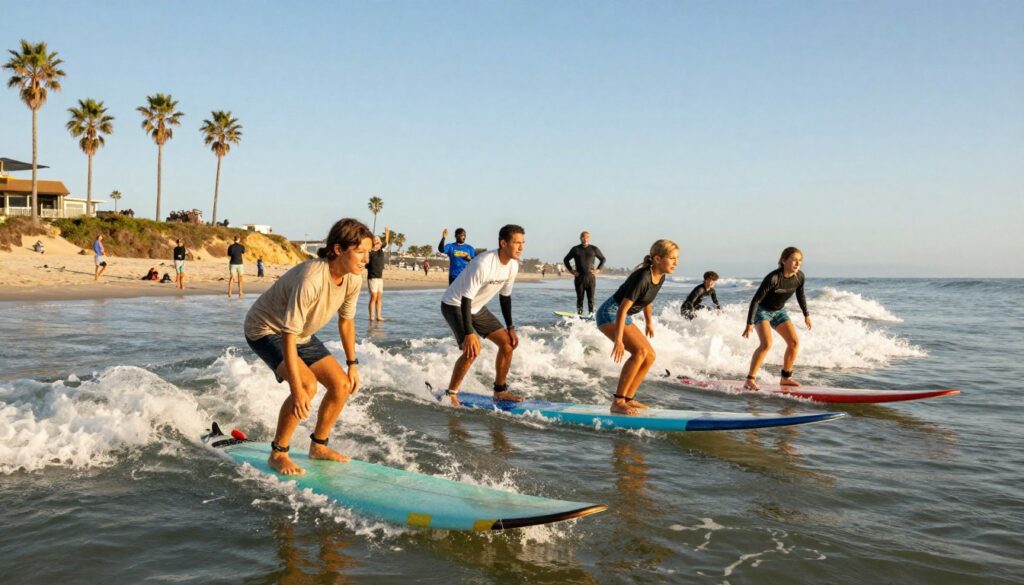
Iconic Breaks for Intermediates
If you’ve mastered the basics, California’s iconic breaks are waiting for you. These spots are perfect for intermediate surfers who want a mix of fun and challenge. Here are some of the best California surfing locations you shouldn’t miss:
- Huntington Beach Pier: Known for its consistent waves, this spot offers a friendly environment that’s not too powerful, making it ideal for refining your skills.
- Malibu’s First Point: Famous for its long, gentle right-handers, this location is a quintessential part of the California surf experience.
- Rincon’s Cove and Rivermouth: These breaks feature perfectly peeling waves, providing an exhilarating ride that helps surfers build confidence.
- Cardiff Reef: A consistent reef break, it offers reliable conditions that cater to various skill levels.
- Newport Jetties: With dependable peaks, this area is perfect for those looking to improve their technique.
- San Onofre’s Old Man’s and Trails: These spots are known for their slower, fun waves, making them great for practicing new maneuvers.
- Swamis in Encinitas: This location provides sublime conditions for all levels, ensuring a fantastic surfing experience.
While these breaks are often crowded, they deliver the quintessential California surf experience. The reality of the local vibe means that timing is key. Many surfers opt for dawn patrol to catch the best waves before the crowds arrive.
Spots like Manhattan Beach feature shifting sandbars that create fast-paced sessions, perfect for improving skills. For more insights on California’s surf culture, check out this beginner to intermediate guide or explore kayaking and SUP options in the area.
Advanced Big Wave Destinations
California is known for its tough big wave surfing spots. These places are a thrill for experienced surfers. They need skill and respect for the ocean’s power.
Here are some of the most notorious big wave breaks:
- Mavericks: This spot is famous for waves up to 60 feet. It’s a cold-water challenge for top surfers. The ocean floor’s shape creates these huge waves, making it very dangerous.
- Ghost Tree: Near Pebble Beach, this spot has huge waves. Surfers must be careful. They should wear helmets and vests because of the wave’s power.
- The Wedge: Located in Newport Beach, it has 20-foot waves in summer. It attracts advanced surfers for exciting rides.
- Ocean Beach: In San Francisco, it’s known for its rocky bottom and shifting sandbars. It’s a tough spot for even the best surfers.
- Black’s Beach: It has waves up to 20 feet with steep drops. Experienced riders love it for its intense waves.
- Lower Trestles: It’s great for high-performance waves. It’s perfect for surfers who want to show off their skills.
Rincon’s Point and Seaside Reef also challenge experienced riders. They test physical and mental strength. These spots are a big step for advanced surfers.
When facing these waves, safety is key. Surfers need the right gear, like tow-in equipment and flotation devices. Knowing how to rescue others is important. Always surf with a buddy. Watching from the cliffs can be exciting, showing the courage of wave riders.
For more on California’s coastal adventures, check out California Coastal Adventures.
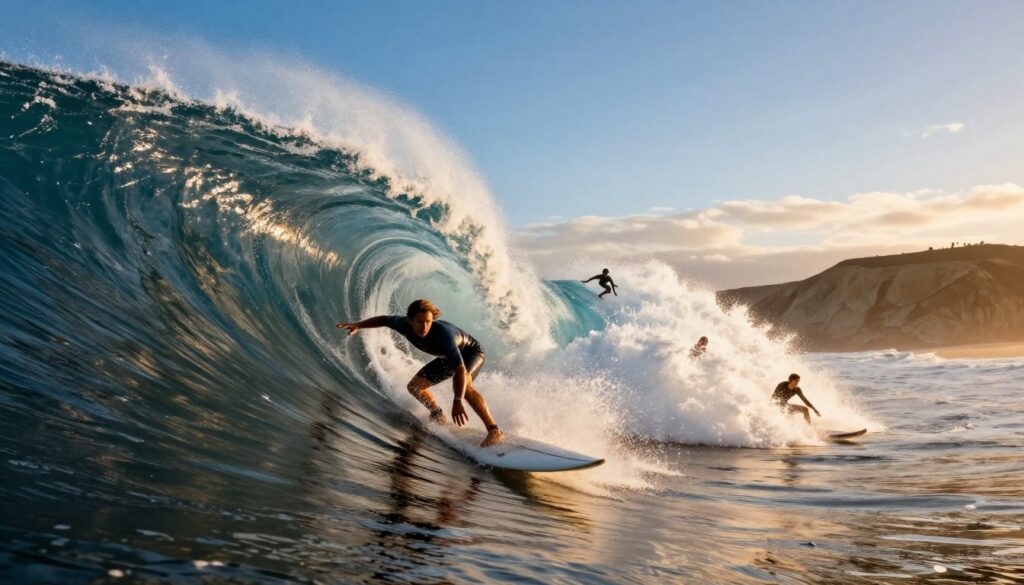
Tides, Seasons & Safety
Knowing about tides, seasons, and safety is key for a great time in best California surfing. California has different surf seasons, each with its own wave types. Winter brings strong north swells, ideal for expert surfers at spots like Mavericks and Ocean Beach. Summer, on the other hand, offers south swells, great for beginners and intermediate surfers at The Wedge and Malibu.
Tides greatly affect wave quality. For example, low tide at Seaside Reef can reveal rocks, making it dangerous. High tide might flood some breaks, changing the ride. Always check tide charts before surfing to find the best conditions.
Safety is always first. After rain, wait at least 72 hours to surf near urban beaches like Doheny, as runoff can carry harmful bacteria. Also, watch out for stingrays at Black’s Beach; shuffling your feet can prevent painful stings. Knowing how to spot rip currents is important—if caught, swim parallel to the shore until you’re out of it.
Temperature is another important factor. Wetsuits are a must for surfing north of Point Conception. A 3/2mm wetsuit works well in San Diego, while 5/4mm hooded suits are better for colder spots like Santa Cruz and Big Sur. Remember to protect yourself from the sun and stay hydrated for a safe and fun surfing day.
Surf Etiquette
Knowing surf etiquette is key for all, from beginners to experts. It keeps the lineup safe and fun. The right of way is a big rule: the surfer closest to the wave gets to ride it first.
Dropping in on someone else is dangerous and not okay. It can cause accidents and upset others.
Paddling out through the channel is important. It helps avoid getting in the way of those surfing. This shows respect for others and keeps the surf area friendly.
Places like Malibu and Huntington Beach are busier. Beginners should watch how locals surf before paddling out. This helps them understand the lineup better.
Localism is a big part of surf culture. Some spots have a hierarchy, and it’s best to respect the locals. Avoiding big groups and aggressive behavior is smart.
Talking to other surfers makes the sport safer. It also builds a community feeling. Helping out and holding onto your board are part of the surf code.
Good etiquette is more than just avoiding fights. It creates a sense of community in California’s surf culture. By following these rules, surfers of all levels can enjoy the waves together. This way, California’s surfing spots will stay welcoming for years to come.