

Forget the postcard clichés. Choosing where to ride in the Golden State is less about finding snow. It’s more about picking your tribe.
It’s a meteorological and cultural referendum. Are you drawn to the Sierra cement of the north? That heavy, hero-making snow builds legends and thighs. Or do you crave the sun-drenched, park-and-party vibe down south?
We’re talking about two completely different ecosystems. On one side, you have the sprawling, corporate-village complexity of Vail’s Lake Tahoe empire. On the other, the fiercely local, no-frills charm of a place like Diamond Peak.
This isn’t just geography. It’s altitude sickness versus traffic on the 330. It’s a tale of two states within a state. Your choice here defines you. Welcome to the real guide.
Powder Hunting Strategies
Chasing powder in California is a strategic game. It needs weather knowledge and precise timing. It’s like a secret mission where the prize is fleeting and the escape is a chairlift ride. Success depends on smart planning and quick action.
First, know what you’re after. California’s snowpack is unpredictable. You’ll find light, fluffy powder and heavy, wet Sierra cement. The cement comes from Pacific moisture, bringing three feet of snow but making your legs ache.
The real magic happens after the main storm. Knowing the weather is key. Look for when temperatures drop and humidity falls. This is when the snow turns into the good stuff.
Your plan on the mountain must be just as precise. Going for “first tracks” is risky but rewarding. It means early starts, dark parking lot gatherings, and a quick lift ride. A smarter move is the “second chair” strategy. Let the ski patrol clear the way first, then enjoy untouched snow with less chaos.
Choosing the right terrain is your final move. Wind shapes the mountain, loading snow on one side and clearing it on another. Before a storm, note the wind direction. After, head to where the snow fell. Also, consider sun exposure. A sunny slope will turn perfect powder into heavy snow by noon.
Don’t overlook your gear on a deep pow day. Poles are essential for balance in deep snow. They help you stay upright and save energy. In this case, function beats form.
The best tool for powder hunting is a season pass. It gives you constant access. Storms are unpredictable, and having a pass lets you go whenever you want. This turns you from a tourist to a local.
Keep an eye on the calendar. Storms can hit from November to April, but the best months are January and February. Plan your biggest missions for this time for the best snow.
Mastering these strategies makes snowboarding California a challenging but rewarding puzzle. The reward is endless runs of perfect snow and the joy of beating the weather and the crowd.
Budget Skiing Tips for Californians
Let’s face it, the toughest challenge in California isn’t the double-black diamond runs. It’s finding a way to ski all season without a trust fund. But, with the right snow sports insider tips, you can beat the resort prices. It’s not about having less fun. It’s about being smart with your money.
Getting a season pass is key to saving money. It’s like having a special deal. If you ski a lot, passes like Ikon or Epic are worth it. They can save you a lot of money, making a trip to Big Bear Mountain Resort just one stop on a bigger adventure.
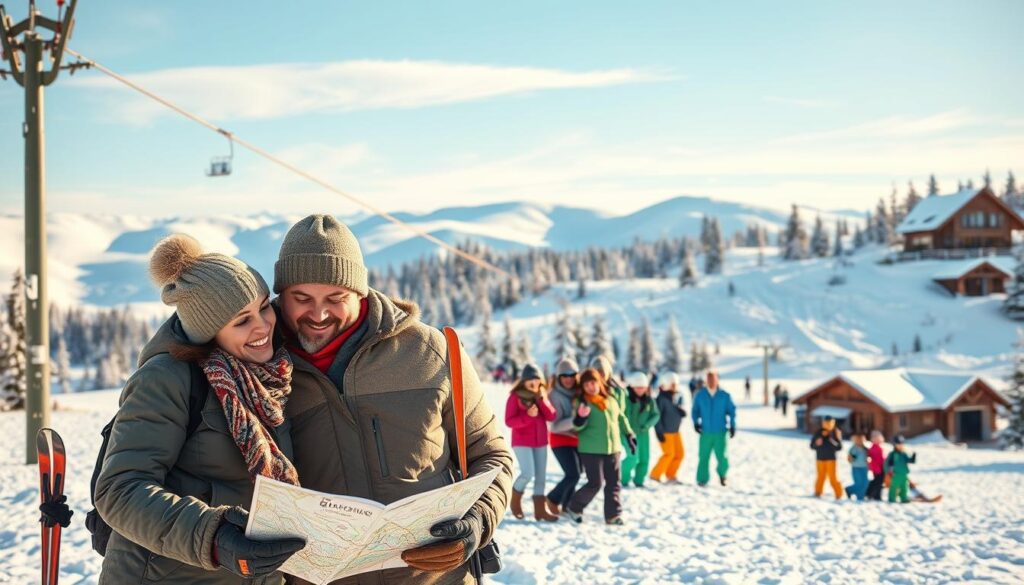
Choosing the right time to buy gear is also important. Buying new in winter is like paying too much for a Christmas tree. Shop in the off-season for better deals. Look for sales in Labor Day or check out Facebook Marketplace or ski swaps for even more savings.
Timing is everything. Skiing midweek can save you a lot of money. Plus, the mountains are less crowded. You’ll have the best snow almost to yourself. It’s like getting a VIP experience without spending a lot.
Don’t overlook lesson-and-rental packages. For $100-$150, you get a group lesson, gear, and a new group of friends. It’s a great way to start skiing without breaking the bank.
| Strategy | Upfront Cost | Long-Term Value | Best For |
|---|---|---|---|
| Multi-Resort Season Pass (Ikon/Epic) | High | Extreme (Pays off in ~3-5 days) | Weekend warriors planning 5+ days, travelers |
| Day Lift Tickets | Low (per day) | Poor (Costs skyrocket quickly) | First-timers, single-day visitors |
| Buying New Gear In-Season | Very High | Low (Immediate depreciation) | No one, honestly. Avoid this. |
| Buying Used Gear (Off-Season) | Medium-Low | High (Get quality for 50-70% less) | Everyone, specially growing families |
| Midweek Visit | Lower ticket price | Priceless (Better snow, no crowds) | Flexible schedules, powder purists |
Enjoying California’s peaks isn’t just for the rich. It’s all about strategy. Learn these tips, and you’ll save money for the important things—like a great apres-ski burger. That’s the real know-how for locals.
Spring Skiing and Corn Snow
Spring in the Sierra is a time of sun and snow, not just survival. It’s a time when the snow becomes perfect for carving. It’s like moving from thrillers to literary fiction, with less adrenaline and more joy.
Corn snow is the star of spring skiing. It’s not slushy, but a fine, granular snow that’s perfect for carving. It’s like a great espresso, full of flavor without being bitter.
Timing is key for spring skiing. South-facing slopes soften first, ready for turns by mid-morning. North-facing slopes stay cold longer, providing firmer snow. The best time is around 10 AM to 1 PM.
Spring skiing has many perks. The weather is warmer, and the snow is softer. Resorts offer deals to keep the season going, and the crowds are gone.
But, there’s a catch. As it gets warmer, the snow melts away. Lower areas melt first, leaving skiers on smaller snowpack. It’s like a game of musical chairs, with the music stopping in April or July.
Don’t forget sunscreen in the spring. The sun at 8,000 feet is strong. A goggle tan is a sign of a good spring skiing day. Staying hydrated is also important, as you’ll be sweating.
| California Resort | Elevation Advantage | Best Spring Aspect | Typical Closing | Corn Snow Reliability |
|---|---|---|---|---|
| Mammoth Mountain | Summit: 11,053 ft | North-facing bowls | June/July | Exceptional |
| Palisades Tahoe | High alpine terrain | KT-22 & Granite Chief | May/June | Excellent |
| Heavenly Mountain | Lake-effect snowpack | East-facing Nevada side | April/May | Good to Very Good |
| June Mountain | Protected north slopes | Chair 7 terrain | April | Good |
The longest-lasting snow is found in north-facing bowls and at higher elevations. Resorts with lots of snowmaking can ski longer too.
Spring skiing can last longer than you think. The best ski resorts in the West ski into June or July. Mammoth Mountain even skis on the 4th of July.
Spring skiing changes the vibe. It’s more relaxed, with people enjoying the sun. Après-ski starts earlier, and the mountain is more like a playground. It’s a secret among those who love skiing in the spring.
Enjoy the spring skiing. Look for the perfect corn snow. Learn to read the sun like a pro. Spring skiing is the reward for making it through winter.
Backcountry Access and Safety
In California, venturing beyond the resort is more than a simple trip. It’s a deep dive into snowpack science, with high stakes. The resort’s edge is not just a line; it’s a boundary between safety and the wild. You’ll find freedom and quiet spots away from crowds, but you must be fully prepared and respect the power of nature.
Entering backcountry terrain requires three key elements. Without them, your safety is at risk. This isn’t about being brave. It’s about being informed.
1. Education: Your Non-Negotiable Diploma. An AIARE 1 course is essential. It teaches you to read the snowpack’s history. This knowledge is vital in California, where snow can change quickly.
Always choose terrain that matches your skill level. A beautiful slope might look inviting, but only if you know it’s safe. Education helps you respect the mountain.
2. Equipment: The Tools of Self-Governance. When you’re on your own, your gear is your lifeline. A beacon, probe, and shovel are more than tools; they’re your right to rescue yourself. Practice using them so you can act fast.
3. Partners: The Social Contract. Never ski alone in bad weather. A good partner is trained, communicates well, and is committed to safety. They help keep your ego in check and watch your back.
This approach highlights a key choice: the Instagram-worthy run or the safe one. The Sage chooses safety, knowing true fulfillment comes from returning home safely.
| Terrain Type | California-Specific Risk Factors | Required Skill/Knowledge Level | Partner & Gear Minimum |
|---|---|---|---|
| Low-Angle Meadows & Trees (Below 30°) | Generally lower avalanche risk, but watch for tree wells and hidden obstacles. Spring sun can create punchy snow. | Basic route-finding, understanding of avalanche terrain avoidance. AIARE 1 recommended. | 2+ partners. Beacon, probe, shovel for all. Basic first aid kit. |
| Moderate Slopes & Conveyor Gullies (30°-35°) | Prime avalanche angle. Maritime snowpack requires daily stability assessment. Cornice fall hazard on ridgelines. | AIARE 1 mandatory. Experience with stability tests. Competent navigation and rescue practice. | 3+ partners preferred. Full avalanche gear plus communication devices (radio/satellite messenger). |
| Steep Couloirs & Alpine Faces (35°+) | High consequence terrain. Complex snowpack loading from wind. Exposure to falling rock and ice. Long rescue timelines. | AIARE 2 or equivalent advanced training. Expert-level rescue skills. Proficiency in technical snow travel. | Small, highly experienced team (2-3). Technical gear (ice axe, crampons, rope). Emergency bivy equipment. |
| Spring Corn Snow & Ski Mountaineering | Shifting hazards: wet avalanches in afternoon, firm ice in morning, crevasse fall risk on glaciers. | Understanding of diurnal snow cycles. Glacier travel and crevasse rescue training. | Roped team for glacier travel. Early start discipline. Knowledge of snowpack metamorphosis. |
The real lesson is not about finding untouched snow. It’s about knowing your limits in a harsh environment. The true reward is in the careful planning, the decision to turn back, and the joy of returning safely. The mountains offer freedom, but only to those who are well-prepared.
Avoiding Crowds on Powder Days
Watching pristine powder get ruined by many skiers is heartbreaking. Storms bring great snow, but soon, many people rush to ski. Your dream of skiing through untouched snow turns into a long wait in line.
Big storms make resorts busier. It’s simple: more people want to ski. Instead of going to famous resorts, try smaller hills. They offer fewer crowds and more turns.
Smaller hills, like Homewood or Dodge Ridge, are hidden gems. They don’t get as many visitors as big resorts. This means you can ski without the crowds.
Midweek skiing is the best secret. Skiing on Tuesday is peaceful. The mountains are quiet, and the vibe is great. If you can, ski midweek for a better experience.
Weekend warriors need a plan. Know the busy spots and avoid them. This helps you ski without the crowds.
- Which parking lot fills first? Arrive early, or know the secret overflow lot.
- Which lift has the eternal queue? Often it’s the high-speed gondola or the express chair to the most advertised terrain. Skip it.
- Where does everyone go first? They go to obvious runs. Find the “second wave” terrain instead.
The “second wave” terrain is less crowded. It’s not as popular because it’s harder to find. Ski here for fresh tracks.
Holiday periods are tough. More people visit. Ski during the lunch rush or late afternoon to avoid crowds.
The goal is to enjoy the mountain alone. Ski where you can hear only your breath and the snow. This is true victory on a powder day.
Equipment Recommendations by Region
Choosing your ski or snowboard gear in California is serious. It’s about the local weather. Your equipment is how you connect with the mountain. The wrong choice can ruin your experience.
First, focus on the boots. A bad fit is a disaster. Start by renting to find what works for you. Look for comfort, warmth, and flexibility. It’s a smart way to learn without spending too much.
After you find what fits, consider buying. But don’t rush into new gear. Look for deals or used items. They can save you money and offer a great fit.
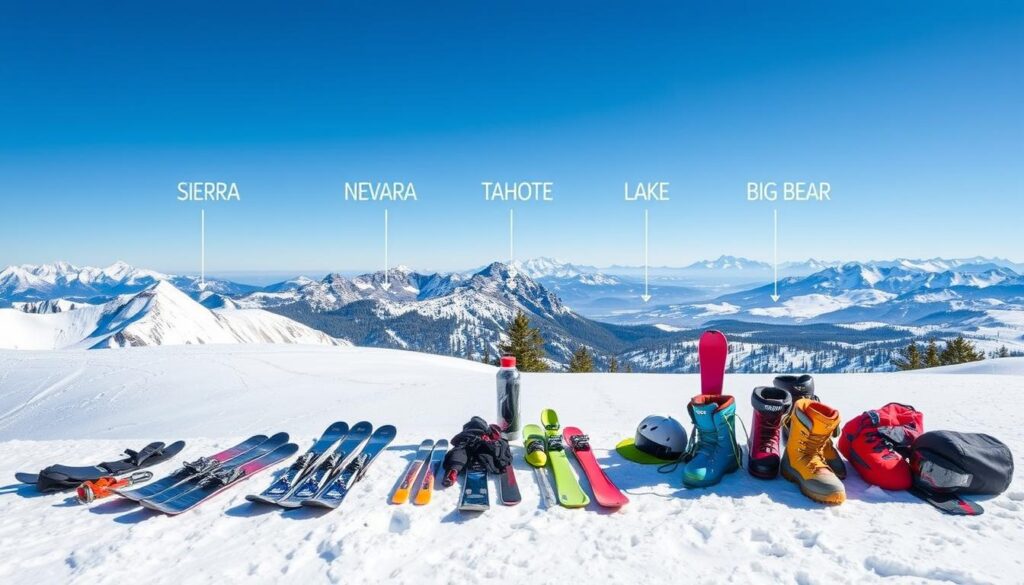
- The Sierra Nevada (Tahoe): Here, the snow is thick and heavy. You need skis or boards that float. Wider skis or boards with rocker are best for navigating deep powder.
- Southern California Resorts: The snow is firmer, often made by machines. You’ll want skis or boards that carve well. Narrower, cambered gear is perfect for smooth, man-made snow.
Don’t borrow old gear from friends. It’s a bad idea. Renting from the resort is safer and better for your skills.
And don’t forget about your goggles. In the Sierra, the right lens is key. You’ll need a lens that works well in different light conditions. Good goggles and socks will keep you dry and happy.
Choosing the right gear for your area in California is key. It makes your time on the mountain better.
Season Pass Value Analysis
Before you buy that season pass, think about this: it’s not just about skiing. It’s a choice in California’s ski industry battle. You’re picking between the Vail Epic empire and the Alterra Ikon coalition. Each has its own ski areas in the Sierras.
Let’s look at the costs with clear eyes. The daily rate seems good at first. But the real cost can add up fast. A week-long trip can cost more than a season pass.
Start by asking yourself: how many days will you ski? Be honest about your schedule and motivation. Don’t forget the blackout dates when your pass is useless. If you live close, spontaneous skiing can be a big plus.
For beginners, a season pass is a great tool. It removes the daily cost. This lets you ski without worrying about money. Falling on your third run feels less bad.
| Pass Name | Key California Resorts | Price Range (Adult) | Notable Blackout Dates | Best For |
|---|---|---|---|---|
| Epic Pass | Heavenly, Northstar, Kirkwood | $900 – $1,200 | Peak holidays at certain resorts | Vail loyalists & Tahoe-focused skiers |
| Ikon Pass | Palisades Tahoe, Mammoth, June Mountain | $1,100 – $1,400 | Select dates at destination resorts | Mammoth regulars & terrain explorers |
| Mountain Collective | Palisades Tahoe, Mammoth, Sugar Bowl | $650 – $750 | Limited days at each resort (2-3 typically) | Multi-mountain tourists & flexibility seekers |
| Indy Pass | Dodge Ridge, China Peak, Mountain High | $300 – $450 | Typically weekends/holidays at partner areas | Budget-conscious skiers & indie mountain supporters |
This value analysis goes beyond money. Think about what your choice means. Does it help with weekend crowds? Does it change the feel of your local mountain?
The decision is yours. It affects the ski community. Choose a pass that fits your vision for skiing.
Family-Friendly vs Expert Terrain
Choosing a California ski resort is like picking a restaurant for a family dinner. One person wants chicken fingers, and another craves molecular gastronomy. The priorities are completely different.
For families, the mountain’s legend is less important than its logistics. A successful day depends on the beginner area. Look for magic carpets, gentle slopes, and short walks to hot chocolate.
Resorts like Northstar or Snow Summit are great for families. They focus on stress-free base areas, not double blacks. Snow Summit’s Bear Bottom and Bear Mountain’s Inspiration are perfect for first-time skiers.
The standard terrain breakdown is useful: 20% beginner, 60% intermediate, 20% advanced. But green circles only get you so far. A few hours with a patient instructor, like a private lesson, unlocks the rest of the mountain.
For experts, it’s all about the terrain. It’s about lift access to steep bowls, the terrain park, and the vertical of double black diamond chutes. Kirkwood’s cliffs or Palisades Tahoe’s steeps are legendary.
The best California resorts balance both worlds. They have zones for intensity and ease. Groms can practice on green circles while experts explore nearby chutes. It’s a delicate, beautiful ecosystem. Find that balance, and you’ve found your mountain.