

Let’s get past the Instagram filters. You’ve seen those pictures: perfect sunsets, gear neatly arranged, and captions that promise change. But what’s real?
Real stories are about hiking the John Muir Trail with wet boots. It’s about trusting a weather app too much and facing a hail storm. It makes you question every choice that led you to that wet mountain pass.
This isn’t just a brochure. It’s a deep dive into the real human experience in the wild. We aim to find more than just pretty pictures: the truth.
Think of it as a post-mortem for fun. The lessons are in blisters, meeting strangers, and the fear of running out of water. This is a deep dive into the real experience. Buckle up.
Story 1: Solo Backpacking the John Muir Trail
Rob Schanz’s outdoor trip report from the John Muir Trail is like a love letter with blistered feet and a broken boot. It’s not your usual nature journal. It’s a polite complaint letter to his own legs.
Thirty-two miles with 10,000 feet of elevation gain? That’s not hiking. It’s a vertical divorce between man and mountain. Schanz’s story teaches us about High Sierra humility.
His journey took him along McGee Creek to Tully Lake, then Grinnell Lake, and ended at Big McGee Lake. The distance seems easy on paper. But in reality, it involved constant bushwhacking and navigating off-trail with Gaia GPS.
Your “trail” is just a digital line on a screen. Your real path is a daily battle with granite scree and stubborn plants. The reward is absolute solitude.
While others fight for Angels Landing, you get an entire alpine lake to yourself. You don’t find this solitude. You earn it with sweat and strategic suffering.
The planning was tough. Day one’s pack felt like carrying a reluctant roommate. Every step up was a debate.
Then came the art of talus-hopping navigation. Gaia GPS would say “go straight.” But the mountain had other plans.
Schanz’s smart move was a short day at Grinnell Lake. He called it a strategic swim. It was smarter than any corporate retreat. Sometimes, progress means stopping.
The climax of any good outdoor trip report often involves equipment failure. Schanz’s boot heel literally split apart.
You plan for epic views and personal triumph. But you remember the failure of your gear. The loop, as Schanz wrote, “beat the hell out of us.” In 3.5 days, it taught more than three months of comfortable living.
| Aspect | Detail | Challenge | Gear Implication | Lesson |
|---|---|---|---|---|
| Route | McGee Creek to Tully Lake to Grinnell Lake to Big McGee Lake | Constant bushwhacking, no maintained trail | Gaiters essential, durable pants required | Off-trail requires mental mapping, not just GPS |
| Distance | 32 miles total | Deceptive mileage due to terrain | Lightweight pack critical for endurance | Sierra miles count double |
| Elevation Gain | 10,000 feet cumulative | Relentless climbs with heavy pack | Trekking poles non-negotiable for joint preservation | Train for vertical, not just distance |
| Duration | 3.5 days | Compressed timeline increases daily intensity | High-calorie, low-weight food strategy vital | Rest days are performance enhancers |
| Navigation | Gaia GPS off-trail | Digital line vs. physical granite reality | Multiple power banks, waterproof case mandatory | Technology assists, but terrain decides |
What makes this outdoor trip report so valuable? It shows the gap between what you expect and what you get. Schanz expected a tough hike. He got a real negotiation with nature.
The split boot heel wasn’t just gear failure. It was the mountain reminding him who’s boss. Your gear can be top-tier. But the Sierra will test its limits.
This solo backpacking strips away all pretension. There’s no audience for your struggle. No one sees your brilliant route-finding or your wrong turns.
The solitude is earned through blood, sweat, and boot leather. You learn that maps are just suggestions. Elevation gain is a cruel accountant.
Most outdoor trip reports focus on summit smiles and golden hour photos. Schanz’s report gives us the truth in between. The moments where you question every life choice that led you here.
Then you reach Grinnell Lake. You swim in water cold enough to reset your nervous system. The suffering makes the beauty feel earned, not given.
That’s the real lesson of the John Muir Trail solo. You don’t conquer anything. You reach a temporary understanding with a landscape that will outlast you. Your boots might not.
Story 2: Surfing Perfect Waves in Big Sur
Forget the waves at Pfeiffer Beach. Big Sur’s perfect waves are thermal currents, and the surfers are California Condors. This wilderness experience isn’t about paddling out; it’s about looking up. It trades the adrenaline of conquest for the profound patience of custodianship.
My guide here isn’t a surf instructor, but a documentary—Ross Thomas’s work with the Ventana Wildlife Society. The mission? To witness a resurrection in feathers. We’re trekking not to a vista, but to a wild condor nest perched in a redwood crown. The scene is primordial, a tableau older than any coastal cliff. This is where the drama unfolds.
And what drama it is. Think Shakespearean, with fire as the antagonist. The Dolan Fire of 2020 tore through the sanctuary, a brutal act in an ecological play. Biologists transformed into airborne heroes, performing daring tree-climbing rescues. Chicks like Phoenix (condor 477) and Iniko (1031) became symbols of fragile hope plucked from the ashes.
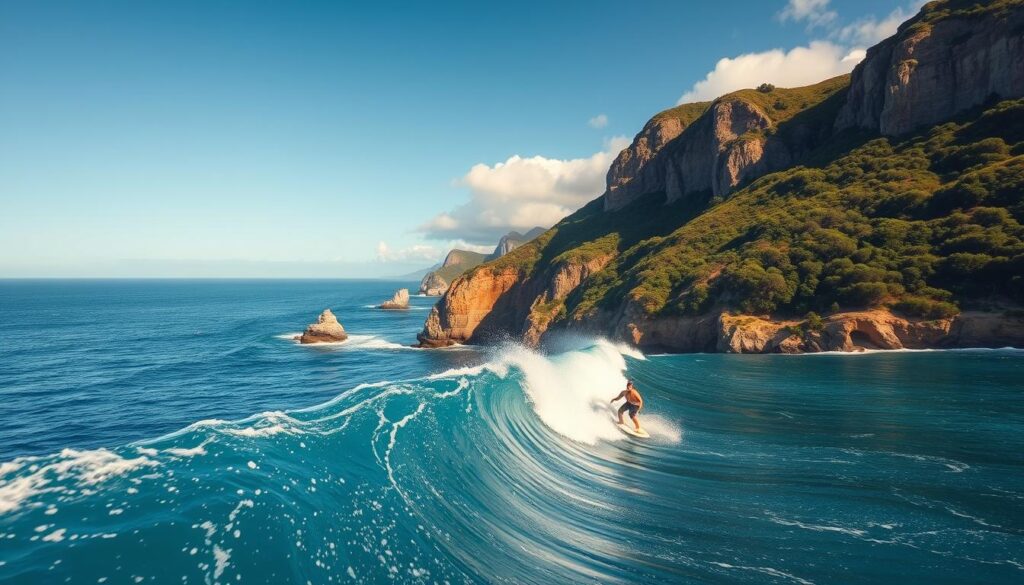
The spectacle of fire fighting condor is epic, but the analytical twist is quieter. The real villain isn’t the roaring flame. It’s the silent, pervasive poison of lead ammunition left in carcasses. This is the slow, insidious threat that outlasts any wildfire. The narrative brilliantly reframes “adventure.”
The rush here isn’t catching a tube. It’s the heart-stopping moment a nine-foot shadow glides overhead, a ghost from the brink of extinction now riding the wind back. It’s data on a tracker, a chick’s first flight, a species’ stubborn will to survive. This story rewrites the adventure manual:
- The Goal: Not a summit, but a sighting. Not a finish line, but continuity.
- The Skill: Not endurance, but empathy. Not technique, but attention.
- The Takeaway: Not a trophy, but a testimony. You become a witness to resilience.
Surfing Big Sur’s perfect waves means understanding that the most powerful forces aren’t always the loudest. Sometimes, they’re the quiet fight to give a giant bird a future. It’s a wilderness experience that changes you from an observer into a stakeholder, forever listening for the whisper of wings on the wind.
Story 3: Winter Mountaineering Mount Shasta
Winter mountaineering on California’s icy volcanoes is a test of human relationships. It strips away civilization’s comforts faster than a howling wind. What remains is raw, unfiltered humanity, revealing more than any reality TV show.
Imagine waking up at 1 a.m. to -15°F outside your sleeping bag. You’re climbing because the snow is firm now. In five hours, it will be a nightmare to walk through.
This isn’t about the view or glory. It’s about survival. You manage a tiny, fragile corporation with three assets: warmth, calories, and morale. Let one fail, and everything collapses.
Melting snow for water is a strategic operation. Staring at your frozen boots is an existential crisis. The mountain is just scenery. The real story is the team.
Winter mountaineering is a forced intimacy experiment. It asks one brutal question: Who will wait for you when you’re slow, cold, and crying in your tent? The answer defines everything. More than any peak, more than any technical skill, this social contract determines success or failure.
Consider the dynamics:
- The Pace-Setter vs. The Straggler: Patience wears thin at 12,000 feet. The strong must decide: push ahead for safety or risk hypothermia waiting.
- The Optimist vs. The Realist: One sees a temporary setback; the other sees a brewing disaster. Both might be right.
- The Gear Guru vs. The Sufferer: Someone always has dry socks and a working stove. Someone else is always on the verge of a breakdown.
Self-arrest practice on a gentle slope feels academic. On Shasta’s icy flanks, it becomes theological. You’re not just stopping a fall. You’re bargaining with gravity, ice, and your own momentum. The psychology of the slip matters as much as the technique. Panic is a luxury you cannot afford.
These California adventure stories often highlight sun-drenched trails or perfect waves. Winter mountaineering offers a different currency: hardship traded for clarity. You don’t find yourself on the mountain. The mountain reveals who you already were—and who you’re with. The summit is just a bonus. The real victory is getting everyone back down with friendships, or at least mutual respect, intact.
The cold is a truth serum. Fatigue is a lie detector. Under that pressure, pretenses evaporate. What’s left is either a bond forged in frozen adversity or a lesson in human limits. Both are worth the price of frozen toes.
Story 4: Desert Ultra-Running in Death Valley
My run in Death Valley started with sweat, not a gun. It’s a battle against the sun, where you try to cool down. This adventure turns science into a personal, sweaty challenge.
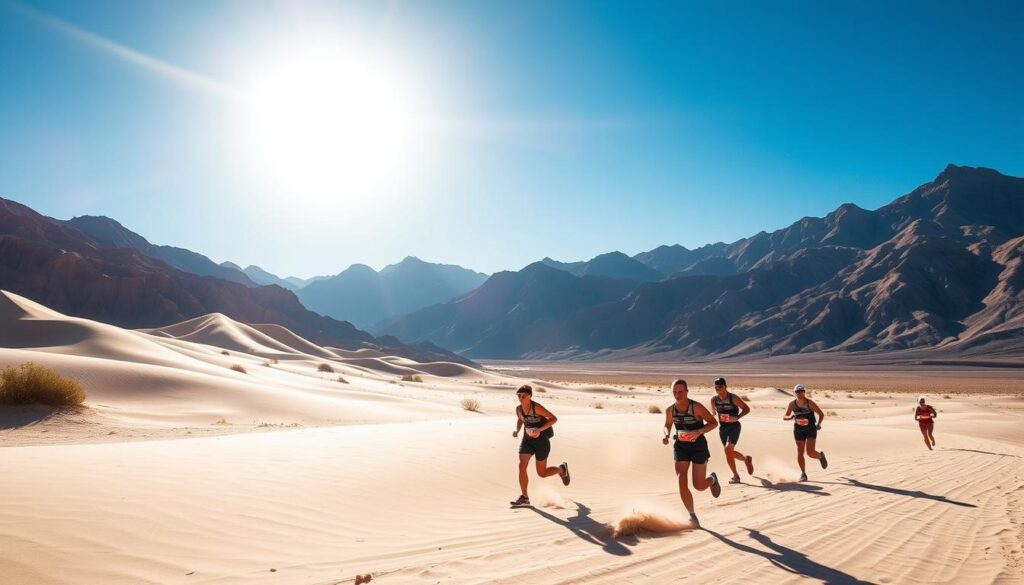
The rhythm of running here is mesmerizing. Every step on sand beats in time with your heart. You enter a “pain cave,” but it feels like a dream in Death Valley.
Shadows seem like water in the heat haze. Your mind tricks you as you lose electrolytes. It’s a world where mirages are real.
Every story from Death Valley is like a survival guide. The salt on your shirt shows your body’s fight to stay balanced. Rob Schanz’s advice on electrolytes is like a lifesaver.
Managing heat is your main job. You’re not racing; you’re keeping your body from overheating. Drink before you’re thirsty and eat before you’re hungry. Stopping before exhaustion is key.
Instead of ice, watch for snakes in the shade. Their rattle is dry and sharp, waking you up. It’s a sound that cuts through the heat.
The valley’s beauty is stark. The floor stretches forever, and mountains rise sharply. Shadows create a minimalist art on the landscape.
Success here isn’t about speed. Success is keeping your body working. Every mile is a victory over your body’s limits. Finding water is like discovering an oasis.
At mile 40, clarity hits you. The world simplifies to your footsteps and breath. It’s a moment of peace, even with a GPS watch.
The desert teaches you to be efficient. Every calorie and sweat drop is a trade-off. You learn to be efficient in a limited world.
Finishing is quiet and slow. The heat is relentless, but you can sit in it now. Your salt-crusted shirt is a badge of honor.
Death Valley tests your limits, not just your endurance. It asks how much you can endure and what you’ll find out. The answer is in sweat and miles, but it’s remembered in quiet certainty.
Story 5: Rock Climbing in Yosemite Valley
Yosemite is a vertical frontier that redefines wilderness experiences. Climbing culture is as important as the rock itself. It’s not just nature appreciation; it’s a battle with geology.
You’re not just passing through; you’re clinging to the rock face. It’s like a spider on a cathedral wall.
The valley is a cultural institution with its own language. Route names like “The Nose” and “Half Dome” are legendary. From the 60s dirtbags to today’s free-climbing stars, every chalk mark tells a story.
Your wilderness experience is about navigating this history while finding your own path.
The mental game here is intense. It’s like chess, but on sun-warmed granite. The fear is real, but it feels cleaner.
Each move is a puzzle of physics and nerve. Will that tiny crystal hold? Can you trust that smear when your feet are screaming?
Behind every summit photo is the reality of gear logistics. Setting up a portaledge is like a bomb squad operation. Your wilderness experience depends on this careful preparation.
Community etiquette is key. The wall has rules about sharing routes and respecting others. This turns solo suffering into a shared journey.
Your belayer is more than just holding a rope; they’re holding your psychological safety net.
Yosemite teaches the ultimate lesson in trust. You’re hanging your safety on your partner’s knot and your own courage. This vertical wilderness experience demands faith in gear, skills, and human connection.
The exposure here is intentional. Unlike backpacking, on El Capitan, you’re committed. Each pitch upward removes an escape option. This controlled vulnerability creates a focus rarely found in horizontal wilderness experiences.
Yosemite’s vertical wilderness offers a unique three-dimensional relationship with nature. Up is the only direction that matters. The community, history, and rock face combine into what climbers call “the Valley.” It’s a state of gravitational defiance.
Lessons Learned from Each Adventure
If these adventure stories California style have a unifying thesis, it’s this: the wilderness is an excellent editor. It ruthlessly cuts your grandiose plotlines and rewrites your script in real time. The victory, then, isn’t in sticking to the itinerary. It’s in the quality of your improvisation.
Each misadventure—from talus fields to toxic lead—taught a specific, often brutal lesson. Let’s synthesize the data into something you can actually use.
Lesson one: community is a double-edged ice axe. Your friends can be your greatest asset, pulling you through a whiteout. They can also be your worst enablers, convincing you that “off-trail is faster” right before a six-hour talus scramble.
The takeaway? Choose your adventure partners like you choose your boots. Both need to be trustworthy, durable, and suited for the specific terrain. And remember, everything has a finite lifespan, measured in miles or moments of stress.
The Condor’s Tale: Invisible Threats
We fear the dramatic—the sudden storm, the bear encounter. The Condor story teaches us that the most dangerous threats are often systemic and invisible. Like lead poisoning in scavengers, the risks that slowly accumulate are the ones that can collapse an entire ecosystem, or a trip.
This translates to preparation. It’s not just about the map and the weather. It’s about understanding the hidden variables: water source contamination, political land access issues, or your own body’s silent need for electrolytes.
The PCT Winter Saga: The Temporary Family
On a long trail, you form a “trail family.” This is a beautiful concept and a temporary contract, renegotiated daily under stress, hunger, and divergent goals. Speed is a privilege of fitness and conditions, not a moral virtue.
The lesson? Group dynamics are fluid. Self-reliance is mandatory, even within a community. Your pace is yours alone; comparing it is a recipe for misery.
The Unifying Principle: Prepare for the Wrong
Preparation is everything. But smart preparation is for things going sideways, not for things going right. Your plan is a hypothesis. The wilderness is the experiment that will test it.
The real skill isn’t in avoiding trouble. It’s in adapting to it with grace, humor, and a working knowledge of how to fix a blown boot seam with duct tape.
| Scenario | The Do | The Don’t | Core Lesson |
|---|---|---|---|
| Off-Trail Navigation | Bushwhack only with experts who have local knowledge. Double-check route direction with a physical map and compass. | Follow a friend’s “shortcut” without independent verification. Rely solely on a phone with 10% battery. | Trust, but verify. Your greatest asset can also lead you into the greatest suffering. |
| Desert & High Elevation | Manage sun exposure with relentless sunscreen, wide-brimmed hats, and electrolytes in your water. Pace for the heat. | Underestimate UV intensity or think water alone prevents cramping. Chase arbitrary daily mileage goals. | Respect invisible forces. Dehydration and sun poisoning are slow, systemic failures. |
| Group Dynamics on Trail | Communicate needs clearly. Be willing to hike your own hike, even if it means splitting from the group temporarily. | Assume the “trail family” is a permanent, monolithic unit. Sacrifice your safety or goals for group harmony. | Community is vital, but self-reliance is non-negotiable. The contract is daily. |
| General Preparation | Pack for catastrophic failure (blister kit, repair tape, extra food). Research not just the route, but its specific, mundane hazards. | Pack only for the perfect forecast and itinerary. Overlook the boring details like foot care or permit logistics. | Prepare for the narrative to break. The win is in the adaptation. |
So, what’s the final exam for these adventure stories California has to offer? Wilderness doesn’t care about your hero’s journey. It will humble your plans, test your relationships, and expose every assumption you didn’t know you had.
The reward is not a summit photo or a finished trail. It’s the quiet confidence that comes from knowing you can handle the edit when the plot twists. That’s the lesson that sticks long after the dirt is washed away.
Photography and Documentation Tips
Documenting an adventure is more about science than art. Forget the traditional photography rules. Your goal is to collect data, not just take pretty pictures.
Think of Ross Thomas’s work. He shows that stories are more important than scenery. A close-up of a condor’s feather tells a story of survival and resilience.
Photographer Rob Schanz says, “DO bring a camera.” It’s not about the gear. It’s about witnessing the beauty you earn through hard work. The camera holds you accountable.
Soophia’s work is a lesson in emotional depth. She captures the cold and the pain, not just the views. Her stories are raw and honest.
So, the first tip for outdoor trip reports is to document both the highs and lows. Struggle adds depth to your story. Without it, your report is just a postcard.
Remember, a photo of your wet, blistered feet is more honest than a summit shot. An audio note of your breath on a climb tells a truth no photo can. A journal entry by headlamp glow is priceless.
This approach creates a truthful narrative arc. Your journey is a complete story, not just a highlight reel. Your vulnerability is what makes your report compelling.
So, what do you need for this kind of documentation?
- The Unheroic Shot: Capture the mundane—the tangled bear bag line, the spilled coffee, the map smudged with dirt. These are the artifacts of real adventure.
- Audio Notes: Use your phone’s recorder. Capture the sound of wind in pines at 3 AM, your trail partner’s laugh, or your own muttered curses on a false summit.
- The Sensory Journal: Write about the feel of the granite, the taste of iodine-treated water, and the smell of ozone before a storm.
This method turns your camera and notebook into lab tools. You’re documenting your experiment in the wild. The goal? To show how you’re changed by the journey.
The best outdoor trip reports show who you were on your journey. They’re a mix of geology and psychology. The landscape shapes you, and your documentation should show that.
Forget the perfect Instagram shot. Chase the moments of human experience. Document the relief, fear, awe, and annoyances.
Your future self will appreciate the emotional truth. They’ll remember the feelings, not just the views. That’s the real trophy of a great outdoor trip report.
Unexpected Challenges and Solutions
Your careful planning is just a dream. You study maps for trail navigation, but sometimes your boots can break open. This happened to a backpacker on a descent.
Weather reports can’t predict everything. Like the time a hiker named Soophia faced a storm that turned the trail into a slippery mess.
Real lessons from the wilderness aren’t in guidebooks. They’re about managing your own expectations. When teamwork fails or gear breaks, it’s all about the mind.
Being flexible is key. Changing plans to avoid bad weather isn’t a failure. It’s a smart move. Sometimes, it’s safer to stay put than to keep moving.
The wild doesn’t care about your plans. It can throw you unexpected challenges. Your response shapes your adventure. Sometimes, the best thing to do is wait for a better day.