Let’s get real: those unwritten rules on California trails aren’t just about being nice. They’re about staying safe. Think of them as nature’s way of saying, “Slow down and watch out!”
In our crowded outdoor spaces, what seems like just being polite is actually a smart way to avoid danger. When hikers, bikers, and horses share tight paths with hidden corners, following the rules is more than just good manners. It’s like following a safety guide.
The irony is, those who think trail rules are just about being polite often cause the most harm. We’re all part of a moving world where a scared horse or a surprised hiker can start a chain of events. It’s like something out of a disaster movie.
Seeing trail etiquette as a safety measure isn’t over the top. It’s just being smart and cautious in nature’s unpredictable world.
Yield Triangle: hikers, bikers, equestrians—real scenarios
Welcome to California’s trail traffic calculus. Here, the yield triangle isn’t just geometry. It’s a constantly shifting hierarchy of momentum and vulnerability. It’s like a real-world game of rock-paper-scissors, but with actual rocks, paper-thin trail edges, and sharp switchbacks.
Let’s look at the physics behind this unwritten social contract. Horses weighing over 1,000 pounds can’t stop quickly like mountain bikes. Hikers going uphill have limited visibility and are very tired. Bikers are fast but not stable. It’s like three different vehicle classes sharing a single-lane road.
The basic rule is simple: the person with the most control yields to the person with the least. Horses get right of way because a spooked 1,200-pound animal is a big problem. Uphill travelers have priority because they have more momentum. And bikers yield to everyone because their brakes work better than hooves or tired legs.
Now, let’s talk about the real-world applications. When a biker meets horses, it’s not just about stopping—it’s strategic positioning. Move to the downhill side because spooked horses instinctively bolt uphill. It’s like knowing which way to jump when a freight train comes through.
When groups meet on narrow switchbacks, it’s a delicate dance of communication and spatial awareness. The protocol? Uphill hikers get priority, but everyone should communicate clearly. A simple “hello” or “passing on your left” works better than awkward trail standoffs.
Here’s the unspoken genius of these rules: they’re reverse chicken where everyone wins by losing right-of-way. These aren’t arbitrary regulations—they’re time-tested protocols that prevent everything from awkward encounters to full-blown trail emergencies.
Effective speed control becomes your best trail manners. Whether you’re on foot, wheels, or horseback, managing your pace shows respect for everyone’s experience. It’s the difference between a pleasant trail encounter and a “did that just happen?” story.
Remember: the yield triangle works because it acknowledges different capabilities and vulnerabilities. It’s trail democracy in action—where everyone gets a vote, but some votes carry more weight for very good reasons.
Passing, Speed, and Noise Control (bells, earbuds)
Let’s talk about passing, speed, and noise on trails. These are key to being a good trail user. It’s not just about being polite—it’s about safety.
Imagine someone wearing earbuds in a forest. It’s like watching a thriller. Yet, people do this on trails every day. It’s like texting and driving, making you a danger to others.
Bells are better than voices for warning others. A bell’s sound is clear, unlike a voice that can get lost. Think of bell boxes as your trail diplomat, warning others without being aggressive.
Speed control is also important. Your fastest time doesn’t matter if you can’t stop in time. Always ride as if someone could appear around any corner.
Passing rules are simple but often broken. Always pass on the left and say “Passing on your left!” loudly. No one likes being surprised by a silent biker.
| Situation | Proper Protocol | Common Mistake |
|---|---|---|
| Blind Corner Approach | Slow down, use bell | Maintain speed, no warning |
| Passing Hikers | “Passing on your left!” | Silent fly-by |
| Earbud Usage | One earbud only | Full noise cancellation |
| Downhill Speed | Controlled within sight lines | Max speed regardless |
Trails are shared spaces, not racetracks. Be careful and courteous to avoid accidents. Always be ready to stop for wildlife, other users, or obstacles.
The one-earbud rule is about safety, not music. You’ll miss important sounds like a rattlesnake or a hiker in distress with both ears plugged.
Following passing and noise rules is your trail social contract. Do this, and you’ll never be the bad guy in someone’s trail story.
Group Size & Dog Etiquette
Managing your group, whether it’s people or pets, shows your trail smarts. Big groups can slow down trails, making them as busy as city streets. When hikers and bikers meet on tight trails, it’s like a bad dance.
Hiking in a line is more than being polite; it’s a smart move. With more people, there’s more chance for trouble. This is key for those who love trail etiquette California and use our busy trails.
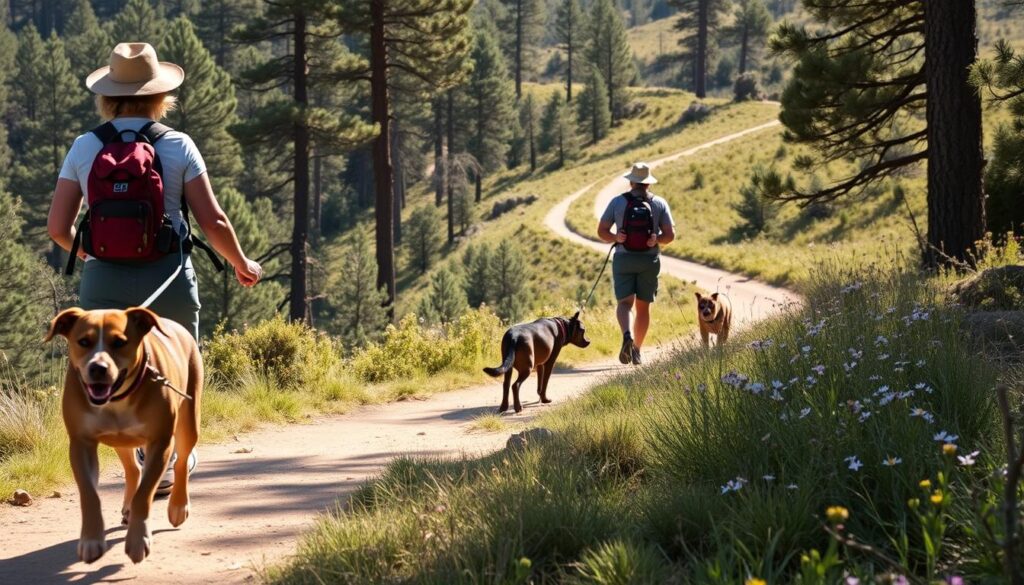
Dogs off-leash might seem fun, but they’re a wild card. They cause 80% of bad encounters with horses and upset wildlife.
California’s leash laws are more than just rules. They help keep the environment and other trail-goers safe. Even if your dog is friendly, a speeding biker might not know that.
It’s also important to clean up after your dog. Leaving waste behind is a big problem. Remember, it’s easier to clean up than to explain why you didn’t.
Proper dog waste management means:
- Always carrying biodegradable bags
- Double-bagging if you’re packing it out
- Using designated waste stations when available
Teaching your dog to listen is key. If they don’t respond fast to commands, they need a leash.
Uncontrolled pets can be dangerous. They might scare animals that don’t bother humans.
Joining trail days volunteer events can teach you about group and pet rules. These events help you learn how to handle both humans and pets on trails.
Think about the size of your group and the trail. Smaller groups (4-6 people) are better for busy California trails. They make trails better for everyone.
The right mix of group size and dog care makes trails happy places. It’s not just about being polite; it’s about keeping the environment safe.
Wet Trail and Mud Season Rules
Think you’re an environmentalist? Mud season is your chance to show off your trail etiquette California skills. But, let’s face it, many of us are not doing well.
Here’s a harsh truth: riding on a wet trail causes lasting damage. It takes hundreds of volunteer hours to fix. Your fun versus the trail’s repair work is a simple math problem.
The puddle paradox is a big problem. We think we should go around puddles, but we should go straight through. This is because avoiding puddles can harm the trail more.
This isn’t just a rule—it’s science. Closure signs are based on soil data. Ignoring them is like ignoring a “bridge out” sign because you think your SUV is tough. The irony is, the same people who damage trails often complain about them later.
Seasonal rules help us protect trails. When trails are like chocolate pudding, it’s nature’s way of saying “no.”
Knowing how to navigate wet trails is key. It’s not just about hikers, bikers, and horses. It’s about letting the trail recover. Your fun during mud season can harm the environment.
Smart trail users make the right choice. They choose not to damage trails, so they don’t have to explain to volunteers why they did.
Respecting Closures and Restoration Areas
Imagine someone ripping pages from a library book, saying they love books. That’s what happens when people ignore trail closures. These rules are not just suggestions. They are important for protecting nature.
Trail closures are like a “Do Not Disturb” sign from nature. They are in place for reasons like stopping erosion or protecting wildlife. Ignoring them harms the environment. One wrong step can undo a lot of hard work.
Trail maintenance costs a lot. Restoration areas need thousands of dollars and many volunteer hours from trail days volunteer groups. These volunteers give up their weekends to keep our outdoors beautiful. The least we can do is respect their efforts.
Private property lines are interesting. Some people see “No Trespassing” signs as challenges, not rules. This isn’t just about being polite. It’s about keeping trails open for everyone. If landowners feel disrespected, they might close trails forever.
Smart trail users see closures as investments in the future. They understand that respecting closures helps everyone. The difference between a good and bad trail user often comes down to this.
| Violation Type | Ecological Impact | Legal Consequences | Community Impact |
|---|---|---|---|
| Ignoring Trail Closures | Soil erosion, habitat destruction | Fines up to $500 | Trail system closures |
| Trespassing Private Property | Disturbance to wildlife | Criminal trespass charges | Lost access privileges |
| Cutting Through Restoration Areas | Undoes months of rehabilitation | Restoration cost liability | Damaged volunteer relations |
| Bypassing bell boxes | Increased wildlife stress | Local ordinance violations | Reduced trail funding |
Bell boxes at trailheads remind us of our responsibility. They are not just decorations. They are part of a system that helps protect nature.
The irony is that some people destroy protected areas to enjoy nature. True outdoor stewardship means knowing when to protect nature, even from our admiration.
When you see a closure sign, see it as a chance to help, not a problem. You’re not missing out. You’re helping to keep trails for future generations. That’s the smart way to enjoy the outdoors.
How to Report Issues (trail apps, land managers)
Ever seen a trail problem and thought “someone should fix that”? Congratulations – you’re that someone. Modern trail reporting has changed from just complaining to using technology to make a difference.
Reports can cut repair costs by 60%. A fallen tree can be fixed quickly, not causing a long closure. An eroded section can get fixed before it becomes a big problem.
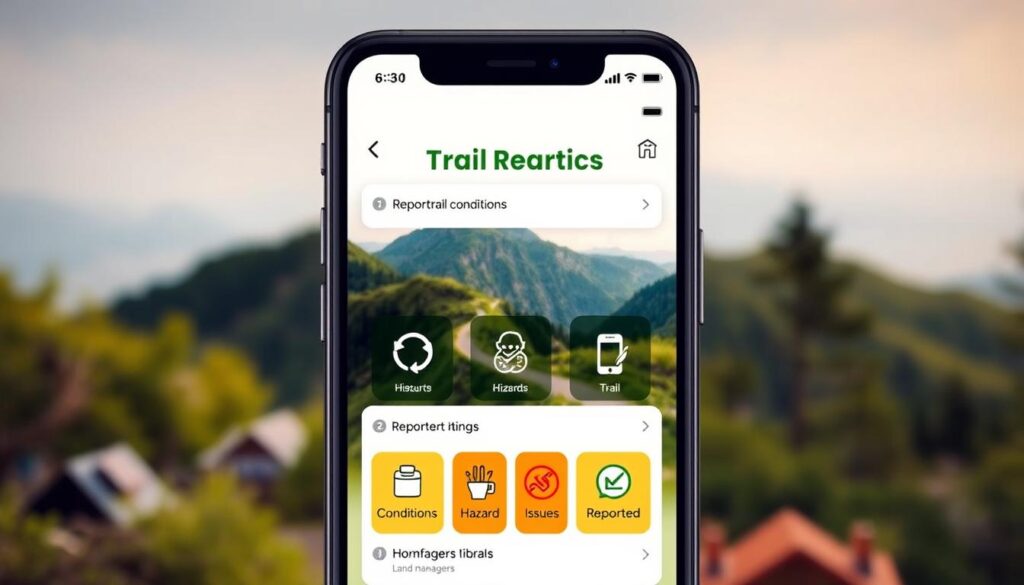
But, vague reports often fail. Saying “there’s a problem near the big tree” is not helpful. Land managers need clear details, not vague descriptions.
The art of effective reporting has three key parts:
- Pinpoint location (GPS coordinates or specific trail markers)
- Clear visuals (photos that show the issue, not your smiling face)
- Concise description (“washed-out section 3ft wide” not “trail looks sad”)
Apps like Trailforks and MTB Project make reporting easy. They automatically send your report to the right land manager. This saves time and ensures your report is seen by the right people.
Knowing who manages your trail is important. It’s not just about knowing; it’s about getting your report to the right place. National forest? State park? Local conservancy? It matters a lot.
Good reporting leads to better speed control and safety. Reporting a drainage issue today can prevent a mud pit tomorrow. This makes trails safer for everyone.
Reporting issues is like digital trail karma. It’s the same mindset as being a great trail days volunteer. Both roles know trails need care.
Those who complain but don’t report are like restaurant critics who never tell the chef. But, those who do report help make trails better for everyone.
Join a Trail Day: Where to Find CA Orgs
Ever notice how reading about jazz differs from actually playing saxophone? Trail volunteering works the same way. When you’re swinging a Pulaski, you learn trail etiquette by doing, not just reading.
California’s trail maintenance is like a symphony. IMBA chapters lead, while local groups and land trusts play key roles. Government agencies provide the setting. It’s a complex dance of funding, people, and planning.
Volunteering is more than charity. It’s learning. You learn why trails curve, why drainage is important, and why some rules exist. Regulars show 80% fewer etiquette violations because they’ve seen the impact.
Finding volunteer spots is easy:
- IMBA chapter websites (they’re surprisingly well-organized)
- Local conservancy volunteer programs
- Land trust stewardship events
- Park district work days
While learning, remember to report trail issues. The CORBA reporting system helps fix problems before they get worse.
Here’s a key point: people who enjoy trails often don’t help maintain them. But, a volunteer who installs bell boxes at trailheads knows the system better than many riders.
Want to really get the rules? Help enforce them by doing the work. Your trail karma will be grateful.
Event Etiquette (races, surf comps, backcountry lines)
Imagine your local trail turning into the Indy 500. That’s what events feel like to visitors. Your Strava attempt becomes a surprise obstacle for others.
Only 5% of trail users are in events, yet they cause 40% of complaints. This is because race days don’t cancel others’ right to enjoy trails peacefully.
Speed control is key during events. Faster movement means you need to be more aware. You’re not just setting your pace—you’re also managing others’ expectations.
The right of way rule is more important during competitions:
- Yield to hikers as if they’re judging your performance
- Pass bikers with clear communication, not silently
- Give horses plenty of space, treating them like VIPs
Event organizers should announce their events like movie trailers. Participants need to remember: not everyone knows about your personal race.
Group dynamics change during events. The pack mentality can make people forget about common courtesy. Your race shouldn’t scare others away from trails.
Good event etiquette means understanding you’re part of a shared space. The trail is not yours alone; it just tolerates your intensity for a while.
Pledge & Quick‑Reference Card
Think of this as your guide to trail etiquette in California. It’s your cheat sheet to avoid becoming a trail horror story. I promise to be predictable, talk openly, and be ready for anything. No surprises where safety is concerned.
Always yield on the trail: hikers go up, bikers give way, and horse riders have the right of way. Use a bell or say hello when passing. Remember, those bell boxes are not just for show.
If the trail is muddy, turn back. Don’t enter closed areas. If you see something broken, report it officially. Carry water, tools, and the humility to ask for help when needed.
This isn’t just about being nice—it’s how to avoid being “that person” on the trail. Keep these rules handy and remember them well. The trail rewards action, not just good intentions.