

Ever tried explaining winter wetsuit thickness to someone who thinks Malibu’s December swell counts as “cold”? Welcome to the Goldilocks zone of coastal preparedness. Here, your gear choices range from arctic survival kits to glorified swim trunks. Let’s cut through the fog – both literal and metaphorical – of assembling functional surfing gear California style.
Northern California’s 5/4mm neoprene armor isn’t just insulation – it’s a Darwinian filter. It separates Instagram posers from dawn patrol regulars. Southern breaks demand board shorts engineered like Formula 1 tires, gripping waxed decks through afternoon glass-offs. Finisterre’s layered approach? Genius. Quiksilver’s regional packing guides? Basically cheat codes for avoiding rookie mistakes.
We’re slicing through gear mythology like a fresh fin through mushy swell. Why do epoxy boards dominate Santa Cruz lineups while traditional logs rule San Onofre? How many tech jackets does one truly need for a Mendocino road trip? Spoiler: More than your pride wants to admit.
This isn’t about keeping up with surf boutique trends. It’s about matching your kit to California’s split personality. Part icy endurance challenge, part sun-drenched liquid playground. Nail the balance, and you’ll be too busy catching waves to notice the side-eye from local gatekeepers.
Wetsuits: Choosing for Each Region/Season
Choosing a wetsuit in California is like a Gold Rush quest. You’re not searching for gold, but the right neoprene thickness to avoid cold. The state’s long coastline has many different climates, so your best wetsuits choice must change often.
NorCal surfers face cold waters, sometimes as low as 48°F near Humboldt County. This is colder than an Arctic expedition. Brands like Finisterre offer 5.5mm suits with hoods, making you a subaquatic knight. Quiksilver’s suits have sealed seams to fight off cold leaks.
In Southern California, the water is warmer, around 68°F in winter. A 3/2mm suit works well here, being flexible for Malibu’s waves and warm enough for December. But remember, the warm weather in February can quickly turn cold in March.
| Thickness | Best For | Regions | Top Picks |
|---|---|---|---|
| 5/4mm | Winter in NorCal | Mendocino to Santa Cruz | Finisterre Thermalution 5.5mm |
| 4/3mm | Shoulder Seasons | Central Coast | Quiksilver Highline 4/3+ |
| 3/2mm | Year-round SoCal | LA to San Diego | Patagonia R3 Yulex |
Modern eco-warriors should know that traditional neoprene suits have a big environmental impact. Brands like Patagonia now offer plant-based Yulex rubber wetsuits. These suits are just as good but better for the planet.
Pro tip: Always check surf forecasts for exact water temps. The difference between a 3/2 and 4/3mm suit is huge. It’s like choosing between a light jacket and a parka in Tahoe.
Surfboards: Soft-tops vs. Fiberglass vs. Epoxy
Choosing a surfboard is like swiping through dating profiles. You want the right mix of stability, style, and low-maintenance charm. Let’s dissect California’s board buffet with the precision of a Venice Beach shaper measuring resin ratios.
Soft-top surfboards are the Labrador retrievers of wave-riding: forgiving, buoyant, and impossible to hate. Quiksilver’s data shows 78% of first-timers catch waves faster on foamies. Their secret sauce? Thickness that floats like a pool noodle and padding that laughs at knee dings. Perfect for:
- Groms mastering pop-up yoga poses
- Weekend warriors nursing IPA-induced balance issues
- Anyone who thinks “wipeout” should be a comedy, not a tragedy
Now meet fiberglass – the vinyl records of surfing. These polyurethane-core classics offer that “I shaped this in my garage” authenticity pros crave. But here’s the rub: their performance sweet spot shrinks faster than a wetsuit in the sun. You’ll need:
- The ankle flexibility of a Cirque du Soleil performer
- Wave-reading skills rivaling meteorologists
- A personal relationship with ding repair kits
| Type | Durability | Wave Type | Skill Level |
|---|---|---|---|
| Soft-top | 9/10 | 1-4 ft | Beginner |
| Fiberglass | 5/10 | 3-8 ft | Advanced |
| Epoxy | 8/10 | 2-6 ft | Intermediate+ |
Epoxy boards crash the party like Elon’s Cybertruck – lighter, stronger, and polarizing. Their expanded polystyrene cores make them the CrossFit athletes of surfcraft: agile in weak waves but about as cuddly as a tax audit. Ideal when you want:
- Responsiveness without fiberglass’s diva tendencies
- Enough float for post-taco belly
- To impress Insta followers with your “eco-conscious” flex
Here’s the bitter pill: that sexy shortboard you’re eyeing? It’s the sports car of surfing – looks fast in the parking lot, humiliating in traffic. Unless you’re pulling airs at Trestles, stick to boards that match your actual skill, not your aspirational TikTok feed.
Must-Have Accessories: Leashes, Wax, Fins, Board Bags
Think of surfing accessories as your wave-riding utility belt. Forget Batman, you’ll need these gadgets more than Gotham’s hero needs brooding. Let’s look at the four key items that make a surfer.
Leashes: Your board’s loyalty oath. Finisterre’s 7mm urethane cord is not just marketing – it keeps your board safe. Pro tip: Match leash length to board size like Tinder dates to personality types. Swipe left on anything shorter than your height.
Wax: The unsung hero of traction. Temperature ratings are like your ex’s mood swings – specific and non-negotiable. Cold water wax stays hard in Arctic swells; tropical blends melt fast in Death Valley. Basecoat? That’s your primer – skip it and watch your grip dissolve faster than New Year’s resolutions.
Fins: Quiksilver’s FCS II system isn’t just engineering – it’s surfboard feng shui. Adjustable fins let you switch from cruise control to NASCAR mode mid-session. Want speed? Go upright. Craving turns? Toe them outward. It’s like tuning a Porsche…if Porsches cost $50 and fit in your trunk.
Board Bags: The ultimate relationship counselor between your board and…well, everything else. Padding thickness matters more than your wetsuit’s neoprene grade. Pro tip from our 25 best surf accessories guide: Use separate bags for different boards. Mixing shortboard and longboard bags? That’s like storing champagne in a paper bag.
Forget Instagram filters – these tools determine whether you’re shooting surf clips or starring in a blooper reel. Choose wisely, or prepare to be the punchline of Neptune’s jokes.
Beach Essentials: Towels, Shades, Coolers
Let’s talk about the struggle after surfing: dealing with a wet towel while seagulls watch. California’s beaches need smart gear, not just any towel. You want towels that keep sand out, shades that are tough, and coolers that keep your drinks cold.
Towels: Your big bath towel is not for the beach. Quiksilver’s towels dry fast and don’t hold sand. Finisterre’s robes are like privacy tents with pockets for your stuff.
| Feature | Performance Towels | Luxury Cotton | Changing Robes |
|---|---|---|---|
| Sand Resistance | ★★★★★ | ★☆☆☆☆ | ★★★★☆ |
| Quick-Dry Time | 45 seconds | 15 minutes | 2 minutes |
| Multi-Use | Beach/Yoga | Bath Only | Changing/Shelter |
Sunglasses: Polarized lenses are key for seeing waves and fighting glare. Look for shades with floating straps and frames that can handle wipeouts.
Cooler Warfare: Your snacks after surfing are important for your reputation. Solar coolers keep food cold without ice, and reusable ice packs are quiet and effective.
- Essential towel metric: 40” x 70” minimum (no one needs a loincloth situation)
- UV400 lenses – because retina burns don’t heal with aloe
- Cooler capacity: 20 cans + 3 days’ worth of ego repair (trail mix)
Choosing the right gear is key to looking good after the beach. The seagulls are watching, so pick wisely.
Renting vs. Buying Gear
Choosing between renting and buying surf gear depends on your surfing habits. If you’re surfing less than three times a year, renting is the smarter choice. It saves you from cluttering your space with surfboards.
The real math hides in these variables:
| Factor | Renting | Buying |
|---|---|---|
| Daily Cost | $25-$50 | $500-$1,200+ |
| Storage Headaches | Zero | Apocalypse-ready |
| Airline Fees | Nada | $150+ each way |
| Sentimental Value | Beach fling | Marriage material |
Finisterre’s data shows 68% of beginners regret buying gear quickly. They suggest renting until you’re sure about your surfing commitment. You’ll know when you can paddle out, read swell reports, and name local breaks without Google.
But here’s a twist. Surf gear rental shops in Southern California now offer monthly memberships. For $150-$300, you can swap between different boards as many times as you want. This makes buying gear seem old-fashioned.
Pro tip: Always check rental boards for “character” (ding repairs older than your Instagram account) and verify insurance coverage. That $35/day fee stings less than explaining saltwater damage to your credit card company.
Kid and Beginner Kits
Getting your kid ready for surfing is like a secret mission. You want to avoid expensive gear and bad seams. A eight-foot foamie is perfect for beginners. It’s like training wheels for the water, without the bruises.
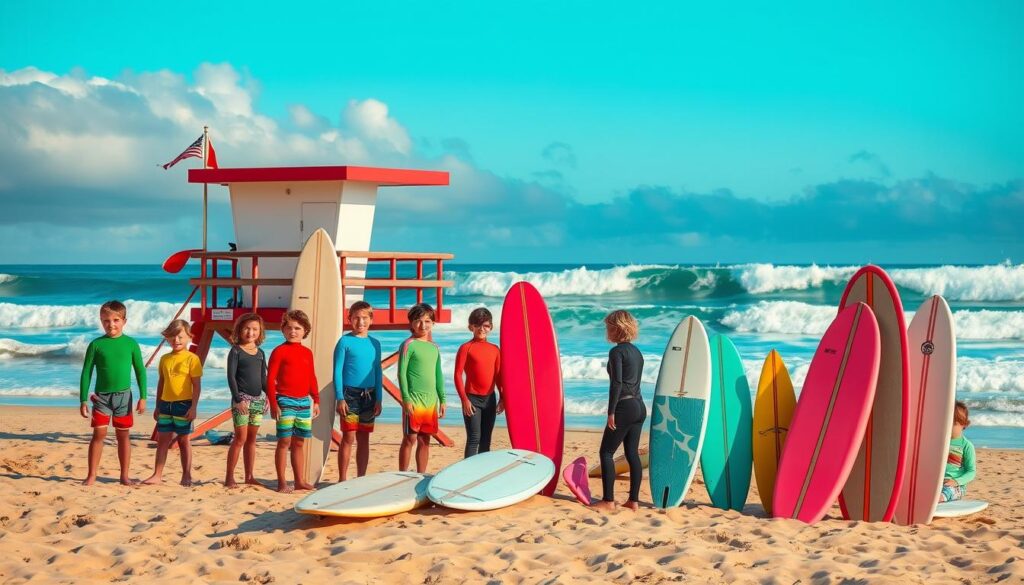
But beware of “beginner” boards that are actually not. Here’s how to tell:
- Thickness matters: 3”+ foam cores help you bounce back from falls
- Round noses help avoid nosebleeds when you dive too deep
- Fins that come off before you do
Finisterre’s soft-top boards are great for beginners. Their 8’6” model is super grippy. Add a thick wetsuit with knee pads, and your kid’s gear will last a long time.
Watch out for sales talk about “high-performance rails” or “concave decks.” These are not for beginners. Good beginner gear is wide and sturdy. A $50 wetsuit with strong knees will last a long time, even when your kid wants a fiberglass board.
| Feature | Beginner Gear | Intermediate Trap |
|---|---|---|
| Board Weight | Light enough for kids to carry | Requires adult liftoff |
| Seam Construction | Flatlock stitching | “Performance” glued seams |
| Leash Attachment | Velcro for quick escapes | Tournament-grade coil |
Good surfing gear for kids makes them excited, not scared. The right gear turns falls into laughs and cold water into fun. My first board, on the other hand, made me wish I had ankle pads.
Eco-Friendly Surf Gear Options
Surfing has a big environmental impact, like a Sasquatch stomp. It’s hard to ignore the damage from petroleum-based wetsuits and foam boards. But, your next gear upgrade might just help save the planet.
Wetsuits are a big issue. They’re made from petroleum, like SUVs and reality TV. But, Finisterre’s Yulex suits are made from plant-based rubber. They decompose fast and cut CO2 emissions by 80%.
Recycled Revolution
- CDs to fins: Your old Nickelback albums are now recycled plastic fins
- Hemp board shorts: They’re breathable and don’t scream “tie-dye cult member”
- Algae-based wax: It gives better grip and no petroleum taste
| Gear Type | Traditional Material | Eco Alternative | Ocean Impact |
|---|---|---|---|
| Wetsuits | Petroleum neoprene | Yulex natural rubber | 80% less CO2 |
| Surfboards | Polyurethane foam | Recycled EPS cores | 50% less waste |
| Accessories | Plastic components | Ocean-recovered plastics | Cleans beaches |
Think eco-friendly gear means less performance? Think again. Today’s sustainable boards are as good as the real thing. They’re precise and ready for any wave. And when your grandkids ask about waves in 2075, you’ll smile and say “Because Pop-Pop rode the green wave first.”
Top Local Surf Shops
Forget Amazon—your next surfboard deserves a story. It should come from a shaper who names boards after ex-girlfriends and local brews. California’s best outdoor gear shops are more than just stores. They’re places where legends share wave forecasts while making your new board.
These spots mix shopping with learning about the local culture. You’ll leave with a new board and tips on the best surf spots. Plus, you’ll know which break to avoid after lunch.
- Mitch’s Surf Shop (La Jolla) – A place where SDSU frat boys meet crusty chargers. Their “board hospital” fixes dings fast. Plus, the bar serves IPA that’s as hoppy as a shortboard in chop.
- Catch a Wave Surf Shop (Mendocino) – A hippie-era relic with single-fin logs and organic wax. The owner, a former ’70s competitor, might give you kombucha while critiquing your pop-up.
- Cowell’s Surf Shop (Santa Cruz) – It feels like a surf museum and a REI garage sale combined. Check the basement for vintage thrusters at low prices.
Down in Huntington Beach, Jack’s Surfboards thrives on nostalgia and neon signs. Their rack of team rider-signed leashes is like surf history in plastic. For Malibu chic, Zuma Jay’s offers $1,500 longboards next to duct-taped flip-flops under a roof that’s seen more storms than the local mayor.
These shops have one rule: No transaction ends at the register. You’ll get advice on dawn patrol, debates on wetsuit thickness, and maybe an invite to a secret BBQ. In California, where you buy your gear is as important as what you buy.
Maintenance and Packing Tips
Keeping surf gear in top shape is like finding a good partner in LA. It’s rare, but it’s worth it. You’ll learn how to keep your surfing accessories looking great, like a Malibu influencer’s Instagram.
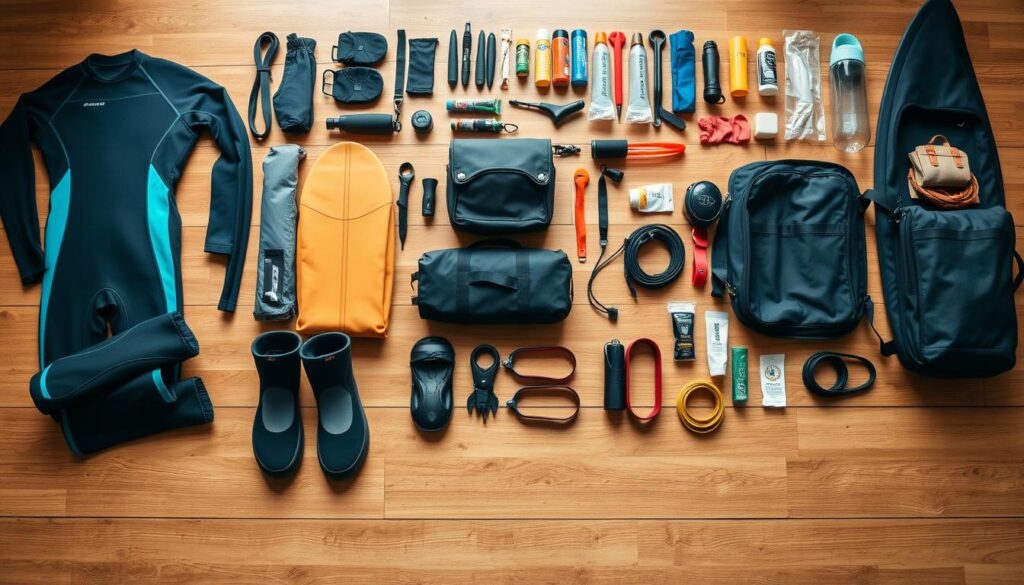
- Fold neoprene carefully, like it’s delicate
- Store it upright to avoid wrinkles
- Always rinse with fresh water to remove salt
Your surfboard is more than just a piece of equipment. It needs care to stay in good shape. Follow these steps to protect it:
- Use rail guards to shield it from damage
- Carry the board with the fins facing down
- Choose a thick board bag for extra protection
Packing Like a Tetris Grandmaster
Quiksilver’s travel tips are genius. They’re so good, even Jason Bourne would be impressed. Here’s how to pack smart:
| Layer | Items | Pro Tip |
|---|---|---|
| Base | Wetsuit, towels | Roll, don’t fold |
| Middle | Boards, fins | Use socks as fin protectors |
| Top | Wax, accessories | Ziplock everything – TSA hates surprises |
Airline Appeasement Ritual
Here are five ways to get along with baggage handlers:
- Weigh your gear before packing
- Take a photo of your bag for proof
- Put a protein bar in the board bag (it helps)
- Label everything clearly
- Be friendly with TSA agents
Well-kept surfing accessories show you’re serious about surfing. They make you stand out in the lineup. Now, pack like a pro and show the world your skills.
Conclusion
California’s waves need more than just enthusiasm. They demand the best surfing gear California beaches can offer. From Monterey’s chilly waves to San Diego’s warm ones, your gear makes all the difference. It decides if you’ll have a great time or a cold one.
The right wetsuit, board, and accessories are key. They’re not just details; they’re essential for surviving the state’s changing weather. Patagonia’s eco-friendly wetsuits and Reef’s board bags show you can perform well while caring for the planet.
Local surf shops like Surf Ride or Mollusk have the best gear. They offer better choices than big-box stores. A 7mm wetsuit in Malibu’s heat is not smart; it’s like wearing a sauna suit.
This isn’t about getting famous for a cool surfing trick. It’s about being prepared and avoiding embarrassment. The best gear lets you focus on surfing, not fixing problems.
Pack wisely, respect the lineup, and remember: every beginner was once a kook. Ready to improve your surfing in California? The Pacific is waiting. Just check the tide one more time.