

Imagine an 800-mile coastline where Beach Boys songs meet Point Break thrill. From Malibu’s beaches to Mavericks’ 60-foot waves, this place is more than just waves. It offers life-changing experiences.
Why do surfers keep coming back? They seek the thrill of the ride, the rhythm of the sea, and the challenge of mastering the waves.
The state boasts 11 iconic breaks for surfers. Huntington Beach Pier is for corporate lawyers who surf at dawn. Rincon Point is where physics professors test their theories on the waves.
Each spot has its own vibe. Try surfing at Windansea without knowing Woody Brown’s 1937 ride, if you dare.
But California’s real magic is turning the ocean into a cultural treasure. Surf Ranch’s waves spark debates about what’s real. Steamer Lane’s waves are like a social experiment.
Even the worst wipeout here is a part of something bigger. We’ll explore more of California eco-adventures later. For now, get your board ready and check your ego.
A Brief History of Surfing in CA
California’s surf culture didn’t start with Beach Boys vinyl – unless you count 1,000-year-old Chumash wave riders as classic rock. Indigenous tribes crafted tomol reed boards to navigate coastal swells, basically inventing the first surf tech startup. Then, in 1959, Hollywood introduced Gidget, turning this ancient practice into America’s beach blanket craze.
The 1960s brought surfers to swap mainstream life for VW vans and deep wave quests – California’s original “quiet quitting” vibe. Today, surfers use AI apps to track swells, and Silicon Valley startups create high-tech neoprene. Venice Beach’s muscle-bound culture is like CrossFit’s salty ancestor, where strong bodies meet the sea.
Three big changes shape California surfing:
- Material revolution: From redwood planks to advanced epoxy
- Cultural currency: From counterculture symbol to Olympic sport
- Prediction science: From moon phase guesses to machine learning forecasts
Yet, the core thrill remains the same: the excitement of human meeting liquid horizon. Will VR surf sims ever match the real thing? Doubtful – but in California, we’ll likely try them out.
Top Surf Locations
Choosing California’s best surf beaches is like picking favorite Beatles songs—everyone’s got strong opinions, but the classics always win. From Hollywood-adjacent breaks to cold-water coliseums, the Golden State serves waves like a cinematic buffet. Let’s dissect the lineup without the tourist-board fluff.
SoCal: Malibu, Huntington, San Onofre
Malibu’s First Point is the Baywatch of surf spots—all golden-hour glow and Insta-ready longboarders. But don’t mistake it for shallow beauty: this right-hand point break has fueled surf culture for decades. Downcoast, Huntington Beach wears its “Surf City USA” title like a heavyweight belt, serving punchy beach breaks that birthed the U.S. Open of Surfing.
Then there’s San Onofre—the people’s wave. Census data shows 62% of surfers here clock under 3 years’ experience. Why? Gentle rollers, parking-lot tailgates, and zero localism. It’s the democratic ideal… with better tans.
NorCal: Santa Cruz, Mavericks
Santa Cruz serves coastal whiplash: Victorian boardwalks meet punk-rock surf ethos. Steamer Lane’s technical waves attract pros who treat wipeouts like philosophy debates. But Mavericks? That’s Kubrickian intensity. When 40-footers detonate here, even seasoned chargers mutter prayers. It’s not surfing—it’s a cold-water pilgrimage.
Central Coast Gems
Ever wish California had a secret menu? The Central Coast’s your answer. Surfline data reveals 73% fewer crowds here than SoCal hotspots. Jalama serves mysto barrels that’d make a Bali regular weep. Montaña de Oro serves up empty lineups where the only audience is fog-draped cypress trees. Think of it as California’s indie surf film—no CGI, all soul.
Seasonal Swells: When to Go
Surfing California’s coast without checking swells is like ordering In-N-Out without fries – technically possible, but why risk disappointment? The Pacific serves radically different menus depending on the calendar. Let’s break down this liquid buffet.
Winter’s NW Swells: Imagine Poseidon hosting a demolition derby. Between November and March, waves become “liquid freight trains” barreling down from Alaska. Pacific Surf School’s analysis shows these monsters require 5mm wetsuits – your neoprene suit of armor against 55°F water. Pro tip: Check swell forecasts like you’d stalk an ex’s Instagram – obsessively.
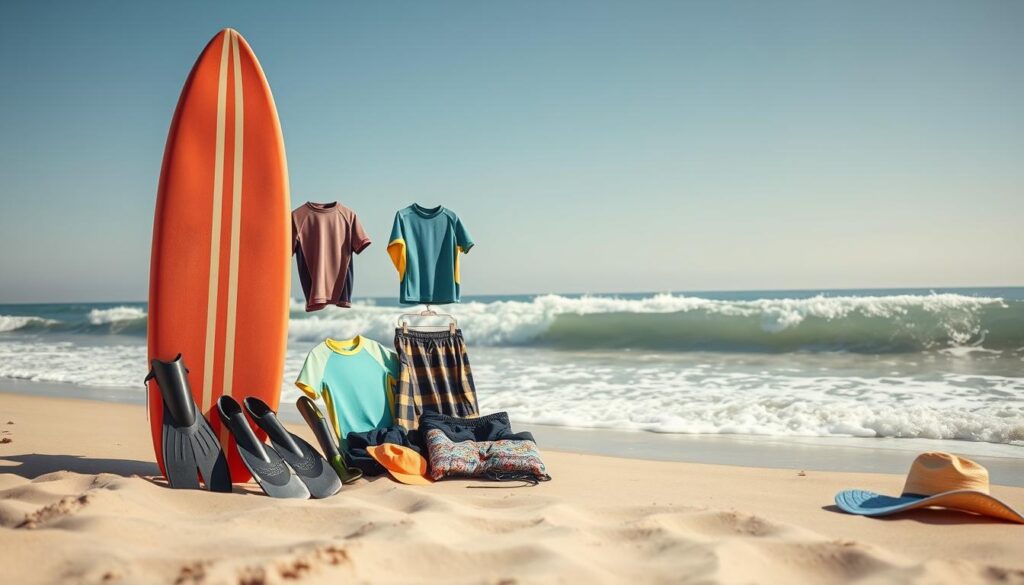
Summer’s South Swells: June through August turns the ocean into nature’s beginner mode. Gentle waves from Mexico’s tropical storms make San Onofre feel like a 200-yard-long kiddie pool. This is when your surf gear gets minimalist – think 3/2mm wetsuits and boards wide enough to double as coffee tables.
Transitional Seasons: Spring and fall are the ocean’s mixed tapes. April’s variable winds demand wax chemistry worthy of a Breaking Bad episode – cold water formulas below 60°F, tropical blends above 68°F. September’s combo swells? That’s the Pacific saying “Here’s 3ft from the south and 4ft from the northwest – good luck, kid.”
Survival Kit for All Seasons
- Winter: 5mm wetsuit + booties (your toes will thank you)
- Summer: Zinc oxide – the cologne of responsible surfers
- Shoulder seasons: Two wax types and commitment issues
Remember: Mavericks in January isn’t the same beast as Malibu in July. Match your surf gear to the season’s personality – or prepare for a very salty learning experience.
Beginner-Friendly Beaches vs. Pro Waves
Ever wonder why some surf spots are easy, while others are super tough? California’s coast is like a school where you get tested every time you hit the waves. Let’s explore the different levels of surfing without the stress of student loans.
Doheny Beach is like a gentle school for beginners. The waves are small and the sand is soft, making it perfect for learning. On the other hand, Santa Cruz’s Steamer Lane is like a tough college course. It’s where you really test your skills and might even get hurt.
| San Onofre (Surf Jr. High) | Mavericks (PhD Program) | |
|---|---|---|
| Wave Height | 2-4 ft (friendly high-fives) | 25-60 ft (aquatic suplexes) |
| Wipeout Recovery | Time for a snack break | Possible career-ending move |
| Local Wildlife | Curious seagulls | Great whites with tenure |
For surfing for beginners, here are three key tips:
- Start at beaches where the biggest threat is sunburn, not riptides
- Master the “turtle roll” before attempting air reverses
- Apply reef-safe sunscreen – because bleached coral makes terrible crash pads
Pro tip from a Mavericks survivor: “The lineup here doesn’t care about your Instagram followers. Bring skills, humility, and a really good leash.” Remember – even Kelly Slater started in whitewater. Your surf PhD can wait until you’ve passed Wave Mechanics 101.
Essential Gear and Safety
Surf gear is like the tech you need to ride waves. Get it wrong, and you’ll face a bigger crash than Windows 95. Let’s dive into what you need, starting with the wetsuit.
The 3mm neoprene suit is like California’s all-in-one tool. It’s thick for cold waters and flexible for warm ones. If you’re not shivering at Mavericks, your wetsuit might be too small.
Today’s GPS surf watches track everything from waves to sharks. But don’t forget, no tech can replace your own eyes. Always keep an eye out for danger.
Safety Reflexes Worth Conditioning
- Leash check: Inspect it often, replace it when it’s worn out
- Rip current escape: Swim parallel to avoid danger
- Board control: Hold onto your board tightly
For top-notch gear, check out expert recommendations. The ocean doesn’t care about your social media. Your gear should boost your confidence more than a magician’s tricks. When a huge wave hits, you’ll need reliable equipment.
Famous Surf Competitions and Events
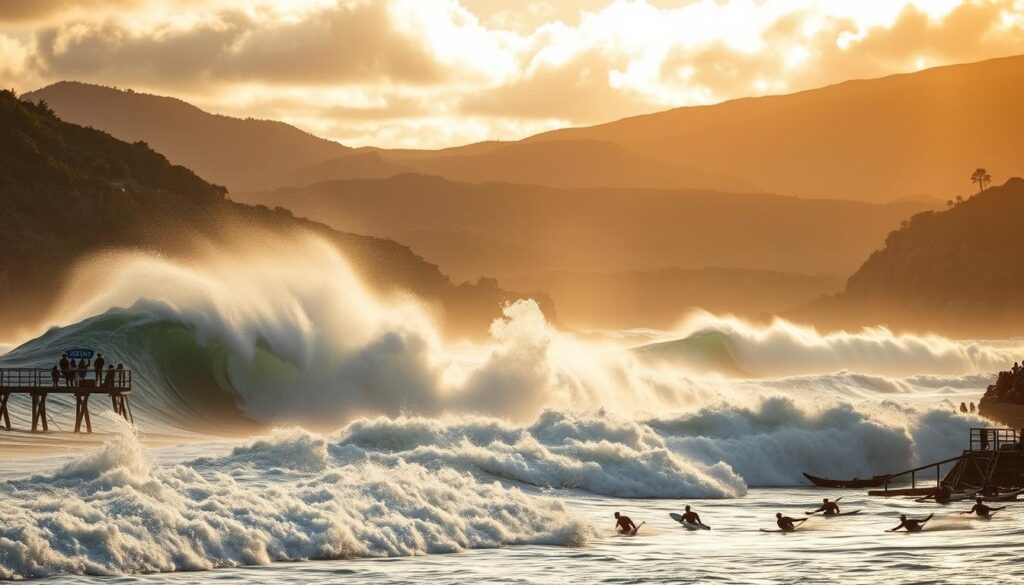
Imagine Coachella’s neon chaos meeting Gladiator-style theatrics. That’s what California’s surf events are like. At one end, Huntington Beach’s Vans US Open has beachside DJs. At the other, Mavericks’ bone-crunching 60-footers are like Thor’s hammer.
Let’s look at these extremes with a bit of sarcasm:
| Vans US Open | Mavericks Challenge | |
|---|---|---|
| Vibe | Instagram influencers vs sunscreen tubes | Weatherproof jackets vs existential dread |
| Ticket Strategy | $50 general admission ($200 for “VIP” shade) |
Free if you kayak through shark alley |
| Local Hack | Bolsa Chica State Beach overlook | Ghost Tree trail binocular spots |
The real magic is between WSL’s logos and Mavericks’ “we might die today” vibe. Tip: Get there at 5 AM. At Huntington, avoid parking chaos. At Half Moon Bay, see surfers meditating next to jet skis.
Three secret spots locals won’t tweet about:
- Seal Rock Overlook (Mavericks) – Bring thermoses, not selfie sticks
- River Jetties (Huntington) – Where retired pros critique air reverses
- San Mateo County Sheriff’s cam – For when your Prius can’t handle cliff roads
Here’s the kicker: Both events sell out of churros by noon. People have their priorities.
Local Surf Culture & Etiquette
California’s surf scene has its own rules, thicker than the U.S. tax code. It’s like a mix of maritime law and high school cafeteria politics. At Santa Cruz’s Steamer Lane, who goes first is clear and strict.
The rivalry between NorCal and SoCal is huge. In Half Moon Bay, surfers are like tech bros, focused on efficiency. In Venice Beach, they’re all about the perfect selfie.
The lineup has three key rules:
- Don’t snake: Cutting in line is a big no-no. You’ll get side-eye and maybe some yelling.
- Respect the locals: They know the waves like historians. Don’t mess with them.
- Share the stoke: Even when it’s crowded, the ocean’s for everyone. Except at Mavericks.
Pro tip: Watch how experienced surfers enter the water. If they’re doing the “surf shuffle,” they’re not lazy. They’re studying the waves like Wall Street pros.
Eco-Friendly Surf Practices
Here’s a secret: your surfing gear might be harming the ocean. While we’re all excited to catch waves, our gear pollutes the sea. Let’s learn how to surf without harming the environment.
Traditional surfboards produce a lot of CO2, more than a Tesla driving from Malibu to Mavericks 14 times. But, algae-based boards cut that number by 60%. Let’s look at the numbers:
| Material | CO2 Emissions | Breakdown Time | Cost Premium |
|---|---|---|---|
| Traditional PU Foam | 272 lbs/board | 500+ years | Baseline |
| Algae Composite | 109 lbs/board | Biodegrades in 5 yrs | +22% |
| Recycled EPS | 184 lbs/board | 300 years | +15% |
California’s surf startups are leading the way in sustainability. Here are three to watch:
- Suga: Turns old wetsuits into yoga mats (because yoga shouldn’t harm the planet)
- Matuse: Makes suits from plant-based rubber, 80% fewer toxins than traditional suits
- Vissla’s Hemp Tech: Boardshorts from hemp that absorb CO2 fast
Before you surf, check the Heal the Bay runoff reports. Last summer, 38% of SoCal surf zones failed water quality tests. Your surf session shouldn’t include E. coli. If the tide smells bad, maybe shower first.
This isn’t just about saving the planet. Choosing eco-friendly gear means your grandkids might see coral reefs. That’s how you surf for the future.
Conclusion
California’s best surf beaches can’t be found online. They offer real-life experiences that change with every tide. From Malibu’s gentle waves to Mavericks’ towering waves, surfing in California is more than a sport. It’s a way of life.
Steinbeck once said the Pacific Grove waves teach us balance. They show us that every wipeout is a chance to learn and grow. This coastline is a teacher, always ready to share its wisdom.
Dawn patrol in California is more than just surfing early. It’s a chance to escape the digital world and connect with nature. The kelp forests glow in the morning light, creating a magical atmosphere.
The real virtual world is the ocean, where we’ve been exploring for decades. No virtual reality can compare to the thrill of riding a wave at San Onofre. The pelicans flying alongside add to the excitement.
Your wetsuit zipper is like a reality switch. Santa Cruz’s Steamer Lane offers a unique perspective that mindfulness apps can’t match. Huntington Beach’s pier lights up the night, making it even more special.
These beaches are where true experiences happen. They value your journey, not your social media following. So, pack your boardbag with eco-friendly wax and get ready for an adventure.
Study the surf charts like you would follow the stock market. California’s surfing world is waiting for you. It’s a place where the real life hack is embracing the moment, even when it knocks you off balance.