

Grand Canyon Lodging changed sharply after the flash flood on August 29, 2026, and travelers planning for mid-September need to treat lodging, water, and trail access as connected issues rather than separate details. The canyon is not fully closed, but several high-demand overnight options and inner-canyon routes were closed as of September 14, 2026. A practical trip can still work if you confirm where you will sleep, how much water access is available, and which trails are open before you drive to the park.
The key shift is that damage in Bright Angel Canyon affected more than one visitor area. At about 2:30 p.m. on August 29, 2026, a flash flood caused major damage around Phantom Ranch, Bright Angel Campground, cabins, the canteen, the North Kaibab Trail, and the Black and Silver Bridges crossing the Colorado River, according to the National Park Service flood closure notice. That damage also sits in the wider context of water infrastructure problems, which is why lodging decisions now require extra care.
What Changed After The August 29 Flood
Damage Reached Key Inner-Canyon Facilities
For many visitors, Phantom Ranch is not just a place to sleep. It is the anchor point for rim-to-river and rim-to-rim plans, and it supports hikers moving through the inner canyon. After the August 29 flood, Phantom Ranch and surrounding infrastructure were damaged, including Bright Angel Campground, cabins, and the canteen. The North Kaibab Trail and river bridges were also affected. That combination matters because it reduces both overnight capacity and through-route options.
As of September 14, 2026, the North Kaibab Trail from its trailhead to Phantom Ranch was fully closed, with no reopening estimate in the research notes. More inner-canyon closures were added on September 3, 2026, including South Kaibab Trail below the Tip-Off and Bright Angel Trail below the Tonto Trail intersection. If your plan depended on linking rim trails with a canyon-floor stay, assume the route needs to be rebuilt from the ground up, not lightly adjusted.
Water Infrastructure Is Driving Visitor Limits
The Transcanyon Waterline damage is a major reason overnight operations were curtailed inside the park. Park updates in the research notes said South Rim water supply was expected to be restored in “weeks, not months” through a temporary water intake at Bright Angel Creek, replacing the damaged pipeline intake. That wording is useful, but it is not a confirmed reopening date. For travelers, the practical reading is simple: do not book around optimism. Book around confirmed services.
Mindful travel also matters here. Water systems under repair should not be treated as a background inconvenience. Carrying your own water where required, keeping plans modest, and avoiding closed areas helps reduce pressure on staff and infrastructure during recovery. Sustainable tourism is not only about choosing low-impact transport; it also means respecting temporary limits after a damaging event.
Grand Canyon Lodging Status After The Flood
Grand Canyon Lodging Checks Before Booking
Grand Canyon Lodging inside the park was heavily affected as of August 31, 2026. Overnight lodging operated by park concessions inside Grand Canyon National Park, including El Tovar, Bright Angel Lodge, Maswik Lodge, Yavapai Lodge, and Trailer Village, was closed until further notice because of water infrastructure damage, as noted on the NPS park lodging page. The same research notes state that all overnight guest lodging inside the park ceased beginning August 31, 2026, while lodging outside the park in Tusayan remained open.
Grand Canyon Lodging now requires more confirmation than a normal shoulder-season visit. If you held an inside-the-park reservation, verify its status directly through the concessioner or official park lodging channel before making the drive. If you are starting a new plan, look first at Tusayan or other communities outside the entrance rather than assuming a historic South Rim lodge will be available. For a date-specific companion update, check our September Grand Canyon closures report before finalizing a route.
What Staying Outside The Park Changes
Staying in Tusayan can still allow a South Rim visit, but it changes the rhythm of the day. You may need to account for entrance timing, shuttle connections, meals, and the possibility that water-related limits affect what is convenient inside the park. The research notes say rim-top areas, visitor centers, the market, shuttle buses on the Blue and Orange routes, rim trails, Desert View Drive, and Desert View Campground with advance reservation remained open. That leaves room for a scenic, lower-impact visit if you avoid closed inner-canyon routes and plan around confirmed services.
Treat Grand Canyon Lodging as part of a wider access plan. A room outside the park can solve the sleeping problem, but it does not reopen closed trails or change water capacity. Build your day around rim walks, overlooks, shuttles where operating, and short plans that can be adjusted if park conditions shift. Travelers who need extra rest breaks or a slower pace may also want to compare practical travel planning resources through the related Silver Liners network before choosing a base.
Trail Access And Rim Planning
Inner-Canyon Routes Need Extra Caution
The most serious access limits are in the inner canyon. The North Kaibab Trail closure from the trailhead to Phantom Ranch removes a major corridor. South Kaibab Trail below the Tip-Off and Bright Angel Trail below the Tonto Trail intersection were also added to the closure list on September 3, 2026. These are not minor detours for casual hikers; they affect the structure of long hikes and any plan tied to Phantom Ranch or canyon-floor travel.
For travelers who had planned a rim-to-rim hike, a Phantom Ranch stay, or a deep inner-canyon route, the responsible move is to postpone that specific plan until official reopening details are posted. Do not try to piece together an unofficial alternative through damaged areas. Trail closures after a flash flood protect visitors, rescue teams, and repair crews. They also protect damaged canyon environments from extra foot traffic while recovery work is underway.
South Rim Options That Still Fit A Visit
The South Rim remained the more workable side for many visitors in the research notes, even with many lodges closed. Rim trails, visitor centers, the market, shuttle buses on the Blue and Orange routes, Desert View Drive, and Desert View Campground with advance reservation were listed as open. That supports a trip focused on viewpoints, rim walking, photography, and scenic driving rather than deep hiking.
This is where a quieter, lower-impact style of travel fits well. Use shuttles where available instead of making repeated short drives. Stay on open trails. Pack out waste. Carry water and snacks rather than assuming every usual service point will feel normal. If your goal is to experience the canyon without adding strain during recovery, a South Rim day based on open rim areas is the better match than forcing an ambitious hiking plan.
North Rim Access And Water Limits
Services Are Limited Through October 15, 2026
The North Rim presents a different planning challenge. The research notes state that the North Rim campground reopened on June 1, 2026, but no overnight lodging was available there for the season through October 15, 2026. Key services were very limited. That means the North Rim should not be treated as a fallback for travelers who lost an inside-the-park South Rim lodge booking.
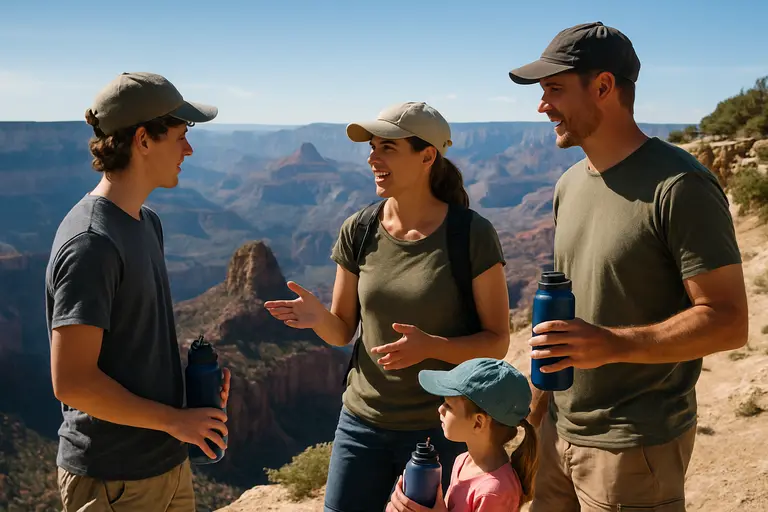
The North Rim also had zero potable water capacity in the research notes. Visitors were told to bring their own water, with limited bottled water available from the General Store, open daily from 9 a.m. to 4 p.m. That is a serious constraint, especially for warm days, families, older travelers, and anyone planning longer walks. If you cannot carry enough water for your group, choose a different plan.
Scenic Roads Are Not The Same As Full Access
Some North Rim scenic drives and viewpoints were listed as open, including Cape Royal Road, Point Imperial, Roosevelt Point, Walhalla Overlook, and Angels Window. That may make the North Rim appealing for a road-based visit. Still, many trails were closed, including Bright Angel Point, Widforss, Transept, the west segment of Ken Patrick, Uncle Jim, and parts of the Arizona Trail between certain points.
The practical takeaway is to separate “viewpoints open” from “the North Rim is fully available.” A short scenic drive with enough water and fuel may be reasonable for some visitors. A trail-heavy day is not the right assumption. Because the North Rim has fewer services even in normal conditions, post-flood water limits make self-sufficiency much more than a preference.
Planning Choices By Visitor Type
If You Already Have A Reservation
If your booking was inside Grand Canyon National Park after August 31, 2026, verify whether it was canceled, paused, or moved before making any nonrefundable travel choices. Grand Canyon Lodging closures were tied to water infrastructure, so reopening depends on repair progress rather than a typical seasonal schedule. Do not assume a property will reopen because your travel date is several days away.
If you booked outside the park, confirm cancellation rules, driving time, and whether your plan depends on a closed trail. A Tusayan stay may still work well for a South Rim-focused trip, but it will not support a Phantom Ranch or North Kaibab plan while those closures remain in place. If the core reason for your trip was a deep canyon hike, rescheduling may be more satisfying than reducing the trip to viewpoints.
If You Are Starting From Scratch
For new plans made on September 14, 2026, begin with what is open, not what you hoped would be open. A practical trip could focus on South Rim rim trails, visitor centers, open shuttle routes, Desert View Drive, and a stay outside the park. Keep daily goals short enough to adjust. Avoid plans that depend on uncertain water restoration timing or reopening dates that have not been announced.
- Confirm lodging status directly before booking or driving.
- Choose South Rim rim-based activities over inner-canyon hikes affected by closures.
- Bring water, especially if visiting the North Rim, where potable water capacity was listed as zero.
- Do not enter closed trails, even if a map app suggests a route.
- Use shuttles where operating to reduce traffic and parking pressure.
Grand Canyon Post-Flood Trip Decisions
A post-flood Grand Canyon trip can still be worthwhile, but it needs a different mindset. Grand Canyon Lodging is no longer a simple choice between a historic lodge, a campground, or a nearby hotel. It is tied to water repairs, concession closures, and trail access that changed after the August 29 flood. The safest planning approach is to keep the trip rim-focused, stay outside the park if inside lodging remains closed, and avoid building any plan around Phantom Ranch, North Kaibab, or closed inner-canyon segments.
For travelers who can be flexible, a South Rim visit based on open rim areas may still offer a meaningful canyon experience with less strain on recovering infrastructure. For travelers whose main goal was a canyon-floor overnight or a rim-to-rim route, waiting for confirmed reopening news is the more responsible choice. Grand Canyon Lodging and trail access should be checked again close to travel, because repair progress can change the visitor picture quickly, but only official updates should drive final decisions.