

Timber Fire Arrives During Big Sur’s Busiest Tourism Period
Big Sur’s summer tourism economy is facing an abrupt disruption as the Timber Fire expands across Monterey County, forcing evacuations, closing state parks and restricting access along one of California’s most important scenic highways. The fire began Sunday, August 9, 2026, and by August 11 had grown to nearly 3,000 acres, with containment remaining around 5% as firefighters worked across steep and difficult terrain. The situation has affected portions of the Big Sur coast during one of the busiest periods of the year for Monterey County tourism, with Monterey Car Week underway nearby.
The impact extends beyond the immediate fire perimeter. Evacuation orders and warnings have affected well-known destinations including Nepenthe, Alila Ventana, the Henry Miller Memorial Library, and several state parks. The closure of a roughly 10-mile section of Highway 1 has further complicated access for residents, businesses, emergency crews and visitors. Caltrans closed the highway from approximately Post Mile 37.5 near Julia Pfeiffer Burns State Park to Post Mile 47 near Fernwood to support firefighting and evacuation operations.
For a region whose economy depends heavily on visitors driving Highway 1, stopping at restaurants, staying at coastal properties and exploring public lands, the disruption is immediate. Big Sur’s tourism model is unusually concentrated around a narrow transportation corridor, meaning a major road closure can affect an entire chain of businesses at once.
Readers following California’s changing outdoor travel conditions can also find additional coverage through California travel news.
Highway 1 Becomes The Center Of The Tourism Disruption
Highway 1 is more than a scenic road through Big Sur. It is the primary route connecting many of the region’s restaurants, accommodations, trails, overlooks and cultural attractions.
That makes the current closure particularly consequential.
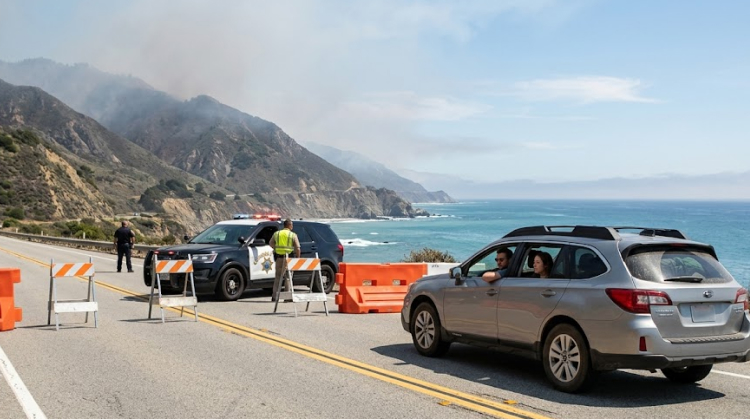
Caltrans announced that the 10-mile closure was established to support Timber Fire emergency operations, with drivers advised to avoid unnecessary travel through the affected area and use U.S. 101 as an alternative route. The restriction is also intended to keep emergency routes clear while crews respond to the fire and evacuation orders remain active.
The geography makes alternative access complicated. Big Sur’s rugged coastline is bordered by the Pacific Ocean on one side and steep mountains on the other. Unlike destinations with several parallel roads, the coastal corridor has limited options for moving large numbers of vehicles when Highway 1 is closed.
That creates a situation in which even travelers who are not directly threatened by flames can be affected.
A visitor attempting to reach a restaurant farther south may find that the route is inaccessible from the north. A hotel may remain physically intact but become difficult or impossible for guests to reach. A state park can remain undamaged while still being closed because firefighters need the surrounding roads or because officials cannot safely accommodate visitors.
This distinction between physical damage and operational disruption is essential to understanding the tourism impact.
Big Sur State Parks Are Among The First Destinations Affected
Several of the region’s most recognizable public attractions have been closed or placed under evacuation restrictions as the fire spreads.
The affected area includes Pfeiffer Big Sur State Park and Julia Pfeiffer Burns State Park, two destinations that normally attract visitors for hiking, camping, coastal views and access to Big Sur’s distinctive redwood and chaparral landscapes. News reports have also identified closures or evacuation impacts involving Andrew Molera State Park and other coastal destinations.
Julia Pfeiffer Burns State Park is particularly recognizable because of its dramatic coastline and 80-foot waterfall that drops from granite cliffs toward the Pacific Ocean. The park stretches from the coast into mountainous terrain reaching approximately 3,000 feet.
Those characteristics also demonstrate why wildfire response in Big Sur can be difficult.
The same steep terrain that creates spectacular hiking trails and coastal overlooks can limit vehicle access for firefighters. Crews must work through rugged landscapes while also protecting structures and keeping evacuation routes available.
The California State Parks information for Julia Pfeiffer Burns State Park illustrates the scale and terrain of the recreational landscape visitors normally encounter.
For tourism operators, the consequences are immediate because park closures remove some of the primary reasons travelers make the drive into Big Sur.
Hotels And Restaurants Face A Different Kind Of Emergency
The Timber Fire is also affecting private businesses that have become part of the Big Sur travel experience.
Evacuation coverage has included Nepenthe, the iconic restaurant overlooking the Pacific, as well as Alila Ventana Big Sur, a luxury resort located in the forested mountains above the coast. The Henry Miller Memorial Library, another cultural attraction associated with the region, has also been closed during the emergency.
These businesses occupy very different positions in the tourism economy, but they share a dependence on visitors physically reaching Big Sur.
A restaurant can lose customers without suffering fire damage. A hotel can lose bookings even if its buildings remain untouched. A cultural attraction can close because employees must evacuate or because authorities restrict access to the surrounding area.
That creates an economic ripple effect.
Hotels, restaurants and attractions depend on one another because visitors typically combine several activities during a Big Sur trip. Someone staying overnight may eat at a local restaurant, visit a state park, purchase fuel, stop at a gallery and spend money at other businesses along Highway 1.
When the road closes, that entire spending chain can contract.
The effect can be especially pronounced for independent businesses because Big Sur does not have the same concentration of alternative commercial districts found in larger California tourist destinations.
Monterey Car Week Adds Another Layer Of Pressure
The timing of the Timber Fire creates an unusual complication for the Central Coast.
Monterey Car Week is underway this week, with events taking place throughout Monterey County. The county’s own special-events records list major activities including the Rolex Monterey Motorsports Reunion at WeatherTech Raceway Laguna Seca from August 8 through August 15, along with numerous private and public events around Monterey, Pebble Beach and Carmel.
Car Week brings an international audience to the region and significantly increases traffic during a period when Big Sur is already experiencing summer travel demand.
The fire therefore arrives at precisely the wrong moment for businesses that depend on peak-season visitors.
It also changes transportation patterns.
Travelers arriving for Monterey Car Week may normally incorporate Big Sur into scenic drives or extended itineraries. With Highway 1 restricted and multiple destinations closed, those plans can change quickly.
The distinction between Monterey’s event economy and Big Sur’s nature-based tourism economy is important. Car Week events may continue in locations outside the evacuation area, while Big Sur businesses and attractions can remain severely disrupted.
That creates an uneven tourism landscape in which one part of the county remains active while another is operating under emergency conditions.
Firefighters Are Protecting More Than Buildings
The Timber Fire was reported at nearly 3,000 acres by August 11, with approximately 500 firefighters working on the incident. Officials have also identified hundreds of structures potentially threatened by the fire, increasing the complexity of the response.
Protecting Big Sur is not simply a matter of placing crews around individual buildings.
Firefighters are also working to prevent the blaze from crossing Highway 1, which would create an even more serious transportation and evacuation problem. The Pacific Coast Highway is one of the most strategically important pieces of infrastructure in the region because there are few comparable coastal routes.
The rugged terrain creates another challenge.
Ground crews cannot reach every location easily, while steep slopes and dense vegetation can complicate efforts to establish containment lines. The fire has been described as burning through grass, brush and oak woodland, with the terrain contributing to the difficulty of the operation.
For visitors, the lesson is straightforward: a scenic destination can become inaccessible long before a fire reaches the destination itself.
Tourism Businesses Depend On Timing And Access
Big Sur’s economy has always been closely tied to seasonal travel.
Summer and early fall are particularly important because travelers generally have favorable conditions for road trips, hiking and coastal sightseeing. A major closure during this period can therefore have a disproportionate effect compared with a similar closure during a quieter month.
The Timber Fire illustrates how quickly that seasonal advantage can disappear.
A business that expects steady weekend traffic can suddenly lose reservations. A restaurant may have to close while staff evacuate. A tour operator may cancel excursions because trails or roads are inaccessible. A hotel may have to manage cancellations and relocation requests while also following evacuation instructions.
The uncertainty can be almost as difficult as the closure itself.
Tourism businesses cannot reliably tell customers when Highway 1 will reopen because reopening depends on fire behavior, containment, emergency operations and road safety rather than tourism demand.
That makes the current situation different from a conventional road construction closure.
The Big Sur Travel Model Is Showing Its Vulnerability
The Timber Fire is exposing a structural vulnerability in Big Sur tourism: the region’s appeal and its transportation limitations are closely connected.
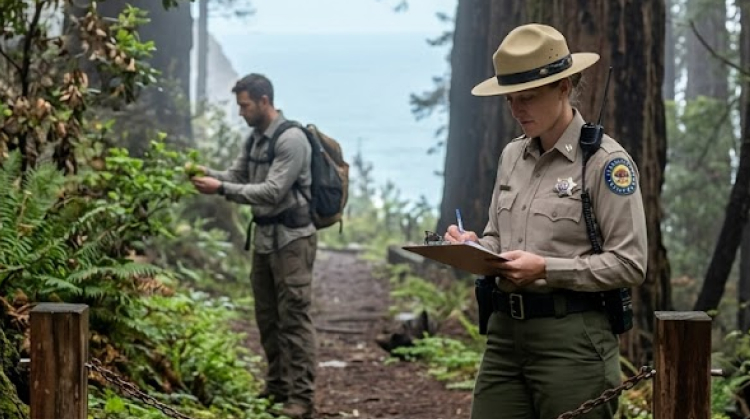
Highway 1 is what makes the destination famous. Its winding route, cliffs and ocean views are central to the visitor experience. But the same geography means there are limited alternatives when emergency officials need to restrict access.
This vulnerability has appeared during previous disasters.
Wildfires, landslides, rockfalls and major storms have repeatedly demonstrated that Highway 1 can become unavailable when conditions deteriorate. The current fire adds another example of how environmental hazards can quickly transform a tourism corridor into an emergency-management corridor.
The economic implications extend beyond Big Sur itself.
Visitors who cannot access the coast may redirect spending to Monterey, Carmel-by-the-Sea, Salinas, Santa Cruz or other destinations. That means some businesses can experience increased demand while Big Sur operators lose traffic.
The redistribution is not necessarily enough to offset the losses, however, because Big Sur’s tourism products are highly specialized.
A traveler who planned to hike among redwoods, eat at Nepenthe and drive the Pacific Coast Highway cannot simply replace that experience with a different hotel in another city.
What Travelers Should Watch Before Returning
The current conditions make Big Sur a destination where travel decisions should be based on official emergency information rather than normal tourism schedules.
Visitors should monitor evacuation orders, Highway 1 conditions, state park announcements and instructions from emergency personnel before attempting to enter affected areas. The situation can change quickly as fire behavior and containment evolve.
The most important information is not whether a particular restaurant or attraction appears open online.
It is whether the road leading to it is safely accessible.
That distinction is especially important in Big Sur because businesses can sit inside areas affected by evacuation orders or road restrictions even when their structures have not been damaged.
Travelers should also avoid entering closed areas simply to observe the fire or take photographs. Emergency vehicles require clear access, and additional traffic can create problems on narrow sections of Highway 1.
Big Sur’s Recovery Will Depend On More Than Fire Containment
The end of the immediate fire threat will not necessarily mean an instant return to normal tourism.
Before visitors return, officials will need to evaluate roads, slopes, vegetation, utility infrastructure, trails and public facilities. Areas affected by fire can remain hazardous after flames disappear because of unstable trees, damaged infrastructure, falling rocks and altered terrain.
For state parks, reopening decisions can therefore take additional time even after containment improves.
Businesses face another challenge: rebuilding visitor confidence.
Travelers planning a California road trip may hesitate to book Big Sur if they are uncertain about whether Highway 1, parks and attractions will be operating. That uncertainty can persist beyond the official emergency period.
The region’s recovery will consequently involve several stages:
- Emergency response: firefighting, evacuations and protection of critical infrastructure.
- Access assessment: evaluating Highway 1, secondary roads and public facilities.
- Park and trail inspections: determining whether visitor areas can safely reopen.
- Tourism recovery: restoring reservations, events and visitor traffic.
The process will depend on conditions on the ground rather than a predetermined tourism timetable.
Big Sur’s Summer Tourism Story Has Changed
The Timber Fire has temporarily changed the meaning of a Big Sur summer trip.
Instead of being defined primarily by scenic drives, redwood hikes, coastal restaurants and state parks, the region is now defined by evacuation zones, emergency operations and restricted access.
As of August 12, 2026, the fire remains an active incident, with the situation developing around a landscape that normally represents one of California’s strongest tourism brands. The combination of nearly 3,000 acres burned, low containment, multiple affected destinations and a 10-mile Highway 1 closure makes this more than a localized inconvenience for travelers.
The immediate priority remains protecting residents, visitors, firefighters and infrastructure.
For Big Sur’s tourism economy, the next stage will begin when officials can safely restore access. Until then, the coast’s most valuable tourism asset—its extraordinary landscape—must temporarily take a back seat to the emergency response protecting it.