

San Diego’s Waterfront Becomes A Major Summer Attraction Beyond Traditional Beach Travel
San Diego’s waterfront is entering another busy summer season as events, outdoor experiences, and coastal attractions continue attracting visitors from across Southern California and beyond.
The city’s waterfront districts have become more than scenic locations for sightseeing. Areas such as the Embarcadero, Seaport Village, Waterfront Park, and Coronado Island now function as connected destinations where visitors combine festivals, dining, museums, outdoor recreation, and coastal activities into full-day experiences.
This growth reflects a larger shift in California tourism. Travelers are increasingly looking for destinations that offer multiple activities within walkable areas, especially locations where outdoor environments and cultural experiences overlap.
San Diego benefits from a unique combination of year-round weather, coastal access, and a strong event calendar. Summer programming brings additional visitors who are interested in waterfront concerts, food experiences, family activities, and community celebrations.
The result is a tourism model that extends beyond traditional beach visits. A day near the San Diego Bay can include waterfront walking paths, historic attractions, local restaurants, harbor cruises, and seasonal events without requiring long-distance travel between activities.
For visitors planning broader California trips, California Times has explored similar outdoor-focused experiences through this California destination guide, showing how coastal locations continue becoming complete travel experiences rather than single-stop attractions.
Waterfront Events Transform San Diego Bay Into A Regional Tourism Hub
San Diego’s waterfront has become one of the city’s strongest gathering spaces because it combines public access with major attractions.
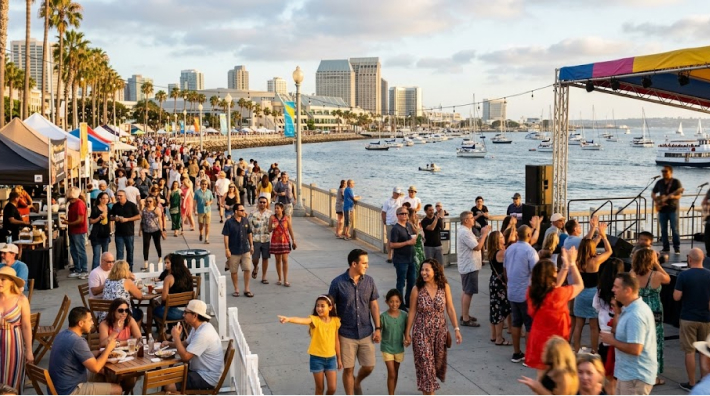
The Embarcadero area connects several important destinations, including the USS Midway Museum, Maritime Museum of San Diego, Waterfront Park, and downtown hotels. This concentration allows visitors to experience multiple activities within the same area.
Seasonal events increase the number of visitors moving through these spaces. Summer programming often includes:
- Outdoor concerts and cultural festivals
- Waterfront community celebrations
- Food and beverage events
- Harbor activities
- Family-oriented programs
The appeal comes from flexibility. A visitor can attend a scheduled event while still having opportunities to explore nearby attractions before or after.
According to the San Diego Tourism Authority, the region continues attracting millions of visitors annually, with coastal attractions representing one of the strongest parts of the local tourism economy.
| Waterfront Destination | Visitor Experience |
|---|---|
| Embarcadero | Harbor views, museums, cruises, walking routes |
| Seaport Village | Shopping, restaurants, family activities |
| Waterfront Park | Public events, open spaces, community gatherings |
| Coronado Island | Beaches, historic sites, coastal recreation |
This event-driven approach helps San Diego compete with other major California destinations by offering experiences that combine recreation, culture, and entertainment.
Outdoor Experiences Make Waterfront Tourism More Accessible
One of San Diego’s biggest advantages is the ability to combine urban tourism with outdoor recreation.
Visitors attending waterfront events often extend their day with activities such as:
- Walking along the bay
- Cycling coastal paths
- Visiting nearby beaches
- Exploring historic neighborhoods
- Taking harbor cruises
This connection between events and outdoor activities matches a broader California travel trend. Tourists increasingly prefer flexible itineraries where one destination provides multiple experiences.
The waterfront environment supports this style of travel because visitors do not need to choose between city attractions and natural scenery. The same trip can include museums in the morning, a waterfront event in the afternoon, and a sunset coastal experience later in the day.
The model is particularly attractive for families and groups with different interests. One person may prefer a maritime attraction, another may want restaurants or shopping, while others may prioritize outdoor views.
San Diego’s waterfront succeeds because it creates a shared environment where those interests overlap.
Local Businesses Benefit From Increased Summer Visitor Activity
Waterfront tourism has a direct impact on surrounding businesses. Restaurants, hotels, transportation services, retail stores, and activity providers all benefit from increased visitor movement.
Event-based tourism creates additional opportunities because visitors often spend more time in the area than they would during a short sightseeing stop.
A person attending a waterfront concert may arrive early for dinner. A family visiting Seaport Village may add museum visits or harbor activities. Travelers staying downtown may extend their walking routes into nearby coastal areas.
This creates a wider economic impact beyond the event itself.
San Diego’s tourism strategy increasingly depends on encouraging visitors to explore multiple parts of the city rather than concentrating activity in one attraction.
The waterfront plays an important role in that strategy because it connects downtown hotels, cultural attractions, transportation options, and recreational spaces.
Sustainable Waterfront Planning Shapes San Diego’s Future Tourism Growth
As visitor numbers increase, sustainability has become a central part of waterfront management.
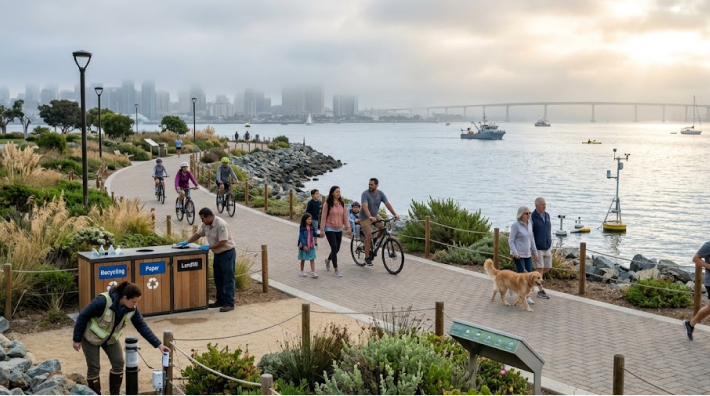
Coastal destinations face unique challenges involving:
- Marine ecosystem protection
- Waste management
- Public transportation demand
- Shoreline preservation
- Climate-related risks
San Diego has invested in programs focused on protecting coastal resources while maintaining public access.
The city’s waterfront improvements emphasize pedestrian-friendly spaces, public transportation connections, and environmental awareness. These efforts support tourism while protecting the natural environment that attracts visitors.
The relationship between tourism and sustainability is especially important in coastal communities. The popularity of the waterfront depends on maintaining clean beaches, healthy marine environments, and accessible public spaces.
The Port of San Diego environmental initiatives highlight ongoing efforts focused on protecting San Diego Bay while supporting economic activity connected to the waterfront.
Summer Events Create New Reasons To Explore San Diego Bay
The growth of waterfront events is changing how visitors experience San Diego. Instead of planning trips around a single attraction, many travelers now build complete itineraries around seasonal experiences.
A summer visit may include:
- Morning exploration at the Maritime Museum
- Lunch near Seaport Village
- Afternoon activities along the bay
- Evening entertainment at a waterfront event
This type of travel benefits both visitors and local communities because it spreads activity across multiple businesses and public areas.
It also supports longer stays. Travelers who might previously spend only a short amount of time in San Diego may now see the city as a destination worthy of several days.
The waterfront’s ability to combine history, recreation, food, and entertainment gives it a competitive advantage among California coastal destinations.
Transportation Improvements Support Growing Waterfront Crowds
Managing increased tourism requires reliable transportation options. San Diego’s waterfront benefits from multiple access points, including pedestrian routes, public transportation, bike infrastructure, and nearby parking facilities.
During major events, transportation planning becomes especially important. Large crowds can create congestion around popular areas, affecting both visitors and residents.
The city continues encouraging alternative transportation options to improve accessibility and reduce pressure on surrounding streets.
This approach reflects a broader California trend where major destinations are investing in transportation solutions that support tourism without overwhelming local communities.
For visitors, understanding transportation options can significantly improve the experience. Arriving earlier, using public transit when possible, and planning return routes can reduce stress during high-demand event periods.
San Diego Waterfront Events Strengthen Southern California’s Coastal Tourism Network
San Diego’s waterfront growth represents a larger trend across Southern California. Coastal destinations are becoming more integrated, with visitors combining experiences across multiple cities rather than focusing on a single location.
A traveler may spend time in Los Angeles, visit Orange County beaches, and finish a trip exploring San Diego’s waterfront attractions.
This regional approach strengthens California’s tourism economy by creating connected travel experiences.
San Diego’s advantage comes from its ability to offer a slower-paced coastal environment while still providing major city amenities. The waterfront represents that balance: a place where visitors can enjoy public events, outdoor recreation, cultural attractions, and ocean views in the same area.
As summer tourism continues growing, the challenge will be maintaining the qualities that make San Diego attractive while preparing for larger crowds.
The future of the waterfront depends on smart planning, sustainable practices, and continued investment in public spaces that allow residents and visitors to share the coastline.