

Coastal Communities Prepare For Another Summer Of Heavy Beach Visitation
California’s coastline is entering another high-demand summer season, and popular beach destinations are adapting their safety strategies as millions of residents and visitors return to the Pacific shoreline.
From Santa Monica State Beach in Los Angeles County to Huntington Beach, Malibu, and Coronado Beach near San Diego, coastal communities are preparing for increased visitor numbers through expanded lifeguard operations, public education campaigns, environmental protections, and improved crowd management systems.
The challenge is familiar but growing. California beaches are among the state’s most recognizable attractions, combining outdoor recreation, tourism, and community gathering spaces. Yet higher visitation creates additional pressure on emergency response teams, parking infrastructure, marine safety programs, and fragile coastal ecosystems.
Summer beach safety is no longer focused only on preventing ocean-related incidents. Local governments are increasingly addressing a wider range of issues, including heat exposure, water quality concerns, wildfire smoke impacts, crowded access points, and responsible visitor behavior.
The shift reflects a broader change in how California manages outdoor recreation. The beach is no longer viewed only as a destination for swimming and sunbathing. It is part of a larger tourism network that includes restaurants, bike paths, waterfront parks, hotels, and regional attractions.
For travelers planning broader coastal experiences, California Times has previously explored how visitors can better prepare for outdoor adventures through its California outdoor travel guide, highlighting the importance of planning around conditions, crowds, and seasonal changes.
Lifeguard Operations Expand As Beach Attendance Peaks
California’s lifeguards remain the first line of defense during the summer season, particularly at beaches with high visitor volume. Agencies such as the Los Angeles County Department of Beaches and Harbors, California State Parks, and municipal beach safety departments increase staffing during peak periods to manage increased demand.
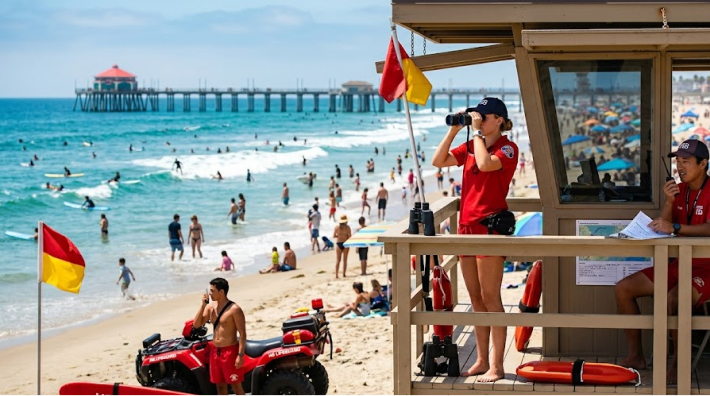
Popular locations such as Santa Monica State Beach and Huntington Beach attract thousands of visitors on warm weekends. These crowds create challenges beyond traditional ocean rescues, including lost children, medical emergencies, heat-related incidents, and conflicts involving crowded public spaces.
The scale of California’s coastline requires different approaches depending on location. A family-oriented beach with calm swimming areas requires different resources than a surf destination known for stronger waves and experienced athletes.
A typical summer safety strategy includes:
| Safety Measure | Purpose |
|---|---|
| Increased lifeguard staffing | Faster response to ocean emergencies and medical situations |
| Public warning systems | Communication about surf conditions, closures, and hazards |
| Beach patrols | Monitoring crowded areas and visitor activity |
| Educational campaigns | Reducing preventable accidents through awareness |
The state’s coastal safety efforts are supported by long-term ocean monitoring and public information programs. The California State Parks coastal safety resources provide visitors with guidance on conditions, regulations, and responsible recreation.
Huntington Beach And Southern California Coastal Areas Face Visitor Pressure
Southern California beaches experience some of the highest visitor concentrations in the state. Huntington Beach, often known as “Surf City USA,” continues attracting surfers, families, tourists, and large public events throughout the year.
The city’s beach environment creates a unique management challenge because it combines recreation, tourism, and competitive water sports. During summer weekends, thousands of visitors gather along the shoreline, creating demand for stronger communication around ocean conditions and public safety.
Parking congestion is another recurring issue. Popular coastal destinations often experience peak demand during holiday weekends, creating pressure on surrounding neighborhoods and transportation networks.
Communities are responding with a mix of strategies:
- Expanded visitor education before peak weekends
- Improved signage near high-risk areas
- Increased beach patrol visibility
- Greater emphasis on public transportation and alternative access options
These approaches aim to maintain public access while reducing the negative impacts associated with overcrowding.
The challenge is balancing tourism growth with quality of life for coastal residents. California’s beaches contribute significantly to local economies, but unmanaged visitation can create environmental and operational challenges.
Ocean Conditions Drive New Safety Messaging For Visitors
One of the biggest misconceptions among beach visitors is assuming that calm weather always means safe ocean conditions. California’s coastline can change quickly, with rip currents, cold water temperatures, and changing surf conditions creating risks even on sunny days.
Rip currents remain one of the leading hazards for swimmers along the Pacific coast. These powerful currents can pull swimmers away from shore, making awareness and proper response techniques critical.
Public education campaigns increasingly focus on teaching visitors what to do during emergencies:
- Avoid fighting against a rip current directly
- Swim parallel to the shoreline when possible
- Signal for assistance if unable to return safely
- Use beaches with active lifeguard supervision
The messaging reflects a broader move toward prevention rather than response. Emergency teams recognize that informed visitors reduce pressure on rescue operations.
This approach is particularly important as California attracts visitors from outside the state and internationally, many of whom may be unfamiliar with Pacific Ocean conditions.
Sustainability Becomes Part Of California Beach Safety Planning
Beach safety strategies now include environmental protection as a central component. Coastal ecosystems face increasing pressure from heavy visitation, plastic waste, shoreline erosion, and climate-related impacts.
Cities and organizations across California are expanding sustainability programs designed to protect beaches while maintaining public access.
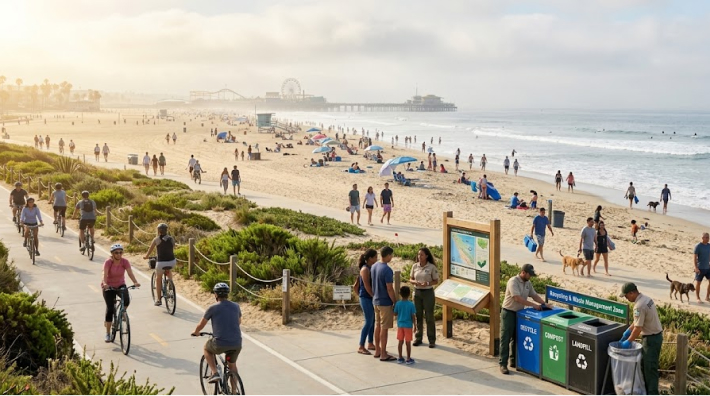
Santa Monica, Malibu, and San Diego coastal areas have introduced initiatives focused on waste reduction, marine protection, and responsible visitor behavior. These efforts include improved recycling access, beach cleanup programs, and public education campaigns.
The relationship between sustainability and safety is becoming clearer. Cleaner beaches create healthier recreational environments, while better-managed visitor patterns reduce long-term damage to coastal ecosystems.
For a state where outdoor recreation contributes significantly to tourism, protecting natural resources has become part of maintaining the visitor experience.
Technology Changes How California Beaches Manage Crowds
Technology is playing a larger role in coastal management. Local agencies are increasingly using digital tools to provide real-time information about parking availability, weather conditions, water quality alerts, and beach closures.
Mobile updates help visitors make better decisions before arriving. Instead of discovering crowded parking areas or unsafe conditions after reaching the coast, travelers can adjust plans earlier.
Some coastal communities are also improving emergency communication through digital signage and public alert systems.
These improvements are especially valuable during holiday weekends when visitor numbers increase dramatically. Better information reduces unnecessary congestion and allows emergency resources to focus on higher-priority situations.
The technology shift mirrors changes happening across California’s outdoor recreation sector, where visitors increasingly rely on digital planning tools before hiking trails, visiting parks, or exploring coastal areas.
Climate Conditions Add Another Layer To Summer Beach Planning
Summer coastal safety is increasingly connected to broader climate conditions. Rising temperatures inland often push more visitors toward beaches, increasing pressure on coastal destinations during heat waves.
At the same time, marine heat changes, wildfire smoke events, and extreme weather patterns influence beach conditions throughout the season.
Local agencies must now prepare for multiple scenarios at once. A single weekend can involve heavy crowds, elevated temperatures, water quality concerns, and transportation challenges.
This creates a more complex operational environment for California’s coastal communities. Safety planning requires coordination between lifeguards, emergency services, environmental agencies, and local governments.
The result is a more comprehensive approach where beach management covers recreation, public health, environmental protection, and tourism planning together.
California Beaches Continue Evolving As Summer Destinations
California’s beaches remain among the state’s strongest attractions, but the way communities manage them is changing. Safety strategies now extend beyond traditional lifeguard patrols to include technology, sustainability programs, visitor education, and smarter crowd planning.
The goal is not to limit access. It is to preserve the coastal experience while preparing for the millions of people who rely on these spaces every summer.
From Huntington Beach surf zones to Santa Monica’s urban shoreline and San Diego’s coastal parks, California communities are adapting to a new era of beach visitation.
The future of coastal recreation depends on maintaining the balance between accessibility and protection. As summer crowds return, the most successful beach destinations will be those that help visitors enjoy the coastline while respecting the environment and the safety systems that keep these places open.